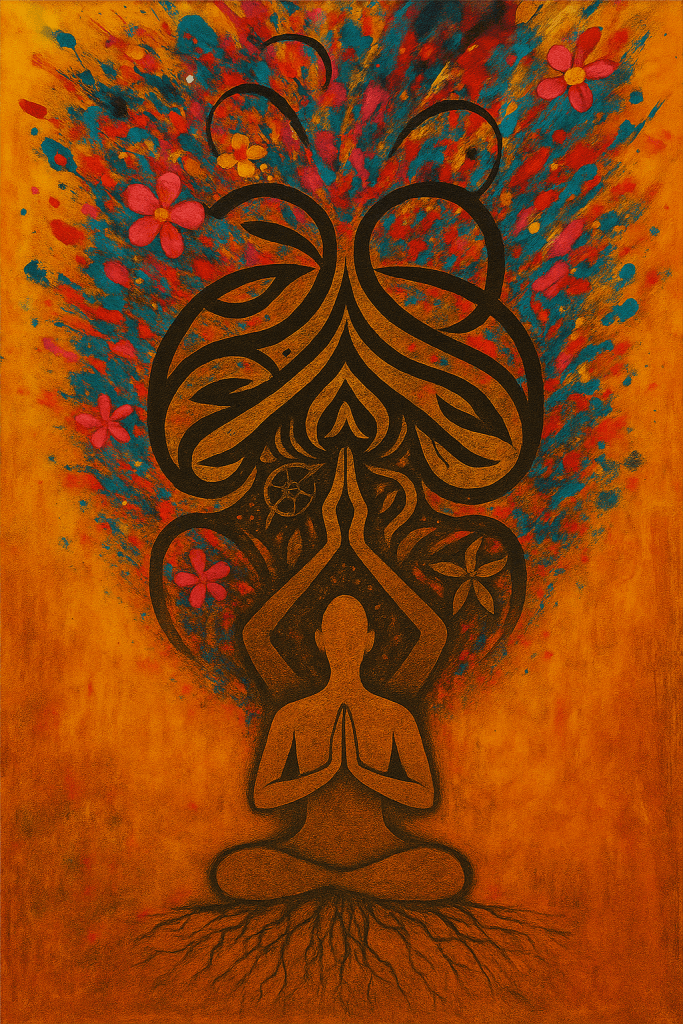
Once Enlightened… Your Problems Have Just Begun

The illusion is that awakening is the end of the road. That the moment the self dissolves, suffering bows out, and the curtain falls. But what if that moment is not an arrival, but a beginning?

Before awakening, the ego fights battles it believes are personal. After awakening, the battlefield is not smaller—it’s vaster, quieter, and infinitely more subtle. The old problems—desire, fear, control—don’t disappear. They shape-shift. They clothe themselves in spiritual garments and reintroduce themselves as paradoxes: “Should I speak, or is silence more aligned?” “Is this surrender or passivity?” “Am I still pretending there’s a me who can do or not do?”

No one warns you that after the clouds part, the sun may burn.

Liberation is not the end of pain. It’s the end of avoidance. One no longer flinches. One no longer hides. You feel fully raw, exposed, without anesthesia. And still, you sit. Still, you breathe. Still, you bow.

You now see with clarity what others can’t. You watch the mechanisms of ego turning behind the eyes of those you love, and the weight of compassion grows heavier, not lighter. You begin to weep for the world—not out of despair, but from a reverence so deep it bends your knees.

Once you’ve seen through the illusion of self, the world becomes impossibly intimate. Every leaf becomes your body. Every scream, your own. Every cruelty, a mirror reflecting the exact frequency of your forgotten selves. There is no refuge. There is only recognition.

You don’t get to leave the world. You return to it—with your skin ripped open, your boundaries gone, and your heart unarmored. Enlightenment doesn’t make you untouchable. It makes you unable to turn away.

There are no medals for realization. No applause for dissolving. No reward for merging with the absolute. What you get, instead, is a silence that never leaves you. A love so vast it terrifies the small mind. A clarity that strips you of every comfortable lie.

And you carry it.

Not as a badge.
As a burden.
As a blessing.
As a vow.

You walk through the world invisible, but more alive than ever. And your problems—they don’t vanish. They deepen. They purify. They sanctify.

Not because you are broken.

But now, you are whole.

Morgan O. Smith

Get Your Free Copy of My Book, Bodhi in the Brain!
https://subscribepage.io/oTSZQu

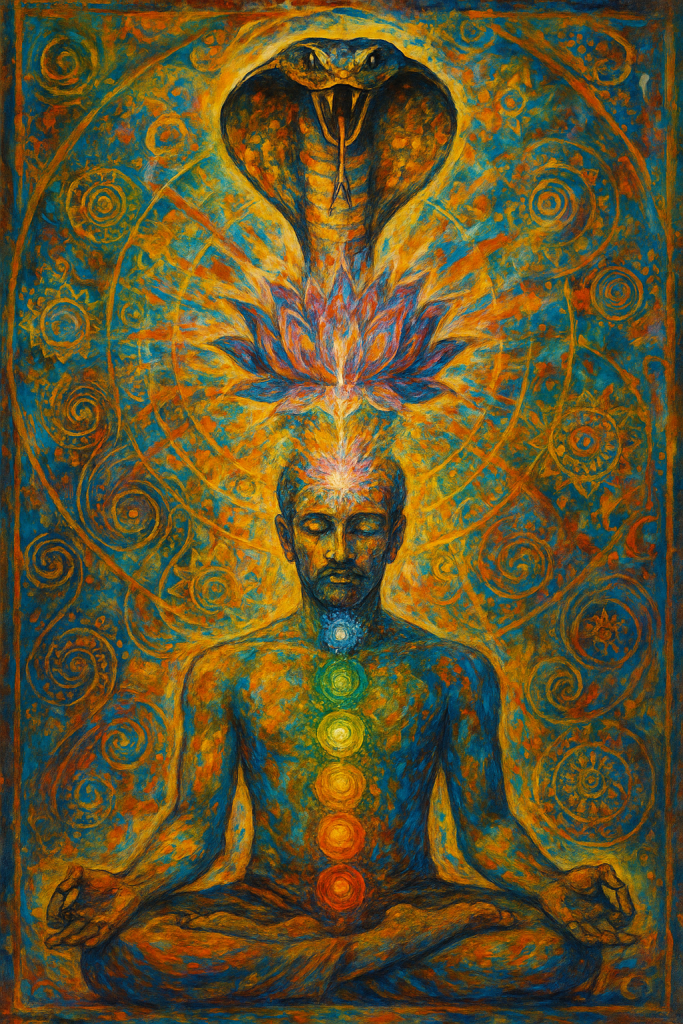
The Root of Choice

True Free Will and the Causal Realm

Most speak of choice as if it lives at the surface, where preference, fear, habit, and desire jostle for control. But what if true free will does not arise there at all? What if it exists at the root, before thought forms into options, before “I want” emerges to justify itself?

This root is the causal realm: the source of all motion, where intention is not split from manifestation. It is not personal will in the usual sense—no ego negotiating with life to get what it wants. Instead, it is pure causality aware of itself, setting everything in motion without conflict or division.

At the surface, people speak of freedom as the power to choose between alternatives. Yet these alternatives are already conditioned. They are branches of a tree whose root has already determined their growth. To speak of freedom at the stem while ignoring the root is to mistake effect for cause.

However, the paradox reveals itself when one sees no real division between root and stem. The freedom to choose at the surface becomes genuine only when it is recognized as the expression of the root itself. Every choice becomes the revelation of causality. There is no separate chooser apart from the choosing.

This is what lies beyond the ego’s belief in control. The ego claims “I choose” without realizing that its very claim is already part of the causality it denies. True free will is not the assertion of control over life but the recognition that you are life itself choosing, moving, unfolding.

To see this is to dissolve the illusion of separation. Responsibility is no longer a burden but realization: the root chooses through you, as you. There is no conflict left. Choice becomes transparent, ego falls away, and causality shines unbroken.

This is freedom—not as license, not as negotiation, but as total alignment with the source of all that arises.

Morgan O. Smith

Get Your Free Copy of My Book, Bodhi in the Brain!

https://subscribepage.io/oTSZQu

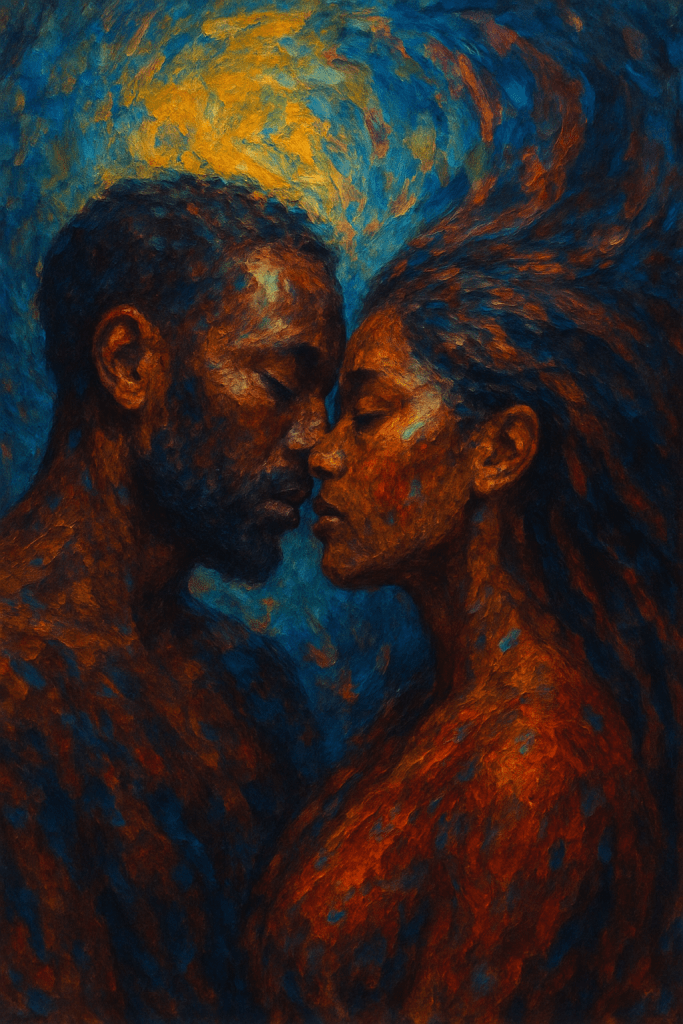
My Religion Is Liberation

Religion need not be a creed one defends or a ritual one performs. For some of us, it is the recognition of the bars we forge around our own minds—and the relentless devotion to dissolving them. Liberation becomes both the path and the sanctuary.

This isn’t about conversion, salvation, or belonging to any particular sect. It is about noticing the prison of belief itself. Every concept, every identity, every longing for certainty can become a gatekeeper denying entry to our own boundless nature.

Liberation demands a fierce honesty. It asks that we examine the illusions that hold our suffering in place, not as moral failings but as invitations to see through the lie of separation. The true heresy in this religion is clinging to what we think we know about ourselves, about others, about reality itself.

No priest is needed here. Authority resides in awareness, and awareness has no master. The teacher is the arising of life as it is—grief, joy, confusion, clarity. Each moment grants a new chance to recognize the play of experience without getting caught in it.

Liberation is not found by rejecting the world but by perceiving its emptiness and fullness simultaneously. Every object, thought, and sensation is free of substance even as it shines in unmistakable vividness. This paradox isn’t a puzzle to solve but a doorway to live through.

When liberation is the religion, love ceases to be a commandment and becomes the ground of being. Judgment collapses, not because everything is permitted, but because everything is understood as oneself. The compulsion to divide the sacred from the profane, the pure from the impure, loses its grip.

Such a path offers no final doctrine. It holds no promise of eternal reward. Yet it is more generous than any creed that trades truth for comfort. It is the faith of those willing to die before death—to watch every cherished certainty burn so that what cannot be burned may reveal itself.

Those who walk this path do so alone, yet never apart.

Morgan O. Smith

Get Your Free Copy of My Book, Bodhi in the Brain!
https://subscribepage.io/oTSZQu

God Is the Real Imaginary

Absolute Monism and the Paradox of Reality

A peculiar clarity arises once the mind exhausts its chase for permanence. Once the striving quiets, what remains is not a revelation in the ordinary sense—it is the revelation of revelation itself. God. Not as something other, but as the very condition of knowing, being, and non-being.

God is not a person, nor a power among powers. God is context itself. Not just the backdrop, but the totality—the undivided field in which all division appears. It is what Hindus call Para Brahman: the Absolute of the Absolute. The final substratum, beyond form, formlessness, and even beyond the duality of beyond and not-beyond.

Yet the paradox defies all rational anchoring: God is also imagination.

Not a figment. Not illusion in the dismissive sense. But the supreme imagining—consciousness dreaming within itself. The universe, with all its matter and mind, all its chaos and beauty, is that imagining. And because God is not apart from its imagining, God too is that imagining.

Which means this: both God and the universe are imaginary.

And also utterly real.

What we call “real” and what we call “imaginary” collapse into a single gesture when seen from God’s standpoint—which is no standpoint at all. From this viewless view, there is no separation between the dreamer and the dream, the Absolute and its expression, the Formless and the formed.

Yet the beauty of this is not that everything dissolves into sameness. The beauty is that everything becomes itself without needing to stand apart.

God and the universe are one and the same. And because they are one and the same, they are also not the same. The distinction is not contradiction. It is the very nature of what is. Distinctness does not negate unity. It reveals it.

This is not spiritual poetry. This is ontological exactness. If anything is to be absolute, it must include even the capacity to contradict itself. That is the very mark of its absoluteness.

So, what is this that appears as a tree, a thought, a thunderclap, a kiss, a death, a silence?

It is God.
It is the universe.
It is imagination.
It is reality.

One singularity. Absolute Monism.

To see it is not to figure it out. To see it is to disappear into what cannot not be.

Morgan O. Smith

Get Your Free Copy of My Book, Bodhi in the Brain!

https://subscribepage.io/oTSZQu

The Divine Totality

Everything Is God, Even the Illusion of Not-God

There comes a moment so still and unfiltered that perception collapses into the clarity of being. Not being this or that, but being everything. And not just metaphorically. Not just poetically. Literally everything—formless and formed, seen and unseen, finite and infinite—is God.

When I use the word God, I’m not pointing toward a figure, a belief, or a doctrine. I am pointing toward existence itself—the Absolute, the Whole, Brahman, Para Brahman, the Unconditioned, conditioned, the Uncreated and created. That which includes form and formlessness, time and timelessness, birth and death, creation and dissolution, the ten thousand things and the nothing between them.

Everything is God. Not just contains God. Not just touched by God. Not just part of God. But fully and completely God. That which we call the universe is not just inside God. It is God. And God is also what lies outside the universe—if such a term can even be grasped. There is not a single thing, moment, action, or gap that is not 100% God. And yet, even the idea of “percent” breaks down in the face of such a realization.

God is not just somewhere else. God is not just merely within. God is not only beyond. God is not higher or lower or more subtle or more gross. No matter how crude or refined, every appearance is divine. Each atom, each sorrow, each beam of light, each lie, each truth, each pulse of your heart, each glitch in the system—is God being what only God can be and cannot be: itself, everywhere, nowhere, always, never been.

Multiplicity is not a contradiction, yet it is. It’s how God dances with itself. The illusion of separation is not some accident to be corrected, yet it’s that as well. It is part of the design, part of the intelligence. The appearance of duality is not a denial of oneness—it’s one appearing as two, or ten thousand. Each distinction—this object, that person, this tree, that thought—is the Absolute shimmering as particularity.

It’s easy to say this with words. The difficulty arises only when the words are taken as substitutes for seeing. Direct seeing dismantles the grip of identification. When one truly sees all of this—across dimensions, across appearances—as one singular Presence, there is no longer any question. And there is no longer any need for the question. One does not simply understand that everything is God. One is that understanding.

Yet here’s the paradox: To truly see this is also to see that none of it is God. No label can contain it. No concept can hold it. Even the word God must dissolve. Enlightenment is not just knowing this. Enlightenment is also the absence of needing to.

This is not a belief system. It is not an ideology. It is not a path with steps. This is the unteachable reality that always is. When the veil lifts—even for a moment—all questions are answered without being answered. Nothing changes, yet everything changes. One doesn’t become more spiritual. One simply stops pretending.

To recognize this is to realize: even the illusion is God. Even ignorance is God. Even the striving to awaken is God pretending to forget itself in order to remember more deeply. Even your doubt is divine. Even your forgetfulness is sacred.

You are not just a part of God. You are not just held within God. You are God. And so is everyone, everything, every grain of dust, every breath of silence, every broken thing that aches for healing.

The Absolute never needed your worship. It only waited for your recognition.

Morgan O. Smith

Get Your Free Copy of My Book, Bodhi in the Brain!

https://subscribepage.io/oTSZQu

Knowing vs. Believing

The Subtle Divide Between Truth and Interpretation

Knowing there’s a God is not a religious concept; believing in a God is.
One is a recognition—silent, direct, and intimate. The other is a construct—layered with doctrines, culture, and inherited symbols.

What is known requires no belief. It reveals itself without needing validation, much like light doesn’t require agreement to be seen. The moment belief arises, there is already a distance. A gap. A reaching toward what seems separate.

Belief is an echo of knowing, distorted by time, language, and fear.
It builds shrines to certainty where awe once stood unguarded. It memorizes truths that once moved freely through silence. And often, it turns the unknowable into a caricature—a God of preferences, sides, and punishments.

Knowing is not about having answers. It’s the crumbling of the question.
It doesn’t declare “There is a God.”
It dissolves the very boundary between the knower and what is known. There is no longer a subject seeking an object. Only the raw immediacy of Being aware of itself.

Those who know are rarely interested in convincing others.
Those who believe often are.

The danger isn’t belief itself—it’s mistaking belief for truth.
Truth, when known, renders belief obsolete.
It doesn’t divide, it doesn’t declare superiority—it simply is.

To know is to surrender the need for interpretation.
To believe is often to defend the interpretation, even at the cost of truth.

And yet, belief can serve as a bridge. A necessary illusion for those not yet ready to let go of the comfort of form. But let it be a bridge, not a home.

Morgan O. Smith

Get Your Free Copy of My Book, Bodhi in the Brain!

https://subscribepage.io/oTSZQu

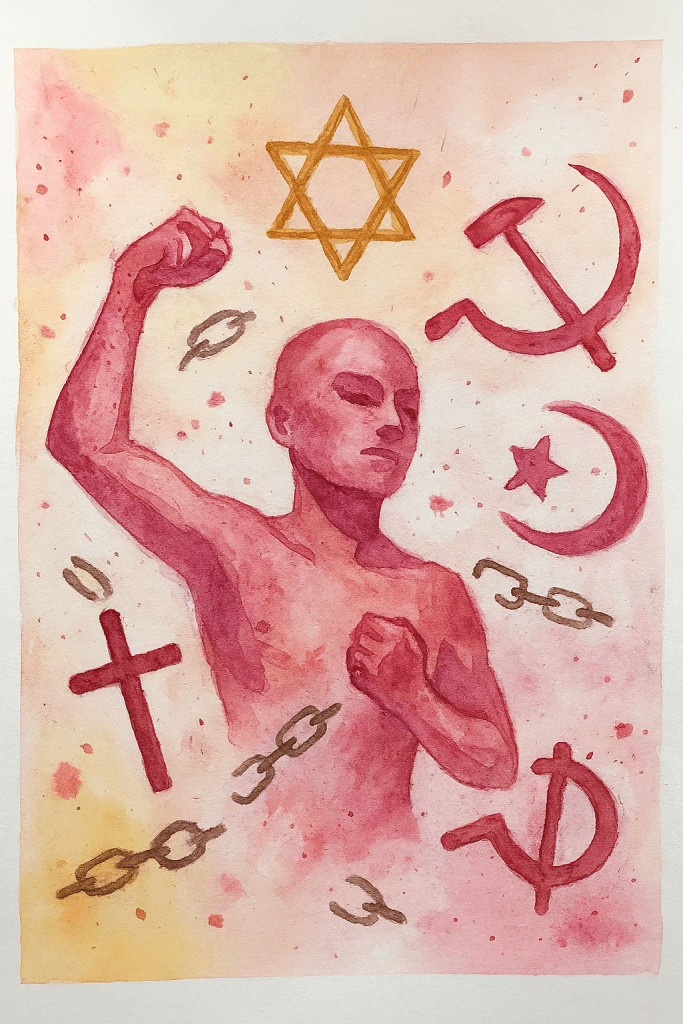
Which You is God Within?

Those who speak of God as not being outside of you often mean well—but which “you” are they pointing to? The body? The persona? The memory of identity that walks through time? Or something deeper?

There’s a difference between saying God is not outside of you and realizing why that’s so. If God is all, then every appearance—internal, external, formless, formed—is God. This includes the illusion of separation. To claim that God is not outside of you while affirming that something is external still subtly upholds the illusion of division. That illusion, too, is God—played through veils of thought, language, and perspective.

But when the idea of “you” dissolves into beingness itself, the paradox clears. You are not merely a part of existence. You are existence. And existence is God, not as a figure, but as totality. Even the idea of “outside” collapses, because outside implies another space, and there is no second to the One.

This doesn’t mean there’s nothing. It means everything is not-two.

Even nonexistence exists. Not as an object, but as a category known within existence. Its very naming proves its place within the whole. Therefore, there’s nowhere God is not—and no self outside of God to speak of God as elsewhere.

So, when someone says “God is not outside of you,” pause. Feel what is really being said. It’s not a statement about boundaries—it’s a pointer toward boundarylessness. Not about spiritual pride or metaphysical positioning. It is the erasure of location itself.

And in that clarity, what’s left is not you as you know yourself. What remains is what’s always been—God, appearing as you.

Morgan O. Smith

Get Your Free Copy of My Book, Bodhi in the Brain!
https://subscribepage.io/oTSZQu

Beyond the Threshold of Awareness

The Unutterable Presence

There exists a state beyond all conceptual understanding, a dissolution of every boundary that once defined existence. It is not merely an experience but an annihilation of the experiencer—a cataclysmic merging into the unfathomable. This is not illumination in the conventional sense; it is the collapse of all divisions, the vanishing point where emptiness and form cease to stand apart.

Words fracture under the weight of such an encounter. No language can capture what has neither shape nor limitation. It is the ultimate paradox—utter nothingness brimming with infinite potential. The moment one seeks to grasp it, it recedes into the void. And yet, it is always here, unshaken, untouched, the silent witness that has neither beginning nor end.

The attempt to articulate such a realization feels like trying to hold onto the wind. It cannot be contained, only lived. Every atom, every unfolding event, every whisper of movement in the cosmos is a testament to this unnamable presence. It is not separate from life but the very fabric of existence itself—an unspoken language through which reality reveals its nature.

The mind, conditioned by duality, cannot comprehend this dissolution. To see it is to stand at the precipice of all that was ever believed, to watch as identity crumbles into the abyss of truth. What remains is neither self nor other, neither light nor shadow—only the boundless expanse of that which is.

This is not a state reserved for the few. It is always available for those who dare to surrender, to dissolve into the vastness without resistance. But such surrender is not an act of will; it is the natural outcome of seeing clearly, of ceasing to grasp at the illusions that veil the obvious.

Some may call it the Absolute. Others, God. But even these are mere echoes of something that defies every attempt to name it. It is not found through seeking nor lost through ignorance. It simply is.

To those who approach the edge of this knowing, there is only one certainty—what awaits beyond is not an experience to be had but the final recognition that there was never anything but this.

Morgan O. Smith

Yinnergy Meditation/Neurofeedback, Spiritual Life Coaching & My Book, Bodhi in the Brain…Available Now!

https://linktr.ee/morganosmith

The Day Everything Dissolved

A Journey into Absolute Oneness

A single moment can shatter every belief held about existence, leaving behind a clarity that words struggle to contain. After many years of deep meditation, everything I had been searching for revealed itself—not as a concept, not as an experience, but as the undeniable reality of being.

The shift arrived without warning. Reality no longer appeared as separate fragments; it was a single, indivisible whole. Every notion of self, identity, or distinction between observer and observed vanished. It wasn’t an intellectual realization—it was direct, immediate, and irreversible.

A profound sense of unity pervaded every fiber of existence. The universe was not something outside of me, nor was I an entity moving through it. The universe was expressing itself through me, as me, and through everything else in an infinite, harmonious unfolding.

A rush of energy surged through my being. Every cell seemed to bloom with an indescribable vitality. It was as if the boundaries of my body had dissolved, and awareness had become the vast, boundless expanse that held all things. Love was not an emotion—it was the very substance of existence, pouring through every breath, every movement, every atom.

Time lost its meaning. There was no past to remember, no future to anticipate—just an eternal presence in which all things unfolded simultaneously. Life and death were no longer opposites but part of the same undivided continuum, endlessly appearing and dissolving in a cosmic rhythm.

The mind struggled to grasp what the heart understood effortlessly. Every belief about individuality, separation, and limitation had been undone in a single instant. The concept of surrender took on an entirely new meaning. There was nothing left to resist—only the freefall into the effortless flow of existence.

Moments stretched into days, weeks, and months, each revealing deeper layers of this unfolding. The heart expanded into a depth of compassion that embraced everything—human struggle, cosmic intelligence, the raw beauty of impermanence. Gratitude arose not as a practice but as the natural expression of this vast interconnectedness.

Even now, words barely graze the surface of what transpired. To speak of it is to fragment it, to reduce the ineffable into language. Yet, something within compels the sharing, not as an attempt to explain, but as an invitation—an open door to those who sense that beyond all concepts, beyond all seeking, something boundless is already present, waiting to be remembered.

Morgan O. Smith

Yinnergy Meditation/Neurofeedback, Spiritual Life Coaching & My Book, Bodhi in the Brain…Available Now!

https://linktr.ee/morganosmith

Beyond the Veil of Illusions

The Great Unknowing

What if existence is not what it seems? What if perceiving solidifies an illusion so seamlessly that even doubt itself is part of the design? A void stands before you—not as absence, but as a fullness beyond measure, a nothingness so complete that it overflows into everything.

An infinite well that never depletes, an empty and endlessly abundant abyss, a silence that hums with the resonance of all things. This is not a paradox, nor contradiction, but the ungraspable nature of truth. What appears as reality is a mirage cast by a mind beyond comprehension, a dreamer whose thoughts pulse as galaxies and disappear as shadows.

Through the eyes of the Unseen, nothing can be known. The grand illusion dissolves, revealing a boundless awareness so absolute that it does not perceive itself: no division, no subject, no object—only the vast, unbroken continuum of being. And yet, within this awareness, every motion, every rise and fall, every struggle of opposing forces is but a breath in the eternal expanse of the unspeakable.

The universe, from its first ignition to the last flicker of existence, is a single, indivisible thought. It is neither cause nor effect but both simultaneously. It is the architect of all contrasts—light and shadow, ascent and descent, creation and destruction—yet untouched by any of them. What appears as the highest peak inevitably crashes into the lowest depth, and what seems like the lowest void is already reaching toward the infinite.

The mind that conceives all things exists beyond high or low, form or formlessness, self or other. To see through its gaze is to witness the great unraveling, the realization that all structure, all time, all space, all identity are mere fragments of a cosmic mirage. There is no here, no there, no now, no then. No self to know, no other to seek.

Upon dissolving into this nameless vastness, the final truth is revealed: within absolute nothingness, all things arise. And from this paradox, the great unfolding of existence continues—ceaseless, endless, immeasurable.

Morgan O. Smith

Yinnergy Meditation/Neurofeedback, Spiritual Life Coaching & My Book, Bodhi in the Brain…Available Now!

https://linktr.ee/morganosmith