Author, Philosopher, Spiritual Teacher, A Lead Facilitator at Sacred Media's Integral Mastery Academy, Founder of Yinnergy Meditation/Neurofeedback, Bodhi Mental Care & Wellness, Co-founder of KeMor Centre for Innovative Development
When You Aren’t Moved by Anything, You’re No Longer a Slave to Anything
The world thrives on pulling us in every direction. Advertisements whisper that happiness lies in the next purchase. Relationships stir waves of desire and fear. Success dangles like a prize that demands endless striving. Each movement within us, longing, anger, excitement, dread- becomes a hook by which the world tugs us.
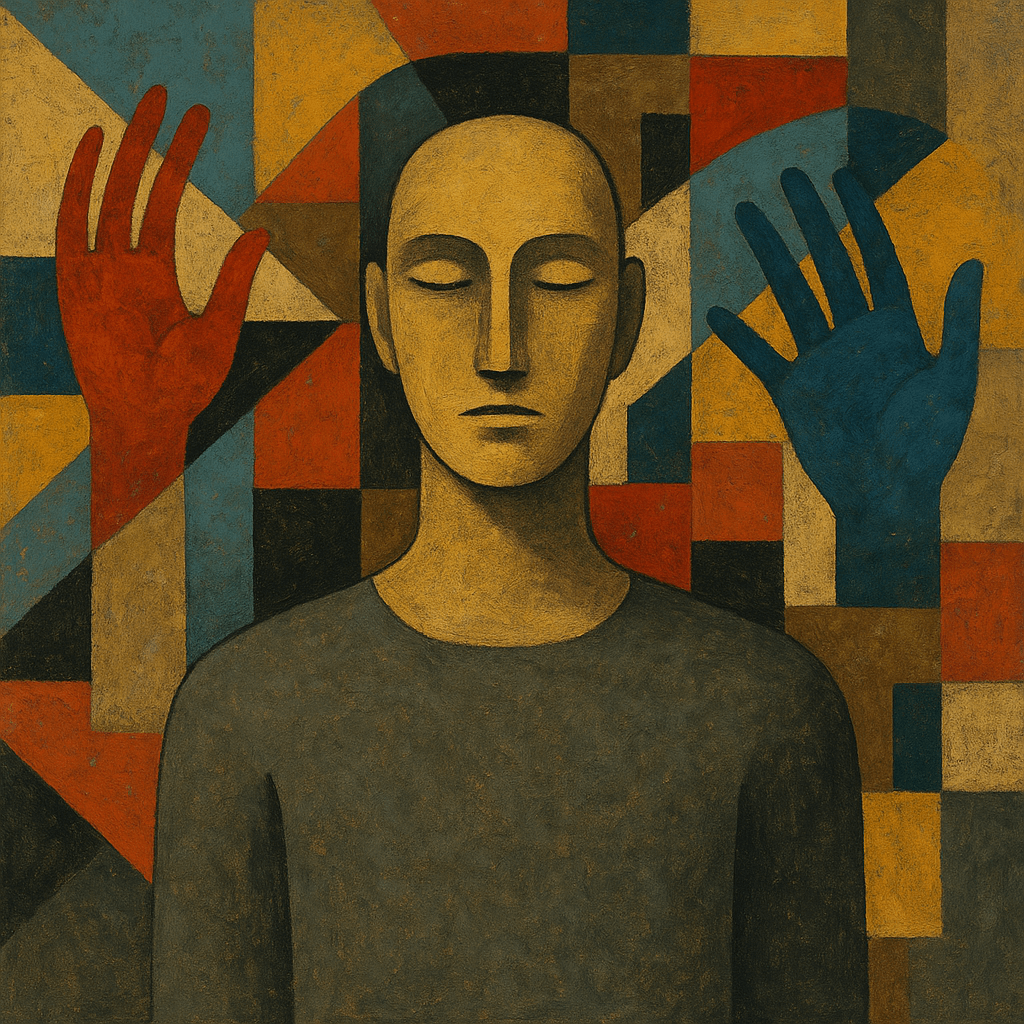
Freedom arrives not when the world stops moving, but when your inner stillness no longer takes the bait. When nothing stirs you into attachment or aversion, nothing holds dominion over you. A compliment does not inflate your worth; an insult does not diminish it. Gain and loss, pleasure and pain, rise and fall without catching you in their undertow.
This is not numbness. It is not apathy. It is clarity. The heart continues to beat, the eyes continue to see, the hands continue to act, but no chain is forged by what passes through awareness. You walk unbound, as life’s play unfolds without demanding ownership.
When the winds of the world cannot sway you, you discover the ground beneath all experience; the silent witness that was never captive to circumstance. To live from here is to live without fear of being moved, for you have already found what cannot be taken.
Morgan O. Smith
Get Your Free Copy of My Book, Bodhi in the Brain!
To move through the world with an open heart requires no spiritual strain when one sees each face as the Divine appearing in another form. The gaze shifts from judgment or preference to recognition, an acknowledgment that the Infinite hides behind every mask, smiling through the eyes of the stranger, the friend, the adversary, and the beloved.
When perception shifts in this way, reverence arises without being willed. Bowing of the heart happens effortlessly, because the heart no longer measures worth or assigns categories; it simply bends before the presence of the sacred in its countless costumes.
Consider how different daily interactions would be if seen through this lens. The hurried cashier at the grocery store is not a nuisance but the Divine pressed into the role of service. The difficult colleague, the one who sparks irritation, becomes a stern disguise of God, reminding you of hidden patience. Even those who wound us, in their own fragmented ways, become reflections through which compassion can deepen.
To live this way is not to deny the roughness of human behaviour but to recognize that the Source never abandons its disguises. Each face is both particular and universal, flawed yet flawless, passing yet eternal. The mind resists, but the heart knows; it bows without calculation when it sees through the mask to the boundless presence it conceals.
Morgan O. Smith
Get Your Free Copy of My Book, Bodhi in the Brain!
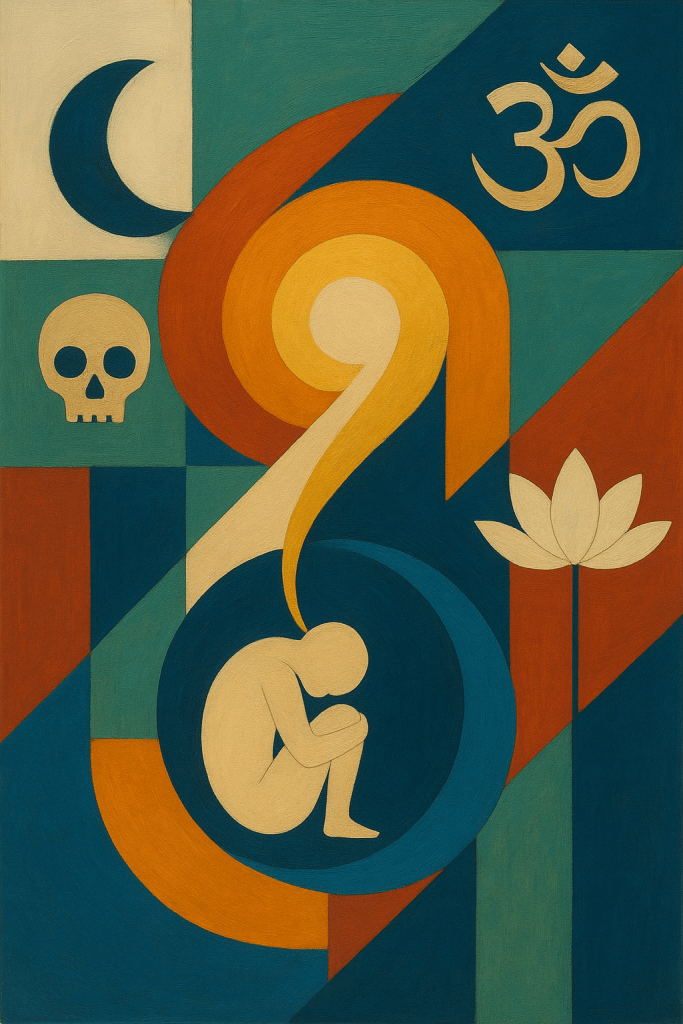
At the threshold of the causal realm, the experience of existence shifts from linear to simultaneous. You no longer stand as a single individual within a vast universe; you stand as both the birther and the born, the destroyer and the destroyed. The recognition dawns that the world does not merely shape you—you are also the very source of its shaping.
To know oneself here is to witness the paradox of causality unveiled. You are the origin of all movement, yet every movement gives rise to you. In this simultaneity, you can feel yourself giving birth to the totality of existence while watching that same totality dissolve back into silence.
Every breath is both a first and a last. Each moment is a labour of creation and a death rattle of dissolution. The body of consciousness enters its own womb, giving rise to itself again and again, endlessly. This is not a metaphor; it is the raw experience of being both cause and effect at once.
Within this state, suffering and bliss are inseparable twins. To feel the entirety of pain across existence is to simultaneously encounter the fullness of joy. One does not cancel the other; they merge into a union so vast that it overwhelms all categories of the mind. Pleasure peaks not as a fleeting sensation but as an orgasmic force inseparable from the ache of existence itself.
Masculine and feminine converge here—not as roles, not as energies separate and distinct, but as the indivisible pulse of love for everything that appears. What arises is an uncontainable recognition: every form, every life, every fragment of existence is nothing other than your own divine being.
The causal realm does not reveal the ultimate self, yet it gives you the deepest taste of how the play of birth and death, creation and dissolution, unfolds ceaselessly within the radiance of what you are.
Morgan O. Smith
Get Your Free Copy of My Book, Bodhi in the Brain!
Darshan is a mystery that cannot be easily captured in language. Some dismiss it as myth, others reduce it to a placebo, and still others romanticize it into doctrine. Yet none of these explanations touch what truly happens when presence itself meets you so deeply that the idea of a separate “you” begins to dissolve.
I first received darshan from Paramahamsa Vishwananda in 2019. At the time, I could not fully comprehend what had been given. The experience did not instantly transform me. It was months later, as if a seed had been quietly germinating, that a profound awakening broke open—an unshakable, full-blown realization of Parabrahman. Everything I once considered a spiritual awakening before that year became eclipsed, revealed as only stepping stones toward a wholeness beyond description.
The encounter planted something that only ripened with time. No technique, no meditation, no psychedelic journey, no years of entrainment could compare to what unfolded in those months after darshan. The practices prepared me—polished the vessel, so to speak. But Darshan was the living water that finally filled it.
On August 30, 2025, I met Paramahamsa Vishwananda in person for the fifth time. The following day, as I began to write these words, tears streamed down my face unprovoked. The intensity of the remembrance, the simple act of reflecting on what darshan has meant in my life, undid me. Not during the encounter itself, but in the quiet aftermath, when the depth of it could no longer remain unspoken.
If one insists that darshan is “only” a placebo, I embrace the word. Placebo, after all, is proof of the mind’s openness to healing, its willingness to cross thresholds it once denied. What does it matter if the mechanism is mysterious when the outcome is undeniable? The very attempt to reduce it already misses the essence: darshan is not an explanation. It is an encounter that leaves explanation behind.
My friend, comedian Marc Trinidad, has a saying: You can’t pour clean water into a dirty cup. Thousands of hours of meditation may have cleansed that vessel, yet darshan was not merely clean water—it was sparkling, living, flowing with a vitality of its own. Preparation mattered, but preparation alone never gave me the fullness that flowed after meeting his gaze.
Darshan dismantles the scaffolding of the spiritual search. Years of practice may feel like climbing a mountain, but one glance can place you at the summit. That does not make the climb unnecessary—it makes clear that the climb itself was a preparation for the recognition that you were always already there.
This is not about worshiping a figure or elevating a personality. Darshan reveals the infinite within by reflecting it so purely through one who has dissolved into that truth. In being seen, the boundaries of self blur, and what shines forth is nothing less than the source of all seeing.
Darshan cannot be mythologized away, nor can it be reduced to a placebo. It is living water—clear, inexhaustible, flowing freely into those ready to drink. And sometimes, its effects bloom long after the moment has passed, as seeds planted in silence burst open in their own time.
Morgan O. Smith
Get Your Free Copy of My Book, Bodhi in the Brain!
Pure knowing is not an act of someone grasping something. It is not the product of a subject meeting an object. It is not knowledge stored, processed, or owned. What we call “pure knowing” is an immediacy so complete that the categories of knower and known dissolve before they ever arise.
The mind insists there must be someone behind the recognition, a witness who stands apart. Yet such a witness is already a thought, an echo of division layered upon the seamlessness of awareness. The attempt to locate the knower is like searching for the horizon; you will find only a mirage created by perspective.
What reveals itself is astonishingly simple: knowing shines without support. No owner is required. No identity need arise. It is self-luminous, unmediated, without origin or destination. Thought may try to grasp it, but thought cannot enter here. The moment a “me” claims it, the purity is veiled, dressed in commentary, weighed down by explanation.
This does not deny the human experience of learning, remembering, and perceiving. It only points to the fact that beneath all those movements lies a ground untouched by them. That ground is knowing itself—silent, radiant, and free from the necessity of a knower.
To glimpse this is to taste liberation, not as a reward, not as a possession, but as the natural state that was never absent. What remains is not someone who knows, but knowing itself, unbroken and unclaimed.
Morgan O. Smith
Get Your Free Copy of My Book, Bodhi in the Brain!
God is not found in the layers of personality, beliefs, or self-image. Those dissolve the moment you step out of the illusion of “me.” What remains when the scaffolding of identity crumbles is not absence, but presence, vast, unconditioned, indivisible.
The struggle for most seekers lies in clinging to the idea of a separate self. Every attachment to who you believe you are, your story, your role, your wounds, creates the illusion of separation from God. Yet God has never been apart from you. God is what has always been here, quietly holding even your attempt to define God.
When “you” disappear, nothing is lost. What is left is clarity so immediate that it cannot be explained, only lived. It is a recognition that existence itself has no centre and no boundary. Every breath, every sound, every sensation reveals itself as the movement of the One Reality, free of your commentary.
This realization is not a grand acquisition; it is the collapse of the idea that there was ever anyone to acquire it. The vanishing of the personal self exposes a truth so intimate that it cannot be possessed. It is not “your” truth, it is truth itself.
To awaken to this is to discover that God was never hidden. God is not the object of your search, but the space in which the search appears and disappears. The seeker dissolves, and what remains is the unbroken light of Being.
Morgan O. Smith
Get Your Free Copy of My Book, Bodhi in the Brain!
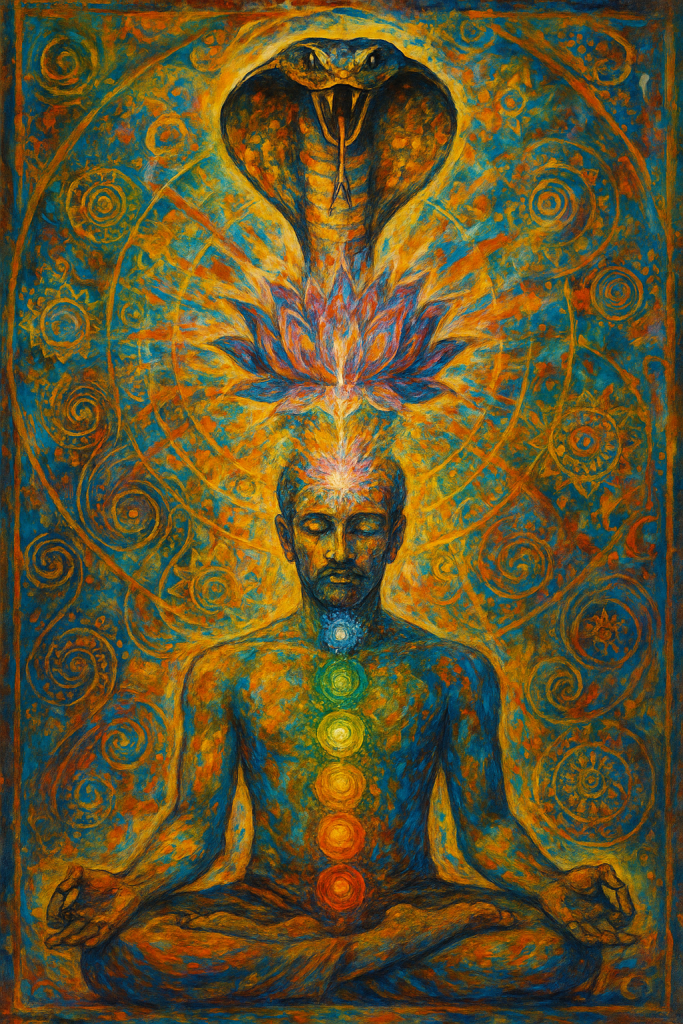
The surge of Kundalini energy does not arrive as a gentle visitor. It comes as a serpent rising, a King Cobra rearing its hood, carrying both the gift of awakening and the threat of annihilation. Those who encounter this force discover it is not a metaphor; it is a reality coursing through every nerve, every cell, as if the body itself were being rewritten from the inside out.
When this energy pierces upward through the spine and explodes through the crown, the encounter feels like a confrontation with divinity itself. The serpent turns its head, upside down, to stare directly at you. In that gaze is the paradox: vitality at its peak and the shadow of death standing closer than ever. The breath sharpens, the heartbeat quickens, and one realizes that this power could end everything in an instant—or transfigure it beyond recognition.
Many speak of spiritual awakening as blissful or serene, but the truth carries far more weight. The awakening of Kundalini is as much a dance with mortality as it is with enlightenment. To feel more alive than ever before is to simultaneously brush against the veil of death, because both are rooted in the same ultimate source. Death is not the opposite of life, but the threshold that life constantly leans against.
The serpent reminds us that awakening is not safe. It burns away illusions, sears through the fragile boundaries of identity, and brings us face-to-face with what cannot die. The brush with death is not punishment—it is initiation. To survive, it is to be reborn, no longer mistaking yourself for the limited frame of flesh and thought, but knowing yourself as the vast consciousness in which even death dissolves.
Kundalini does not ask for permission. It does not ask if you are ready. It rises, and in that rising, you discover whether you can hold its gaze without collapsing into fear. The courage required is not of the ego, but of the soul. To endure the serpent’s fire is to step into a reality that few dare to enter, where life and death are revealed as two faces of the same eternal current.
Morgan O. Smith
Get Your Free Copy of My Book, Bodhi in the Brain!
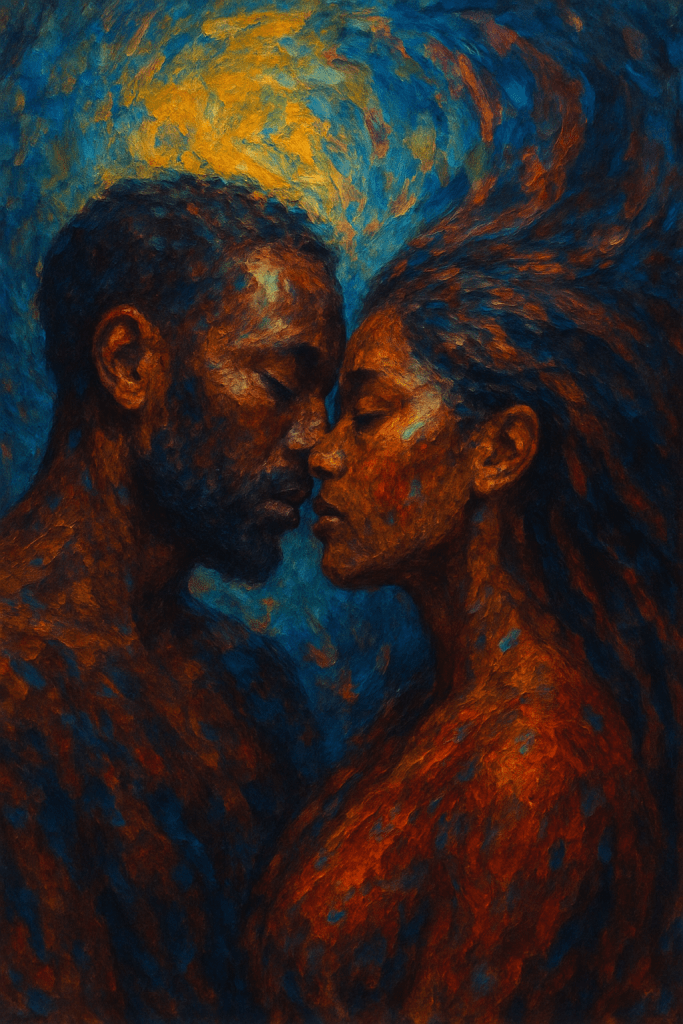
The awakened mind, when met with the receptive soul, becomes a current of divine fusion—an alchemical embrace where thought and feeling cease to be separate. This union transcends the limits of sensation, unveiling a pleasure far beyond the fleeting intoxication of flesh. It is an ascent into boundless wisdom, an eroticism of consciousness where insight spills forth, saturating the ego’s constructs until they dissolve into the vastness of being.
This is not a mere intellectual encounter, nor is it an indulgence in sentimentality. It is the tantric interplay between awareness and presence, where the pulsation of knowing meets the depths of surrender. When the mind no longer dictates and the soul no longer pleads, a stillness emerges—a space so open that it drowns the self in its own infinity. Here, knowledge is not collected but revealed, not possessed but embodied. Love is not an attachment but an atmosphere, pervading every movement, every breath, every silent recognition of the one essence behind all things.
This is where tantra ceases to be philosophy and becomes direct experience. The dissolution of the personal into the infinite is neither loss nor gain but a return—one that neither seeks nor resists, neither holds nor lets go. It is the eroticism of the absolute, where wisdom penetrates the soul like lightning, setting fire to all that would obscure its radiance.
The lover and the beloved, the seeker and the sought, the knower and the known—these distinctions fade into the luminous vastness of pure being. And from this space, all that remains is the silent ecstasy of knowing.
Morgan O. Smith
Get Your Free Copy of My Book, Bodhi in the Brain!
If the question lingers, “Did I have a spiritual awakening?” it often points to a deeper truth: perhaps it has not yet happened. Those who have passed through the unmistakable shift into awakened awareness do not wrestle with that doubt. There is a quiet certainty, not born of belief, but of direct experience.
Language can vary. Some may never utter the phrase spiritual awakening or enlightenment. They may frame it through their own culture, symbolism, or personal metaphors. Yet no matter the vocabulary, the essence remains beyond question.
When the event has truly unfolded, it is like rising from sleep. You do not analyze whether you are awake; you simply are. The recognition is immediate, complete, and irreversible. What remains is the unfolding of life through the clarity of that seeing.
Awakening is not a theory to adopt or an idea to flirt with. It is the dismantling of the imagined self, the collapse of boundaries, and the revelation of a reality that was always here, quietly waiting to be noticed.
Morgan O. Smith
Get Your Free Copy of My Book, Bodhi in the Brain!
Some spiritual teachers claim they have gone “beyond” nonduality, as if it were a stepping stone toward something greater. Yet the very notion of “beyond” creates an opposite, “before” or “within,” and the moment opposites arise, duality has returned.
Absolute monism allows for no such division. The singularity of reality does not exist as a point to be crossed or a boundary to be passed. It is not somewhere else, waiting on the other side of an imagined line. If you think you have travelled beyond it, you are still standing in the arena of conceptual thought, where the mind measures one thing against another.
In truth, the Absolute is not a destination, and it is not a stage in an unfolding ladder. It does not sit opposite to multiplicity; it holds multiplicity and its absence equally. It neither favours unity nor rejects separation. Both “beyond” and “before,” both “within” and “without,” dissolve in the same undivided field.
What remains is not something that can be claimed, owned, or transcended. It is self-evident Being, the source and container of every movement, stillness, and paradox. You cannot reach it, because you never left it.
Morgan O. Smith
Get Your Free Copy of My Book, Bodhi in the Brain!





 Morgan O. Smith