The Dawn of Inner Illumination

Embracing the Light Within

In the depths of our being, there lies a profound revelation, akin to the experience of witnessing the first rays of dawn after a long night. This awakening is not just a mere encounter with light; it is the realization that you are that very light, cradled in the embrace of darkness, which is also an integral part of your essence.

Imagine living in a realm of perpetual twilight, where the distinction between light and darkness blurs, creating a harmonious coexistence. This is the realm of our inner world, where we discover that light and darkness are not adversaries but complementary forces. In the heart of this realization, we find that our true nature transcends these dualities.

The journey towards this awakening begins with a simple, yet profound question: Who am I? This inquiry, deeply rooted in the wisdom of Eastern philosophy, is not a quest for a label or a definition. Instead, it is an exploration of the essence of being. As we delve deeper, we peel away the layers of conditioned thoughts and societal constructs, arriving at the core of our existence.
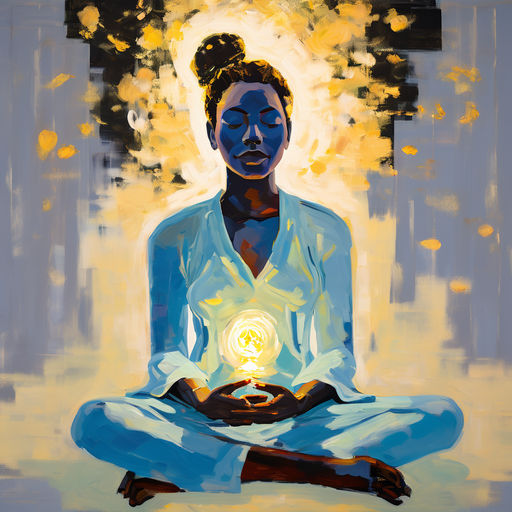

In this core, we discover that we are the silent observers, the light of consciousness, witnessing the dance of life. This light does not falter; it remains constant, illuminating our experiences, thoughts, and emotions. Yet, it is untouched by them, just as the sun is untouched by the activities it lights up.

This realization brings a profound sense of freedom. We are no longer bound by our limitations of ourselves. We are the vastness that encompasses all things, the eternal light shining in the heart of darkness. This is the essence of absolute monism – the understanding that all is one and that one is all.

But this awakening is not the end. It is the beginning of a new journey. A journey of living in the light of this truth, of embodying this understanding in every aspect of our lives. It is about finding the balance between being and becoming, between stillness and movement, and between the light and the darkness within.


As we embrace this light within, we become beacons for others on their paths. We inspire, guide, and uplift, not by words alone, but by the very essence of our being. Our lives become a testament to the truth that in the heart of darkness lies the most radiant light.

Morgan O. Smith

Yinnergy Meditation, Spiritual Life Coaching & My Book, Bodhi in the Brain…Available Now!

https://linktr.ee/morganosmith

Celebrating Black History Month

A Journey Beyond the Shadows of Misconceptions

As we embrace the profound significance of Black History Month, we find ourselves at the confluence of reflection and aspiration, a moment to honour the rich heritage and indomitable spirit of the Black community while confronting the shadows cast by historical misconceptions. Among these are the misinterpretations within various religious traditions that have mistakenly associated Black identity with curses or lesser status. This post seeks to illuminate the path toward spiritual enlightenment, transcending beyond these archaic beliefs to a place of unity and universal respect.

#### Christianity, Judaism, and the Misunderstood “Curse of Ham”

Within both Christian and Jewish histories, the narrative of Ham’s curse has been misconstrued to justify racial discrimination. However, a closer examination reveals that this interpretation bears no weight in the sacred texts themselves. When understood in their essence, these texts speak to the inherent dignity of every human being, irrespective of colour or creed.

#### The Teachings of Joseph Smith in Mormonism

Mormonism, through the lens of Joseph Smith’s teachings, has faced scrutiny regarding statements on race. It’s vital to recognize the evolutionary journey of religious communities toward greater inclusivity and understanding. The Latter-day Saints have openly repudiated past racial restrictions, moving towards a more inclusive faith community that acknowledges the divine in every individual.


#### The Mark of Cain and Its Misinterpretations

The “Mark of Cain” has similarly been misapplied as a rationale for racial discrimination. Yet, within the broader Christian and Jewish theological context, this mark is not about race but rather God’s protection. It serves as a reminder that divine judgment belongs to the divine alone, urging us to forsake judgment and embrace compassion.

#### Hinduism’s Caste System and the Quest for Dharma

Hinduism’s caste system, often misrepresented as a racial hierarchy, is fundamentally a social structure misunderstood by many. The essence of Hindu dharma speaks to a cosmic law of righteousness and duty that transcends social divisions, advocating for a society where all individuals are valued for their unique contributions to collective harmony.

#### Transcending Misconceptions: The Spiritual Enlightenment

As we journey through Black History Month, let us anchor ourselves in the wisdom that true spiritual enlightenment transcends all forms of division, recognizing the divine spark within every individual. This enlightenment beckons us to see beyond the superficial differences that have historically divided us, encouraging a collective movement toward understanding, respect, and unity.

In debunking these misconceptions, we honour the spirit of Black History Month and contribute to a world where spirituality and human dignity flourish unbounded by the chains of past misunderstandings. Let this month be a catalyst for change, a time when we reaffirm our commitment to a world where every soul is recognized for its infinite worth and potential.


#### In Conclusion

Black History Month offers us a sacred opportunity to reflect on our spiritual journeys and the universal quest for enlightenment. By challenging and transcending outdated beliefs, we pave the way for a future where spirituality unites rather than divides, celebrating the diversity that enriches our collective human experience.

Morgan O. Smith

Yinnergy Meditation, Spiritual Life Coaching & My Book, Bodhi in the Brain…Available Now!

https://linktr.ee/morganosmith

Ol Doinyo Laetoli le Baaba

Illuminating the Spiritual Legacy of Ol Doinyo Laetoli le Baaba during Black History Month

In the reflective observance of Black History Month, we embark on a journey that transcends the mere recounting of historical achievements, steering us toward the profound realms where spirituality and cultural heritage intersect. The narrative of Black history is incomplete without honouring the luminaries who have sculpted the spiritual landscape of our times. Among these influential figures, the late Ol Doinyo Laetoli le Baaba stands as a beacon of spiritual enlightenment, whose contributions extend far beyond the conventional boundaries of recognition.

Ol Doinyo Laetoli le Baaba, a sage of our era, infused the spiritual discourse with a rich infusion of wisdom drawn from the depths of African spirituality. His teachings, resonating with the essence of interconnectedness, invite us into a realm where the self is not an isolated entity but a part of the vast continuum of existence. This perspective offers a refreshing contrast to the often individualistic narratives prevalent in mainstream spirituality, urging us to rediscover our bonds with nature, community, and the ancestral wisdom that shapes our collective consciousness.

Celebrating Black History Month provides a poignant moment to reflect on how Ol Doinyo Laetoli le Baaba’s legacy enriches our understanding of spirituality. His work exemplifies how the exploration of spiritual depths can be a source of empowerment, resilience, and liberation. In a world fraught with division and superficiality, his teachings serve as a reminder of the power of spiritual unity and the importance of anchoring our lives in values that foster community well-being and harmony with the cosmos.

Moreover, Ol Doinyo Laetoli le Baaba’s contributions challenge us to broaden our spiritual horizons, encouraging an inclusive approach that honours diverse paths to enlightenment. This inclusivity is crucial in our quest for a more compassionate and understanding world, where spirituality becomes a bridge connecting diverse cultures and traditions.

As we celebrate Black History Month, let us honour Ol Doinyo Laetoli le Baaba by embracing his vision of a spiritually awakened society, where the wisdom of all cultures is recognized as integral to our collective journey toward enlightenment. Let his legacy inspire us to delve deeper into the spiritual philosophies that have nurtured resilience and hope in the face of adversity, and to recommit ourselves to the path of spiritual growth and communal upliftment.

In remembering Ol Doinyo Laetoli le Baaba, we are reminded of the vast spiritual wealth embedded in the history and heritage of Black communities. His life and teachings stand as a testament to the enduring strength and beauty of African spirituality, offering a wellspring of inspiration for all who seek to traverse the path of spiritual awakening with authenticity and grace.

Morgan O. Smith

Yinnergy Meditation, Spiritual Life Coaching & My Book, Bodhi in the Brain…Available Now!

https://linktr.ee/morganosmith

The Cosmic Symphony of Black History

Melanin, Mind, and the Universe

February’s arrival ushers in Black History Month, a time traditionally dedicated to recognizing the achievements and struggles of the African diaspora. However, from an awakened, and Cosmo-centric perspective, this month invites us to delve deeper into the essence of existence and our interconnectedness with the cosmos. Through this lens, Black History Month transcends conventional celebration, guiding us to explore the profound implications of melanin, neuromelanin, and the cosmic mysteries they link us to.

At the heart of this exploration is melanin, a pigment found not only in human skin but also in many aspects of the natural world. Melanin’s presence in the universe is a testament to its significance in the tapestry of life. From the protective hues of Mother Nature’s flora and fauna to the adaptive features of human beings across different climates, melanin speaks to the adaptive, creative force of the cosmos. It’s a reminder that diversity in form and function is a fundamental cosmic principle.

In the human body, neuromelanin plays a crucial role in the brain and nervous system, hinting at the intricate relationship between physicality and consciousness. This pigment within the brain is a frontier of mystery, potentially holding keys to understanding consciousness, intuition, and the profound spiritual capacities of human beings. As we celebrate Black History Month from a Cosmo-centric viewpoint, we recognize neuromelanin not merely as a biological attribute but as a symbol of the profound connection between the cosmos’s dark matter and the inner cosmos of human consciousness.


The greatest mystery, however, lies within the human brain, a universe unto itself. Here, the conversation extends to the nervous system, nadis, and chakras—concepts found in Eastern philosophies that describe the energy pathways and centers within the body. These systems are believed to connect the physical body to the spiritual, serving as conduits for cosmic energy. The presence of neuromelanin in these areas invites a reevaluation of its spiritual significance, suggesting a deeper, possibly cosmic connection that influences spiritual awareness and potential.

Furthermore, the parallel between the dark pigments that colour our existence and the dark matter and dark energy that compose the universe is striking. Just as dark matter and dark energy are invisible forces that hold the cosmos together, melanin and neuromelanin represent unseen yet powerful connections between the universe and our inner selves. This analogy invites us to consider the cosmic importance of Black history and culture, not as isolated phenomena but as integral components of the universal story.

Black History Month, from a Cosmo-centric perspective, becomes an opportunity to honour and explore these connections. It’s a time to reflect on how melanin and neuromelanin symbolize the deep, mysterious bonds between our physical existence and the spiritual, cosmic reality that surrounds us. This celebration is an invitation to acknowledge the African diaspora’s contributions not only to human history but to the cosmic symphony of existence.


As we honour this month, let us do so with a consciousness that reaches beyond the surface, recognizing the profound implications of our interconnectedness with the universe. Let us celebrate the melanin that colours our world, the neuromelanin that connects us to the cosmos, and the cultural and spiritual richness of Black history as essential threads in the fabric of the universe.

Morgan O. Smith

Yinnergy Meditation, Spiritual Life Coaching & My Book, Bodhi in the Brain…Available Now!

https://linktr.ee/morganosmith

The Paradox of Creation and Spiritual Enlightenment

In the realm of existence, there lies a profound mystery: the relationship between a creation and its creator. This enigma is deeply rooted in the concept of spiritual enlightenment, a state of awakening to a higher understanding beyond the tangible and the temporal.

Consider this: everything within our grasp, every entity, every idea, has a beginning and an end. This cycle of birth and cessation is a fundamental truth that frames our understanding of the world. However, this perspective is inherently limited, confined within the boundaries of our ‘lower state of being.’ In this state, our comprehension is restricted to the linear progression of time and the finite nature of existence.

But what if there exists a realm beyond this? A realm where the linear confines of time and space do not bind existence? This is where the notion of spiritual enlightenment comes into play. Spiritual enlightenment can be seen as an awakening, a transcendental realization that elevates one’s understanding beyond the mundane, the impermanent, and the transient.


In this awakened state, the traditional boundaries that separate a creation from its creator begin to blur. The creation, which once viewed its creator as an unfathomable entity, starts to grasp the essence of the creator. This essence is not bound by the limitations of time or space; it transcends the dichotomy of beginning and end.

However, this journey towards understanding the creator is paradoxical. The very nature of enlightenment lies in embracing the unknown, in accepting that there are realms of existence and consciousness that are beyond our current comprehension. It’s about acknowledging that in our quest for understanding, we might never fully grasp the entirety of the creator’s essence. The trick, therefore, lies in the art of ‘not knowing.’

In this acceptance of not knowing, we find a peculiar form of wisdom. It is a wisdom that recognizes the limitations of our perception and humbly accepts the vastness of the unknown. It is in this space of humble acknowledgment that we inch closer to understanding the true nature of the creator.


In essence, the path to spiritual enlightenment is not about seeking definite answers or absolute truths. It is about the journey towards understanding, a journey that acknowledges the beauty in the unknown and finds peace in the unanswerable questions of existence.

Morgan O. Smith

Yinnergy Meditation, Spiritual Life Coaching & My Book, Bodhi in the Brain…Available Now!

https://linktr.ee/morganosmith

The Parrot Syndrome

Echoing Beliefs vs. Experiencing Truth

In a world inundated with information, “The Parrot Syndrome” has become increasingly prevalent, especially in the realm of spiritual enlightenment. This syndrome refers to the tendency to repeat information regarding spiritual enlightenment without genuinely experiencing or understanding it. It raises a crucial question: can true wisdom be imparted through mere repetition of beliefs, or does it necessitate direct, personal experience?

#### The Echo Chamber of Beliefs

The Parrot Syndrome manifests predominantly in spiritual circles where teachings are often passed down from one individual to another without critical examination or personal introspection. Teachers, motivated by a genuine desire to spread wisdom, might inadvertently become mere conduits for these teachings, echoing the beliefs of others rather than sharing insights from their journey. This second-hand knowledge, while it can be informative, often lacks the depth and transformative power of firsthand experience.


#### The Depth of Direct Experience

Contrastingly, spiritual enlightenment that stems from direct experience carries a different quality. It is not just understood intellectually but felt deeply and integrated into one’s being. This experiential wisdom is often more relatable and impactful because it comes from a place of authenticity and personal transformation. It transcends theoretical knowledge and enters the realm of lived truth.

#### The Path to Authentic Understanding


Breaking free from the Parrot Syndrome involves a shift from passive reception of information to active, experiential learning. It requires questioning, exploring, and most importantly, experiencing. When teachers and seekers alike embark on a journey of personal discovery, the wisdom they share is not just borrowed but born out of their life experiences and realizations. This authenticity not only enriches their spiritual journey but also inspires others to seek their truth.


#### Embracing a New Paradigm

As we move forward, spiritual communities need to foster environments where experiential learning is valued over rote repetition. Encouraging personal exploration and valuing diverse experiences over uniform doctrine can lead to a more profound and inclusive understanding of spiritual truths.

#### Conclusion


The Parrot Syndrome, while a common pitfall in the pursuit of spiritual enlightenment, also offers an opportunity for deeper, more authentic engagement with spiritual truths. By prioritizing personal experience over second-hand knowledge, we open the door to a more genuine and transformative understanding of spirituality.

Morgan O. Smith

Yinnergy Meditation, Spiritual Life Coaching & My Book, Bodhi in the Brain…Available Now!

https://linktr.ee/morganosmith

Unveiling Reality

The Journey from Illusion to Truth

In our journey through life, we often come across what we call “illusions.” These are perceptions or beliefs that appear to be real but are not. However, the most profound realization is that these illusions are not mere deceptions; they are, in fact, Truth in disguise.

### The Nature of Illusion

An illusion, by its very nature, is something that deceives the senses or mind. It’s like a mirage in the desert – you see water, but as you approach, it vanishes, leaving you in the stark reality of the desert heat. Similarly, in life, we encounter situations that seem to be one thing but turn out to be another.

But here’s where it gets interesting. These illusions are not just errors or misperceptions. They are gateways to a deeper understanding of reality. When we delve into the nature of an illusion, we begin to uncover the layers of truth that it conceals.

### The Grand Illusion

The concept of the “Grand Illusion” takes this idea a step further. It suggests that our entire perception of reality might be an illusion. This is a theme explored in various philosophical and spiritual traditions. In Hinduism, for instance, Maya is the illusion that veils the true nature of the universe. In Western philosophy, Plato’s allegory of the cave talks about shadows on a wall that we take for reality.

The Grand Illusion is not just a deception; it is a representation of the ultimate truth, albeit in a form that we can’t immediately recognize. This truth is not something that can be easily explained or understood through conventional means. It is something that must be experienced and felt.

### Unveiling the Truth

So, how do we unveil the truth hidden behind these illusions? It begins with questioning our perceptions and beliefs. We need to look beyond what is immediately visible and ask ourselves what lies beneath. This process of inquiry and introspection leads us to a more profound understanding of ourselves and the world around us.

As we peel back the layers of illusion, we start to see the truth in its purest form. This truth might not be comfortable or easy to accept, but it is liberating. It frees us from the confines of our limited perceptions and opens us up to a universe of possibilities.


### Conclusion

The journey from illusion to truth is not a straightforward path. It’s a winding road filled with challenges and revelations. But it is a journey worth taking. For in understanding the Grand Illusion, we come closer to understanding the true nature of our existence and the universe we inhabit.

Morgan O. Smith

Yinnergy Meditation, Spiritual Life Coaching & My Book, Bodhi in the Brain…Available Now!

https://linktr.ee/morganosmith

Understanding Spiritual Enlightenment and Nirvana

A Journey Beyond Words

The quest for spiritual enlightenment is a journey that transcends mere words and enters the realm of profound inner transformation. In the West, enlightenment is often equated with a comprehensive understanding of one’s true nature. This interpretation focuses on the illumination of the self, its intricacies, and its connection to the larger universe. It’s a state of comprehension, where the veils of ignorance are lifted, revealing the true essence of being.

In Eastern traditions, particularly Buddhism and Advaita Vedanta, enlightenment takes on a different hue. Here, it’s synonymous with Nirvana or Moksha – the liberation from the endless cycle of birth, death, and rebirth, known as samsara. This liberation is not just an intellectual understanding but a profound realization that leads to the dissolution of the self. In Buddhism, this is conceptualized as Anatta or no-self, a realization that the self is an illusion and liberation lies in transcending it.


Similarly, in Hinduism, Moksha aligns with the concept of Brahman – the ultimate reality or universal self. While seemingly different, both Nirvana and Moksha converge on the same endpoint: liberation from all forms of suffering and the cycle of samsara.

However, there’s a subtle yet significant distinction to be made. One can achieve spiritual enlightenment – a deep comprehension of their nature and the nature of reality – yet still be bound by the chains of samsara. It’s a state of awakening, an important step on the path, but not the culmination. True liberation, as seen in the concepts of Nirvana and Moksha, involves not just comprehension but also a complete surrendering of the self, a realization of its illusory nature, and ultimately, liberation from the cycle of existence.


Thus, while spiritual enlightenment and Nirvana (or Moksha) are often used interchangeably, their meanings diverge significantly based on cultural and philosophical contexts. In the West, enlightenment is primarily about understanding, while in Eastern philosophies, it’s about liberation. Only when the facets of comprehension, surrendering, realization, and liberation are all present can we step beyond spiritual awakening into the realm of true spiritual enlightenment.

Morgan O. Smith

Yinnergy Meditation, Spiritual Life Coaching & My Book, Bodhi in the Brain…Available Now!

https://linktr.ee/morganosmith

The Souvenir of Spiritual Enlightenment

Beyond the Peak Experience

In the realm of spiritual enlightenment, there lies an experience so profound and transformative that it often defies description. It’s a peak experience, a moment of nondual awareness where the sense of self merges with the universe, transcending the usual barriers of the ego and the mind. Those who attain this state describe it as a moment of absolute clarity, an encounter with the true essence of being. But what happens after this peak experience? How does one integrate this transformative moment into the fabric of everyday life?

The answer lies in the concept of the ‘souvenir’ of spiritual enlightenment. This souvenir is not a physical object, but a subtle, yet profound change within the individual. It’s the lingering essence of the experience, a change in perception and understanding that remains long after the peak moment has passed. This souvenir is a reminder, a glimpse of the infinite that we carry back into our ordinary lives.


This souvenir manifests in various forms. It might be a deepened sense of peace, a newfound ease in dealing with life’s challenges, or a pervasive feeling of connectedness with all things. For some, it’s a shift in values and priorities, leading to a life more aligned with inner truth and compassion. For others, it’s an ongoing journey of self-realization and growth, a path that continuously unfolds with each new insight and understanding.

The phenomenon of spiritual enlightenment itself is vast and incomprehensible, which cannot be fully grasped or retained by the finite human mind. In this light, the souvenir we bring back is not the entirety of the experience, but a fragment, a taste of the infinite that changes us in subtle and profound ways.


To integrate this souvenir into daily life requires patience, awareness, and a willingness to continue the inner journey. It’s about maintaining an openness to the lessons and insights from this transformative experience. It involves embracing the present moment, living with mindfulness and heart, and allowing the essence of the experience to guide and inform our actions and choices.

In conclusion, the nondual peak experience of spiritual enlightenment is a transformative journey that leaves us with a lasting souvenir. This souvenir, though a mere fragment of the vastness of the experience, has the power to profoundly alter our perception, guiding us towards a life of greater awareness, compassion, and connection. As we navigate the complexities of life, this souvenir becomes a beacon, illuminating our path and reminding us of the deeper truths of our existence.

Morgan O. Smith

Yinnergy Meditation, Spiritual Life Coaching & My Book, Bodhi in the Brain…Available Now!

https://linktr.ee/morganosmith

Snow as Sand

The Sahaja Perspective on Finding Paradise in the Everyday

In our spiritual journey, the quest for enlightenment often leads us down paths of deep contemplation and profound realizations. One such metaphor that encapsulates this journey is the concept of seeing snow from a blizzard as sand from a tropical paradise, a core principle of Sahaja, an ancient philosophy rooted in the pursuit of natural simplicity and spontaneous spiritual awareness.

Sahaja teaches us that the world around us, often perceived through the lenses of our preconceived notions and cultural conditioning, holds a deeper, more intrinsic beauty that is akin to paradise. This metaphor, seeing snow as sand, is not about the physical transformation of elements but a radical shift in perception. Just as snow and sand are vastly different in their physical properties, they can represent the dualities of our life experiences – cold and warm, transient and permanent, harsh and soft. However, Sahaja invites us to look beyond these dualities and see the underlying essence, which is pure, unchanging, and blissful.


This transformative perception is not an overnight occurrence but a gradual awakening. As we embark on our spiritual quest, we learn to peel away the layers of our conditioned views, much like shedding winter clothes to feel the warmth of the sun on our skin. The snow, with its cold and aloof nature, symbolizes the challenges and hardships we face in life. In contrast, sand, warm and inviting, represents the ultimate state of contentment and joy. Through Sahaja, we learn to embrace both with equanimity, understanding that paradise is not a distant land to be reached but a state of mind to be realized.

In essence, the philosophy of Sahaja teaches us that paradise is all around us, waiting to be discovered in the mundane, the ordinary, and even in the challenges. It is in the laughter of a child, the quietude of a snowy night, the resilience of a blooming flower in the desert, and the vastness of a starlit sky. It reminds us that every moment is an opportunity to experience the divine, to see the extraordinary in the ordinary.


As we journey through life, let us remember that the snow is also sand, and in every grain of our experiences, paradise awaits. This realization is the essence of Sahaja – seeing the world not as it appears, but as it truly is, an endless expanse of beauty, joy, and peace.

Morgan O. Smith

Yinnergy Meditation, Spiritual Life Coaching & My Book, Bodhi in the Brain…Available Now!

https://linktr.ee/morganosmith