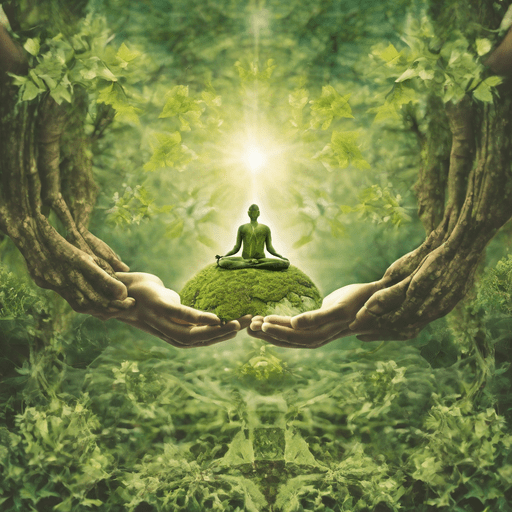
Everyone Falls Back Asleep After Awakening, But No One Falls Asleep After Enlightenment

In the journey of self-awareness and understanding, there’s a profound adage that resonates deeply: “Everyone falls back asleep after awakening, but no one falls asleep after enlightenment.” This statement, while seemingly simple, carries with it a world of meaning and depth, particularly in the context of spiritual and personal growth.

#### The Paradox of Awakening and Enlightenment

At first glance, the idea of “falling back asleep after awakening” seems counterintuitive. Isn’t awakening supposed to be a permanent shift in consciousness? The truth, however, lies in the subtle difference between temporary awakenings and true enlightenment. Many of us experience moments of awakening — brief glimpses into a deeper reality or a sudden awareness of a profound truth. These moments can be sparked by various experiences: a beautiful sunset, a piece of art, or a moment of deep connection with another person. However, these are often transient, and we find ourselves slipping back into our habitual patterns of thought and behaviour.

Enlightenment, on the other hand, represents a fundamental and irreversible shift. It’s akin to a door that, once opened, cannot be closed again. In enlightenment, there is a permanent transformation of perspective, a sustained awareness that transcends the ordinary consciousness. This state is often described as a deep, unshakable understanding of the nature of reality, self, and existence.


#### The Role of Meditation in Enlightenment

This statement emphasizes the necessity of years of meditation for true enlightenment. Meditation, in its various forms, is more than just a practice of calming the mind. It’s a tool for deep introspection, for peeling away the layers of illusion and ego that cloud our true nature. Through persistent meditation, one can gradually dissolve these barriers, fostering a greater connection with the inner self and the universe.

Meditation teaches patience, discipline, and, most importantly, the ability to observe without attachment. These qualities are essential in moving from fleeting moments of awakening to a sustained state of enlightenment. It’s a journey of continuous growth and learning, where each meditative experience builds upon the last, gradually leading to a profound understanding and acceptance of what is.


#### Conclusion

In conclusion, the journey from awakening to enlightenment is not a straight path. It involves many cycles of falling back into unconsciousness and rising again with a deeper understanding. This process is necessary and valuable, as each fall and rise polishes the soul, preparing it for the ultimate state of enlightenment. The years of meditation are not just a discipline but a devotion to the inner journey, a commitment to uncovering and living one’s truth.

Morgan O. Smith

Yinnergy Meditation, Spiritual Life Coaching & My Book, Bodhi in the Brain…Available Now!
https://linktr.ee/morganosmith

The Souvenir of Spiritual Enlightenment

Beyond the Peak Experience

In the realm of spiritual enlightenment, there lies an experience so profound and transformative that it often defies description. It’s a peak experience, a moment of nondual awareness where the sense of self merges with the universe, transcending the usual barriers of the ego and the mind. Those who attain this state describe it as a moment of absolute clarity, an encounter with the true essence of being. But what happens after this peak experience? How does one integrate this transformative moment into the fabric of everyday life?

The answer lies in the concept of the ‘souvenir’ of spiritual enlightenment. This souvenir is not a physical object, but a subtle, yet profound change within the individual. It’s the lingering essence of the experience, a change in perception and understanding that remains long after the peak moment has passed. This souvenir is a reminder, a glimpse of the infinite that we carry back into our ordinary lives.


This souvenir manifests in various forms. It might be a deepened sense of peace, a newfound ease in dealing with life’s challenges, or a pervasive feeling of connectedness with all things. For some, it’s a shift in values and priorities, leading to a life more aligned with inner truth and compassion. For others, it’s an ongoing journey of self-realization and growth, a path that continuously unfolds with each new insight and understanding.

The phenomenon of spiritual enlightenment itself is vast and incomprehensible, which cannot be fully grasped or retained by the finite human mind. In this light, the souvenir we bring back is not the entirety of the experience, but a fragment, a taste of the infinite that changes us in subtle and profound ways.


To integrate this souvenir into daily life requires patience, awareness, and a willingness to continue the inner journey. It’s about maintaining an openness to the lessons and insights from this transformative experience. It involves embracing the present moment, living with mindfulness and heart, and allowing the essence of the experience to guide and inform our actions and choices.

In conclusion, the nondual peak experience of spiritual enlightenment is a transformative journey that leaves us with a lasting souvenir. This souvenir, though a mere fragment of the vastness of the experience, has the power to profoundly alter our perception, guiding us towards a life of greater awareness, compassion, and connection. As we navigate the complexities of life, this souvenir becomes a beacon, illuminating our path and reminding us of the deeper truths of our existence.

Morgan O. Smith

Yinnergy Meditation, Spiritual Life Coaching & My Book, Bodhi in the Brain…Available Now!

https://linktr.ee/morganosmith

The Imperfection of Spiritual Gurus

Embracing Humanity in the Pursuit of Enlightenment

In the realm of spiritual enlightenment, the figure of the guru often looms large – a beacon of wisdom, a guide towards self-realization. Yet, amidst the reverence and idealization, a fundamental truth often remains unacknowledged: no spiritual guru is perfect. This paradox lies at the heart of a deeper understanding of spiritual growth, where perfection is not a destination, but a journey of constant evolution and self-awareness.

The Dual Nature of the Guru


The guru, in their essence, embodies a unique dualism. On one hand, they are perceived as having attained a state of union with the Self – a transcendental consciousness that surpasses ordinary human experience. This aspect of the guru resonates with a realm beyond the physical, where notions of perfection are redefined in the context of spiritual wholeness.

Conversely, the psychological aspect of the guru is firmly anchored in the human experience. It is a constant reminder that they, too, are subject to the trials and tribulations of the human condition. The guru’s journey is not marked by an escape from humanity but by a deeper immersion into it, embracing its imperfections as part of the broader tapestry of existence.


Perfection is a Process, Not a State

The pursuit of perfection, especially in the spiritual context, is often misconstrued as the attainment of a flawless state. However, this pursuit is more accurately seen as a process – a continual striving for betterment and understanding. The guru, aware of their imperfections, does not seek to eliminate them but to understand and integrate them into their larger spiritual narrative.

This approach demystifies the journey towards enlightenment. It is not about transcending humanity but embracing it in its entirety – with its flaws, contradictions, and challenges. The psychological striving of the guru serves as a powerful reminder that spiritual growth is not about reaching a plateau of perfection but about engaging in an ongoing dialogue with both the self and the universe.

The Metaphor of the Guru

There is something I occasionally mention in my teachings. The saying is that if you hang out with the guru long enough, eventually, the guru will fart. This metaphor, as humorous as it is, holds profound philosophical significance. It symbolizes the inescapable humanity of the spiritual teacher – a reminder that they, too, are bound by the natural laws of existence.

This metaphor serves as a levelling force, bridging the gap between the guru and the seeker. It’s a reminder that spiritual leaders are not infallible deities but fellow travellers on the path of enlightenment. Their wisdom does not stem from their distance from humanity but from their deep engagement with it, warts and all.


Conclusion

In embracing the imperfection of spiritual gurus, we are invited to a more authentic engagement with spirituality. It’s an understanding that enlightenment is not about the erasure of flaws but the acceptance and integration of them into our journey. This perspective fosters a more compassionate and realistic approach to spiritual growth, one that acknowledges the beauty in imperfection and the humanity in the divine.

Morgan O. Smith

Yinnergy Meditation, Spiritual Life Coaching & My Book, Bodhi in the Brain…Available Now!

https://linktr.ee/morganosmith

Meditate…

Until Your Internal World Resembles Paradise

In the bustling chaos of everyday life, where the noise of the external world often drowns out our inner peace, there is a profound need for sanctuary. Not a physical refuge, but a mental oasis that can be accessed anywhere, anytime. This sanctuary is not just a fleeting escape, but a transformation of our internal world into a paradise. The key to unlocking this paradise? Meditation.

Meditation, often misconceived as merely a relaxation technique, is a profound journey toward internal transformation. It’s about finding the silence amidst the noise, the stillness within the storm. Through meditation, we can delve into the depths of our consciousness, explore the landscapes of our minds, and cultivate a garden of tranquillity.

But how does one’s internal world become a paradise? It begins with understanding that paradise is not a physical location, but a state of being. It’s a place of balance, harmony, and a profound understanding of oneself. Meditation guides us toward this state by teaching us to observe our thoughts without attachment, to embrace our emotions without being overwhelmed by them, and to find clarity amid confusion.

As we meditate, we learn to let go of the clutter, the unnecessary burdens that weigh down our spirit. We learn to nurture thoughts and emotions that uplift and support our well-being. Slowly, the internal chaos gives way to a serene landscape, a paradise that is uniquely ours.

This journey, however, is not without its challenges. Just like any paradise, our internal world requires nurturing. It requires patience, dedication, and above all, a willingness to explore and accept ourselves fully. But the rewards are immeasurable. In this internal paradise, we find resilience against external turmoil, a deep sense of peace, and a wellspring of joy that is not dependent on external circumstances.

So, take a moment to close your eyes, breathe deeply, and embark on the most rewarding journey of all – the journey within. Meditate until your internal world blossoms into a paradise, a haven of peace and joy that you carry with you always.

Want to find your paradise within? Discover the transformative power of Yinnergy Meditation, a unique and effective program designed to unlock your inner potential. Yinnergy is not just a meditation method; it’s a journey toward emotional, mental, and spiritual growth. With Yinnergy, you can experience profound deep meditation, heightened relaxation, and a significant boost in creativity, focus, and intuition. It’s an ideal practice for both beginners and seasoned meditators, offering a simple yet powerful path to enhanced well-being and self-awareness. Embrace a life of clarity, balance, and harmony with Yinnergy Meditation. Start your transformative journey today and tap into your deepest potential!

Remember to make the most of our exclusive Holiday promotion. Apply the discount code R7X9Z2P for special savings on all Yinnergy products during checkout.

https://yinnergy.gumroad.com/

Embracing the Now

The Path to Ego Death and True Awareness

In our relentless pursuit of self-improvement and understanding, we often overlook a fundamental truth: the power of simply being in the present moment. This idea, though simple, holds profound implications for our journey towards inner peace and self-realization.

**Letting Go of Judgment and Bias**

To truly embrace the present, we must first release ourselves from the shackles of judgment and bias. This means observing our experiences, thoughts, and feelings without labelling them as good or bad, right or wrong. It’s about being an impartial witness to our own life.


**The Surrender to ‘What Is’**

Surrendering to ‘what is’ requires a deep acceptance of the present moment, regardless of its nature. It’s not about resignation or defeat; rather, it’s an active engagement with the now. In doing so, we allow life to flow naturally, without the resistance that often leads to suffering.

**Death of the Ego**


The ego, often seen as our conscious self or identity, thrives on differentiation, judgment, and past-future thinking. By embracing the present and letting go of these traits, we facilitate the ‘death’ of the ego. Now this does mean losing our sense of self, transcending the limited, subjective view of the ego.


**A New Perspective**

As we learn to live in the present, our perspective on life shifts. We begin to see the interconnectedness of all things and the beauty in simplicity. The burdens of past regrets and future anxieties lighten, offering a sense of liberation.

**Final Thoughts**

The journey towards ego death and true awareness is not about gaining something new but about losing the misconceptions and biases that cloud our true nature. It’s a path of unlearning, of returning to the essence of who we are.

Morgan O. Smith

Yinnergy Meditation, Spiritual Life Coaching & My Book, Bodhi in the Brain…Available Now!

https://linktr.ee/morganosmith

Beyond Happiness

Embracing Non-Attachment and Eternal Bliss through Meditation

Creating a state of non-attachment and achieving contentment in life is a journey that many strive for. The key to this profound state of being lies in the practice of meditation, a tool that has been revered for centuries across various cultures for its transformative powers.

### The Illusion of Happiness


Happiness, as we often perceive it, is a fleeting emotion, a temporary state influenced by external circumstances. It’s like chasing the wind – always shifting and changing. This chase can often lead to a cycle of highs and lows, leaving us feeling more drained than fulfilled.

### Embracing Non-Attachment

Non-attachment, on the other hand, is a more stable state. It’s about finding peace and contentment regardless of the situation. This doesn’t mean becoming indifferent or emotionless. Rather, it’s about observing life’s ebbs and flows without being mentally and emotionally consumed.


### The Role of Meditation

Meditation is the bridge that leads us to non-attachment. Through consistent practice, meditation allows us to observe our thoughts and feelings without getting entangled in them. It’s like watching clouds pass by in the sky – they come and go, but the sky remains unchanged. This detachment from our transient thoughts and emotions reveals a deeper truth about our existence.

### Realization of the Self

As one delves deeper into meditation, a realization dawns – that we are the ground of all being. This profound understanding shows us that our true nature is not bound by the transient nature of worldly experiences. We are something more substantial, more permanent.

### Eternal Bliss

This realization paves the way for bliss, which is different from happiness. Bliss is a state of eternal contentment, unshaken by the changing tides of life. It’s a deep, internal fulfillment that does not depend on external factors.


### Conclusion

Non-attachment and bliss are states that can be realized through the practice of meditation. By observing our thoughts and emotions without attachment, we can discover the unchanging truth of our existence, leading to a life of deep contentment and eternal bliss.

 Morgan O. Smith

Yinnergy Meditation & My Book, Bodhi in the Brain…Available Now!

https://linktr.ee/morganosmith

Jungle Flower

A Beacon of Inspiration and Healing

In 2012, I had the incredible fortune of crossing paths with a remarkable soul – Jungle Flower. A former photographer, poet, speaker, writer, workshop and sound bath facilitator, Jungle is a mosaic of talents and a beacon of inspiration.

Our first meeting was at a social gathering with R.I.S.E. Edutainment members, where she played the violin with such grace, that it was as if the strings narrated stories of her deep resilience. That year also marked her first spiritual peak experience, an event I was privileged to witness.

Jungle Flower’s journey is one of remarkable courage. She has openly shared her path of healing from abuse and sexual violence through storytelling and spoken word. This journey led her to establish ‘Reclaim Your Voice’ – a BIPOC survivor-led initiative creating safe spaces for individuals to heal from abuse and sexual violence. Her symposiums, which I’ve attended and participated in, are a testament to her immense capacity for empathy and healing.

Beyond her professional achievements, it’s her heart that truly resonates. I recall a moment during our Kundalini Yoga training with Krishna Kaur. Post-session, a participant complimented Jungle Flower on her jacket. Without hesitation, she offered it to her. This act of kindness is a window into her soul.

Jungle’s journey with meditation, including becoming my student in the Yinnergy program, led to her receiving the Yinnergy Appreciation Award in 2014 for her community service. She then expanded her reach through talk radio with ‘Reclaim Your Voice’, a project I proudly sponsored.

Her accolades, including the Volunteer Toronto Legacy Award (2015), the Roger Fisher Scholarship (2016), the Write Your Self Scholarship (2017), and the Mayor’s Community Safety Award (2021), are just the tip of the iceberg. In 2019, she mesmerized a sold-out audience with her one-woman show, ‘Jungle Flower Dragon Heart’, where she shared memoirs through various artistic expressions.

Jungle Flower’s impact stretches beyond the Canadian borders, with invitations to speak at universities in the US. Her recent venture into sound baths is yet another layer of her multifaceted talent. Attending one of her sessions is an experience of deep relaxation, emotional stability, and a journey into heightened intuition and inner peace.

(Enjoying a transformative sound bath session with Jungle Flower)

For those in Toronto, seeking elevation, healing, and a profound connection, I cannot recommend Jungle Flower enough. Her individual, group, and couples sessions are transformative experiences that go beyond mere relaxation.

Discover more about Jungle Flower’s sound baths:

jungleflowerwellness.com

Morgan O. Smith

Journey of Empowerment

(Mah Noor and I back in 2010)

My Experience with Mah Noor and Her Family

Introduction:
Every now and then, we encounter individuals who leave a lasting impact on our lives. This is the story of Mah Noor, a former student of mine, and her family, who have become a significant part of my life’s journey.

Meeting Mah Noor:
I first met Mah Noor as a young Muslim girl in elementary school. At just 12 or 13 years old, she exhibited a wisdom and spiritual depth that was well beyond her years. I overheard her speaking to a teacher, and I was immediately struck by her insightfulness. I remember thinking to myself, “This girl is spiritually anointed!”

Reconnection and Growth:
Years later, our paths crossed again when Mah Noor joined my program, ‘9 for the Mind.’ Not long after, her mother became one of my clients in Yinnergy Meditation. This reconnection allowed me to witness Mah Noor’s growth from a bright young girl to an insightful adult and eventually, a loving mother.

The Bond with Amaan:
Now, Mah Noor is a mother to a wonderful boy named Amaan. Watching Amaan grow and being a part of their family life has been an absolute joy. My bond with Mah Noor has only strengthened over the years, and now, her family feels like my own.

Lessons Learned:
This journey with Mah Noor and her family has taught me the importance of spiritual growth, the power of mentorship, and the beauty of lifelong connections. It’s a reminder of how our roles as educators and mentors can extend far beyond the conventional classroom, touching lives in profound ways.

Conclusion:
My experience with Mah Noor and Amaan is a heartwarming chapter in my life. It reinforces my belief in the transformative power of education, meditation, and spiritual connection. I look forward to continuing this journey with them and witnessing the many milestones yet to come.

Morgan O.  Smith

Yinnergy Meditation & My Book, Bodhi in the Brain…Available Now!

https://linktr.ee/morganosmith

The Environment’s Role in Spiritual Growth

Spiritual growth is an inward journey that involves deepening self-awareness, a connection to a higher purpose, and a pursuit of inner peace and enlightenment. Though one might perceive spiritual growth as purely internal, the environment plays an instrumental role in shaping this voyage.

**The Outer Reflects the Inner**:
Spirituality isn’t limited to the realm of meditation, prayers, or religious practices. It’s also about understanding oneself to the larger world. The environment serves as a mirror, reflecting the chaos or calm we feel within. A serene setting, like a tranquil forest or a quiet beach, can provide the space needed for introspection, while a tumultuous environment might challenge and refine our spiritual resilience.

**The Playground of Experiences**: Our experiences, heavily influenced by our environment, serve as lessons that guide our spiritual evolution. Facing economic hardships might teach us humility and gratitude while being in a nurturing emotional environment can facilitate feelings of love and empathy. Each environment, with its unique challenges and blessings, offers distinct lessons for our soul’s growth.

**Environmental Genetics and The Enlightened Individual**:
Modern scientific understanding acknowledges that both genes and the environment play roles in determining our characteristics. This interplay is also valid for spiritual inclinations. An individual with a genetic predisposition towards introspection and an environment that encourages self-reflection might have a smoother path toward enlightenment. Conversely, someone genetically predisposed to anxiety but raised in a supportive environment might learn to channel that anxiety into a deeper spiritual quest.

Yet, it’s crucial to remember that enlightenment isn’t a one-size-fits-all concept. The combination of genetics and environment produces a spectrum of enlightened individuals, each with unique strengths, perspectives, and wisdom to offer.

### Balancing Agency with Environmental Influences

While the environment significantly shapes us, spiritual growth also involves recognizing and exercising our agency. It’s about acknowledging environmental influences while taking proactive steps to seek experiences and environments that align with our spiritual goals.

For many, this might mean seeking spiritual communities, immersing oneself in nature, or actively creating a personal sanctuary that facilitates inner reflection and growth. For others, it might involve challenging and transforming their environments.

In conclusion, the environment isn’t just a backdrop against which the drama of life unfolds; it’s an active participant, a teacher, a mirror, and a guide on our spiritual journey. Recognizing its influence can empower us to harness its lessons, navigate its challenges, and embark on a more profound, fulfilling spiritual voyage.

Morgan O.  Smith

Yinnergy Meditation & My Book, Bodhi in the Brain…Available Now!

https://linktr.ee/morganosmith

The Sacred Within the Flawed

A Paradox of Divine Texts

In an intricate dance between the divine and human, sacred texts from various religious and philosophical traditions find themselves at the nexus of reverence and scrutiny. These texts, while venerated as conduits of divine wisdom and moral guidance, are not immune to critique nor the acknowledgment of their inherent flaws.

When we unravel the threads of any sacred text, we find them woven with not just divine insights but also the human elements of error, contradiction, and historical context. Many perceive the imperfections found within these texts as reasons for critique and skepticism. Yet, there is a compelling perspective to be explored – the idea that the very flaws embedded within sacred texts render them genuinely sacred.

In dwelling within the flawed, we find a reflection of our imperfect nature. Sacred texts do not present an unattainable moral and existential utopia but rather provide a mirror through which we can perceive and engage with our own imperfections and moral dilemmas. The contradictions and ambiguities are not simply obstacles to faith but rather essential elements that provoke deeper questioning, reflection, and ultimately, a more profound understanding of our place within the cosmic order.

The perfection of the divine, if it were to be communicated through a medium devoid of error or contradiction, may remain eternally aloof and incomprehensible to our flawed human nature. Therefore, perhaps it is within the inconsistencies and paradoxes of sacred texts that we find an accessible pathway toward divine wisdom – a bridge crafted from the very imperfections that define our humanity.

By acknowledging and engaging with the flaws within these revered writings, believers do not denounce their faith but rather deepen it, embracing a spiritual journey that accepts the entwinement of the divine and the human, the perfect and the imperfect. It becomes a spiritual practice wherein the belief is not despite the flaws but is enriched and deepened by them.

In this juxtaposition, an opportunity for an intimate and authentic spiritual journey is birthed. The flaws compel believers to wrestle with their understanding, to question, and to seek, rather than passively accept a prescribed truth. This active engagement fosters a spirituality that is not static but dynamically interwoven with the realities of human experience, constantly evolving and adapting to the nuances of our understanding and experience.

As we traverse through the passages of sacred writings, embracing both divine wisdom and human error, we embark upon a journey that is both inward and outward, exploring the realms of the divine and our soul. In this sacred exploration, the flaws do not deter us but rather beckon us into a deeper, more authentic engagement with the divine, where faith is not a blind acceptance but a perpetual quest, rich with inquiry, reflection, and spiritual growth.

Perhaps then, the sacredness of these texts is not diminished by their flaws but is instead, beautifully and mysteriously, illuminated by them.

Morgan O.  Smith

Yinnergy Meditation & My Book, Bodhi in the Brain…Available Now!

https://linktr.ee/morganosmith