Every Concept Leaves the Real Untouched

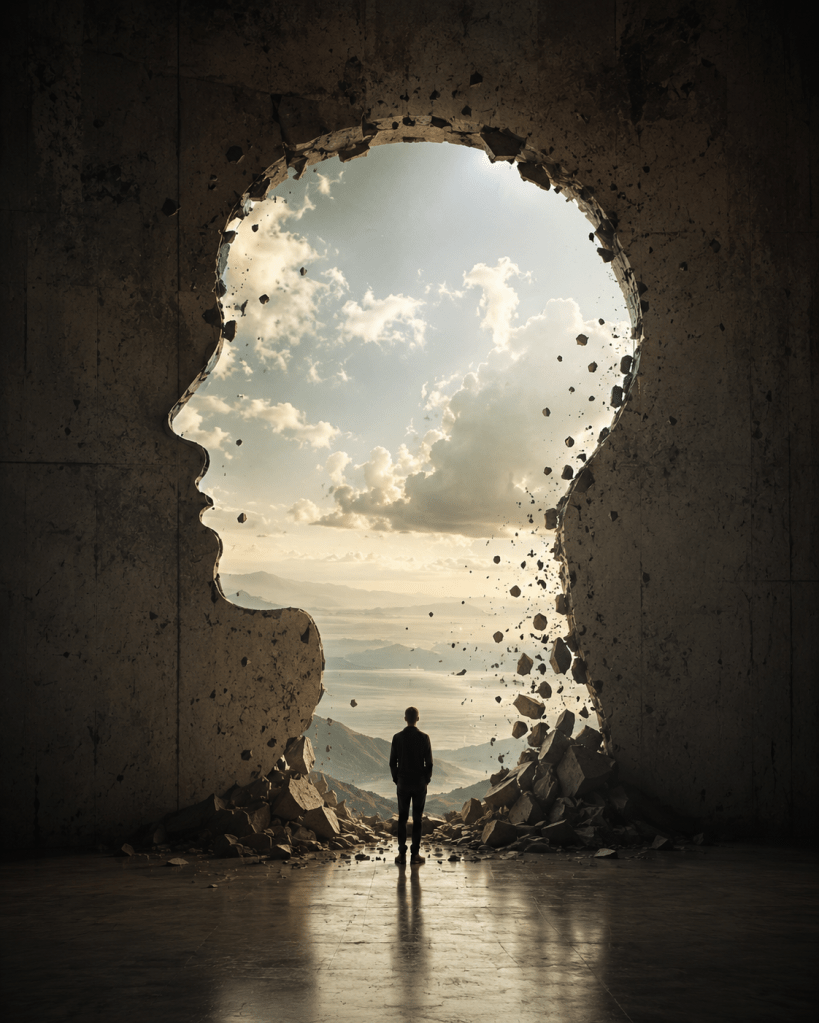
Human beings live inside a world of concepts.

Names, beliefs, identities, philosophies, and explanations create a framework through which experience is interpreted. Without concepts, daily life would become difficult to navigate. Language allows communication. Ideas allow learning. Categories allow organization.

Yet something remarkable is often overlooked.

Reality itself never becomes the concept used to describe it.

A map of a forest is not a forest.

A recipe is not a meal.

A photograph of the ocean contains no water.

Concepts point. Reality is what is pointed to.

Confusion begins when the distinction is forgotten.

The spiritual seeker is especially vulnerable to this mistake. Sacred texts are studied. Philosophical systems are compared. New beliefs replace old beliefs. Concepts become increasingly refined until one eventually possesses a sophisticated understanding of reality.

Understanding, however, is not the same as direct realization.

A person can memorize every description of fire and still feel cold.

Words about truth are not truth.

Ideas about awareness are not awareness.

Concepts about God are not God.

Reality remains exactly as it is regardless of how it is described.

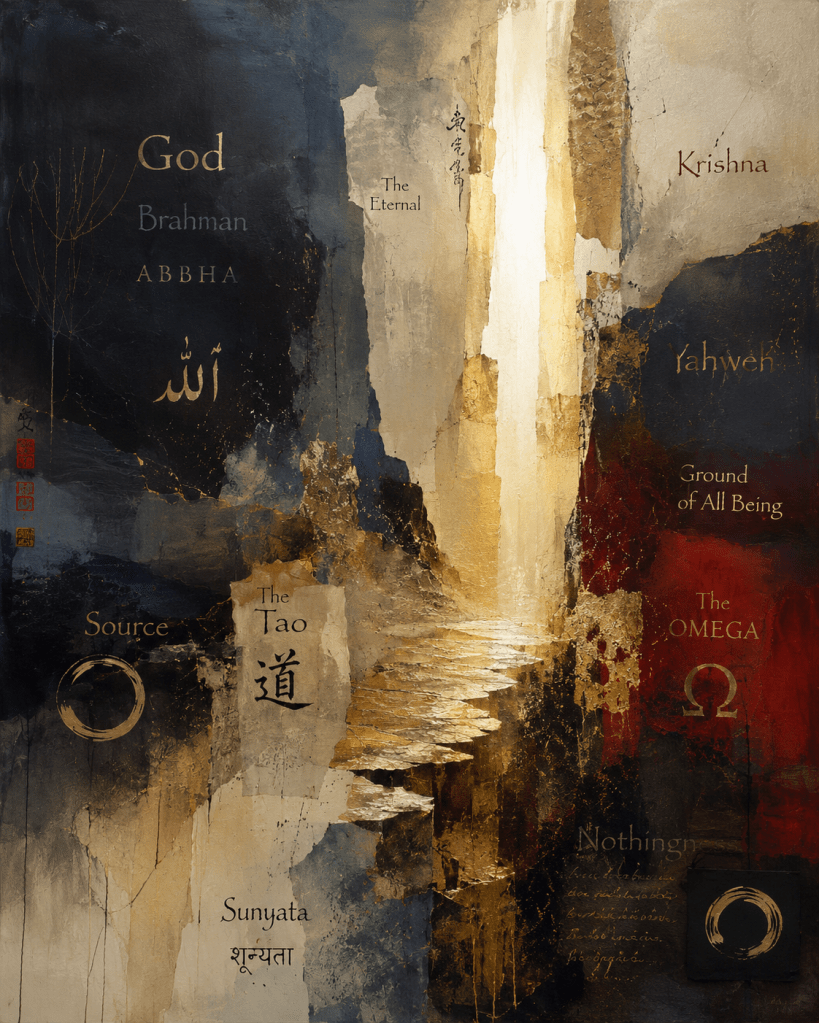
This becomes obvious when observing how different traditions speak about the ultimate. One tradition speaks of Brahman. Another speaks of emptiness. Another speaks of divine presence. Another speaks of pure consciousness. Each description carries value, yet none possesses exclusive ownership over what is being described.

The Real remains untouched by every label.

Names change.

Languages change.

Civilizations rise and fall.

Reality remains.

A mountain does not become more majestic because someone writes a poem about it. The sky does not become less vast because someone misunderstands it. Existence itself is unaffected by every opinion formed about it.

The same principle applies to the deepest dimensions of spiritual realization.

Many seekers become fascinated with collecting concepts. They gather teachings the way others gather possessions. Each new idea creates the feeling of progress. Intellectual understanding expands, but direct recognition often remains distant.

Knowledge accumulates.

Wisdom simplifies.

Eventually a moment arrives when thought reaches its natural limit. Not because thinking is flawed, but because thought can only operate through symbols and representations. Reality is never a representation.

Reality is immediate.

A sound is heard before it is named.

A sensation is felt before it is interpreted.

Awareness is present before thought comments upon it.

This simple observation reveals something extraordinary. Every concept arises within awareness, yet awareness itself is never captured by the concepts appearing within it.

Thought can describe awareness endlessly.

Awareness remains untouched by the description.

Mystical traditions across the world repeatedly return to this insight. Zen emphasizes direct seeing beyond conceptual thought. Advaita Vedanta points toward the witness beyond all mental activity. Taoism reminds us that the Tao spoken of is not the eternal Tao.

Different languages.

Different approaches.

The same invitation.

Look beyond the description.

Look beyond the explanation.

Look beyond the concept.

What remains is not an idea.

What remains is not a belief.

What remains is not a conclusion.

Something quietly present before every thought arises and after every thought disappears.

The Real does not need protection from misunderstanding.

It does not require belief to exist.

It does not become greater through praise or smaller through denial.

Every concept comes and goes.

The Real remains untouched.

Always here.

Always present.

Always beyond what can be said about it.

Morgan O. Smith
https://linktr.ee/morganosmith

Being Itself Is Beyond All Comparison

Comparison is one of the mind’s most persistent habits.

A person compares their life to another’s. One spiritual path is measured against another. Success is weighed against failure. Pleasure is contrasted with pain. The mind constantly creates distinctions, arranging reality into hierarchies and opposites.

This process serves a practical purpose. Comparison helps human beings navigate the world. Choosing food, evaluating risks, and making decisions often depend upon recognizing differences.

Problems arise when comparison is mistaken for truth itself.

Every comparison requires two or more objects. One thing is judged against another according to some standard. Larger and smaller. Better and worse. Higher and lower. More and less.

Being itself belongs to none of these categories.

A mountain can be compared to a hill. A river can be compared to a stream. A philosophy can be compared to another philosophy. Yet the simple fact of existence cannot be measured against anything because there is nothing outside existence with which it can be compared.

What could reality be compared to when every possible comparison already appears within reality?

This insight carries profound implications.

Much of human suffering arises from the assumption that life should be different from what it is. The present moment is measured against an imagined alternative. One’s current self is judged against an idealized future self. Experience becomes trapped inside endless evaluation.

Comparison creates psychological distance.

Being dissolves it.

A tree does not compare itself to another tree. The ocean does not envy a mountain. The sun does not seek validation from the stars. Nature expresses itself without consulting a scale of worth.

Human beings possess the unique capacity to construct elaborate mental narratives about who they are and who they should become. These narratives can inspire growth, but they can also create perpetual dissatisfaction.

The mind says, “I will be complete when I become something else.”

Being says nothing at all.

Existence simply is.

Mystical traditions throughout history have pointed toward this recognition. Advaita Vedanta speaks of Brahman as the sole reality, beyond all attributes and distinctions. Zen directs attention toward immediate experience before conceptual division. Taoism points toward a way of being that precedes judgment and categorization.

Each tradition approaches the mystery differently, yet all gesture toward a dimension of reality untouched by comparison.

Awareness itself offers a clue.

Thoughts come and go. Emotions rise and fall. Sensations appear and disappear. Identity changes throughout the course of a lifetime. Childhood becomes adulthood. Certainties become questions. Questions become insights.

Awareness remains.

The witnessing presence behind every experience is not greater than experience or lesser than experience. It is not superior or inferior. Such categories apply only to objects appearing within awareness, not to awareness itself.

Comparison belongs to the content.

Being belongs to the context.

A remarkable freedom emerges when this becomes more than an intellectual idea. The need to constantly measure oneself against others begins to weaken. Life is no longer approached as a competition for significance. Existence is appreciated directly rather than filtered through endless evaluation.

Nothing needs to be added.

Nothing needs to be removed.

Being is already complete before the mind begins calculating its value.

Perhaps this is why the deepest spiritual realizations often arrive with extraordinary simplicity. Reality is not discovered through becoming something greater than what one is. Reality is recognized through seeing what has always been present beneath the machinery of comparison.

Being itself cannot be ranked.

It cannot be improved.

It cannot be diminished.

Being itself is beyond all comparison.

Morgan O. Smith

https://linktr.ee/morganosmith

No Definition Can Hold the Infinite Whole

Human beings are addicted to definition.

We define nations, identities, emotions, philosophies, and even the boundaries of the cosmos itself. The mind survives through categorization. Without labels, ordinary navigation becomes difficult. Language organizes perception into manageable fragments, allowing consciousness to interpret experience through patterns and distinctions.

Yet something extraordinary happens when the mind attempts to define the infinite.

It fails.

Not because the infinite is irrational, but because definition itself depends upon limitation. To define something means to separate it from what it is not. A tree is not the sky. Water is not stone. The body is not the chair. Every definition creates borders.

The infinite has no border.

This creates a profound paradox. The moment the infinite is defined, it becomes psychologically reduced into an object of thought rather than the living totality from which thought itself emerges.

People speak about God, consciousness, enlightenment, emptiness, Brahman, Tao, or ultimate reality as though these words contain what they point toward. But words are symbols, not the living actuality itself. A menu is not a meal. A map is not the terrain. Spiritual language often becomes mistaken for realization.

Concepts can inspire awakening.
They cannot replace it.

A person may memorize every sacred text ever written and still remain trapped within mental abstraction. Another person may sit silently beneath a tree, beyond philosophy and doctrine, and directly encounter a depth untouched by conceptual thought.

Reality does not require intellectual permission to exist.

The mind struggles with this because it seeks stability through certainty. Certainty creates psychological comfort. Ambiguity threatens identity. This is why people cling to rigid ideologies, religious systems, or philosophical conclusions. Definitions provide the illusion of control over existence.

But existence refuses confinement.

Life continuously overflows the structures created to contain it. Every scientific breakthrough revises older assumptions. Every spiritual revelation dissolves previous certainty. Every profound mystical experience shatters the mental boundaries once believed to be absolute.

The infinite remains untouched by every framework attempting to grasp it.

Ancient sages understood this deeply. Lao Tzu opened the Tao Te Ching by warning that the Tao which can be spoken is not the eternal Tao. Advaita Vedanta points toward neti neti — “not this, not that” — stripping away every conceptual identification. Zen dismantles attachment to intellectual understanding through direct experience and paradox.

These traditions are not anti-intellectual.
They simply recognize the limits of conceptual thought.

Thought is a tool. A remarkable one. But a tool should not be mistaken for the source of reality itself.

Awareness exists before thought comments on it.

Silence exists before language interprets it.

Being exists before identity claims ownership over it.

This recognition changes the entire spiritual journey. Seeking shifts from accumulating beliefs to dissolving false certainty. One no longer attempts to imprison truth inside definitions but instead becomes available to direct experience without resistance.

The infinite cannot be possessed mentally because the mind itself appears within the infinite.

A wave cannot contain the ocean from which it rises.

Perhaps this is why the deepest realizations often arrive with humility rather than triumph. The closer one moves toward ultimate reality, the more obvious it becomes that existence exceeds every philosophical system ever created.

No final sentence survives there.

Only openness.
Only presence.
Only this immeasurable reality appearing as everything.

Morgan O. Smith

The Sublime Symphony of Existence

Beyond Divine Order

In our ceaseless quest for understanding the cosmos and our place within it, we often grapple with the notion of a ‘Divine Order’. This concept, deeply entrenched in various spiritual and religious doctrines, suggests a cosmic plan orchestrated by a supreme entity. Yet, in exploring the depths of nonduality and Eastern philosophy, we encounter a different perspective. It proposes an order in the universe not dictated by an external divine force, but one that is inherently divine in its essence.

The universe, in its boundless complexity and sheer immensity, operates on principles that transcend human comprehension. This is not the manifestation of a predetermined divine decree but rather an emergent, dynamic order. It’s like a spontaneous dance of cosmic energies, perpetually unfolding in a harmonious yet unpredictable pattern. This order, devoid of deliberate design, is divine not because it is ordained by a deity, but because it embodies the sacred interplay of life and existence itself.


In the heart of nonduality, there is an acknowledgment of the intrinsic unity of all things. This unity is not a structured hierarchy but an organic, flowing confluence of energy and consciousness. When we perceive the universe from this lens, we see that divinity is not an external force imposing order; it is the very nature of existence, resplendent in its boundless diversity and unity.

Eastern philosophies, like Buddhism and Taoism, offer profound insights into this concept. They teach us that seeking order in the traditional sense is akin to chasing a mirage. Instead, embracing the natural flow of life, with its apparent chaos and inherent order, leads to deeper understanding and peace. This perspective invites us to look beyond the superficial structures and dive into the essence of being, where we find a truly divine rhythm.


In conclusion, the ‘order that is truly divine’ is not a preordained scheme but a natural, emergent phenomenon. It is a testament to the mysterious, awe-inspiring nature of the universe, where divinity is found not in an external blueprint, but in the very fabric of existence. This understanding opens us to a more profound appreciation of life, urging us to explore the depths of our being and the cosmos, in a journey of endless discovery and wonder.

Morgan O. Smith

Yinnergy Meditation, Spiritual Life Coaching & My Book, Bodhi in the Brain…Available Now!

https://linktr.ee/morganosmith

You Are What You Eat, and Also What You Don’t

The Eastern Philosophy of Consumption and Abstention

In the intricate dance of life, we often hear the adage, “You are what you eat.” Rooted in the wisdom of many cultures, this phrase suggests that our physical and mental well-being is profoundly influenced by the food we consume. But just as importantly, the choices we make about what we refrain from eating also define us. In the vast expanse of Eastern philosophy, whether feasting or fasting, you are that.

The concept of ‘Ahara’ in Ayurveda, the ancient Indian science of life, teaches that everything we consume, be it food, thoughts, or experiences, becomes a part of our inner and outer constitution. It’s not merely about the nutrients we obtain, but the energy, the ‘prana’, that comes with it. A meal cooked with love nourishes the soul, just as a dish prepared in haste or anger might leave us feeling unsettled.

Conversely, the act of abstention or fasting, common in Eastern practices like Buddhism, Jainism, and Taoism, is not merely a physical exercise. Fasting is as much a mental and spiritual activity as it is a physical one. By abstaining, we aren’t merely depriving ourselves; we’re creating space. Space for reflection, for inner growth, and for reconnecting with the self.

In the Zen Buddhist tradition, the act of eating mindfully, paying attention to every morsel, and being grateful for the nourishment is a form of meditation. On the other hand, moments of abstention teach us about the impermanence of desires. As Lao Tzu stated in the Tao Te Ching, “To attain knowledge, add things every day. To attain wisdom, subtract things every day.”

In the end, the balance between consumption and abstention is a personal journey, an inner dialogue. It’s about recognizing that every choice we make, whether to indulge or to refrain, is a reflection of our inner state, our philosophies, and our connection to the world around us.

As we navigate through the rhythms of life, let us remember: that we are not just shaped by what we consume but also by what we choose to let go. And in that delicate balance lies the true essence of existence.

Morgan O. Smith

Yinnergy Meditation & My Book, Bodhi in the Brain…Available Now!

https://linktr.ee/morganosmith

The Dance of Emptiness and Form

Unveiling the True Essence of Yoga

The philosophical underpinnings of Yoga transcend the popular perception of it as merely a physical discipline. Yoga, in its quintessence, is a union, a symbiotic dance between emptiness and form. This dance, a philosophical waltz within the vast expanses of the universe, finds a profound echo within us.

When we speak of form, we are drawn towards the tangible, quantifiable aspects of our existence—our body, the physical world around us. These are things we can touch, see, smell, hear, taste—the concrete attributes of our being. On the Yoga mat, the physical form is the obvious manifestation of our practice. Asanas are the embodiment of form, an expression of our grounded reality.

On the other hand, emptiness is an abstract concept, often considered synonymous with void or nothingness. In Eastern philosophies, emptiness does not signify a lack or absence but is regarded as the space that allows the form to exist, the silence that cradles the sound. It is the immaterial consciousness, the observer within us.

In the practice of Yoga, we cultivate the experience of both form and emptiness. Through asanas, we engage with form, enhancing our physical wellness and strength. Yet simultaneously, through meditation and breath control (Pranayama), we connect with the space of consciousness, the emptiness.

The union of emptiness and form in Yoga echoes the concept of Yin and Yang in Taoism. These seemingly opposing forces are complementary and interdependent. Similarly, in Yoga, the physical form (body) and the immaterial consciousness (emptiness) are intertwined in a dance, with neither one being superior to the other.

The realization of this union empowers us to perceive ourselves beyond the limitations of physical existence. We start to experience our oneness with the universe, recognizing that the emptiness within us is the same as the cosmic void, and the form is an expression of universal matter.

In true Yoga, we find balance and harmony between form and emptiness. We start understanding that emptiness isn’t a void but a space filled with infinite possibilities, and form is not rigid but a fluid and ever-changing phenomenon. This balance and harmonious interaction between emptiness and form illuminate the path toward self-realization and enlightenment.

Consequently, Yoga transforms from a practice into a way of life, a journey towards unveiling the veiled, harmonizing the paradox of existence and experiencing the profound unity of all creation. It’s a journey that, while dancing on the stage of duality, ultimately guides us back to unity.

In essence, Yoga teaches us to embrace the dance of life, the continuous ebb and flow between form and emptiness. In this dance, we discover our true selves, learning to live in harmony with our internal rhythms and the universal pulse. Only by acknowledging and understanding both emptiness and form can we truly unfold the potential within, ultimately experiencing the profound union that is the heart of Yoga.

Through this exploration, may we all find our unique rhythm in the cosmic dance and awaken to the truth that Yoga is not just something we do, but rather a state of being. A union of emptiness and form, a harmonious dance in the infinite canvas of existence.

Morgan O. Smith

Yinnergy Meditation & My Book, Bodhi in the Brain…Available Now!

https://linktr.ee/morganosmith

Sand Castles of Consciousness

Discovering the Essence Within

Introduction:


In the tranquil tapestry of Eastern philosophy, where contemplation converges with existence, there lies a profound revelation – Everything in existence is composed of Pure Consciousness. Here, Consciousness is not merely an attribute; it is capitalized, symbolizing its omnipresence as the very fabric that weaves through the cosmos. It is akin to an ancient tale of a castle crafted from sand, reflecting that though it may don the guise of a majestic structure, it remains, in essence, sand.

The Sand and the Castle:

Visualize a child meticulously building a sand castle on the shore. The grains of sand, amassed and sculpted, assume the shape of a castle. Does the sand cease to be sand when shaped into a castle? Certainly not. This allegory mirrors the realization that while the myriad forms around us may appear different, they are all permutations of the same unyielding Consciousness.

The Essence of Consciousness:

Consciousness is akin to Brahman in Hinduism or the Tao in Taoism in the Eastern philosophical context. The unchanging, infinite, immanent, and transcendent reality is the Divine Ground of all matter, energy, time, space, being, and everything beyond. Our ephemeral existence is a mere reflection, a ripple in the vast ocean of Consciousness.

Flow of Forms:


Just as a sand castle is subjected to the whims of waves and winds, forms in the material world are in a constant state of flux. The ancient Hindu text, the Bhagavad Gita, illustrates this with the concept of ‘Lila’, depicting the world as a divine play of forms. The Taoist philosophy also reverberates with this thought through the Tao, which flows through and is the inherent nature of all things.

The Inner Alchemy:

One might inquire, how does this realization benefit our daily lives? Understanding that we are not just isolated entities, but integral threads woven into the fabric of Consciousness, can be transformative. It helps us transcend the illusion of separateness and cultivates compassion, humility, and interconnectedness with all beings and the natural world.

Conclusion:


As we embrace the wisdom of Eastern philosophy, let us be mindful of the sand castles we build and the sands that shape them. Let us embark on a spiritual odyssey to unearth the Consciousness within and around us, recognizing that the essence is unchanging, infinite and all-encompassing. Like the sand castles by the sea, our forms are transient, but the Consciousness that shapes us is eternal.

Morgan O. Smith

Yinnergy Meditation & My Book, Bodhi in the Brain…Available Now!

https://linktr.ee/morganosmith

The Enigmatic G.O.D.

A Tapestry of Multifaceted Interpretations through Turiyatita

Introduction:
In the endless quest to fathom the profound entity known as God, Eastern and Western philosophies converge and diverge in a myriad of ways. This cosmic journey leads us to Turiyatita, a transcendent state beyond the fourth state of consciousness, where the true essence of God can be wholly embraced. Let us delve into the kaleidoscopic interpretations of the acronym G.O.D. through the lens of both Eastern and Western spirituality.

Giver Of Dreams:
In Western concepts, God is often seen as the Giver Of Dreams, inspiring aspirations. Contrarily, Eastern philosophies like Hinduism consider God as the Atman, reflecting the highest potential within oneself.

Guardian Of Divinity:
The Western Abrahamic faiths often portray God as a protector of purity, a Guardian Of Divinity. In Taoism, the Tao is considered the source of all divinity, without actively guarding it.

Guide Of Destiny:
In the Western context, God often plays a direct role in guiding destinies. The Eastern concept of Dharma reflects an innate order and righteousness, where individuals are their own guides through Karma.

Generator Of Diversity:
In the West, God’s creative aspect is exemplified in Genesis. In Hinduism, Lord Brahma symbolizes the Generator Of Diversity, being responsible for creation within the eternal cycle of Samsara.

Gatherer Of Devotion:
In the West, devotion is often gathered in the form of prayer. In Bhakti Yoga, an Eastern practice, devotion is an all-encompassing love and surrender to the divine.

Grand Orchestrator of Dynamics:

While Western deism believes in God as the Grand Orchestrator who set the universe in motion, Daoism sees the Dao as an impersonal force, guiding the natural order.

Garden Of Delight:
In Christianity, Eden represents the Garden Of Delight. In contrast, Buddhism’s Sukhavati is a pure land, representing an enlightened state of bliss and contentment.

Galaxy’s Omnipotent Designer:
In the West, Intelligent Design Theory posits God as the designer. Hinduism’s Vishwakarma is revered as the divine architect of the universe, reflecting a similar sentiment.

Guardian Of Deeds:
In Western theology, the idea of a judgmental God who serves as Guardian Of Deeds is prominent. The Eastern concept of Karma conveys a self-regulating system of moral retribution.

Gracious Overseer of Deliverance:
Both Eastern and Western traditions portray God as a liberator. In Christianity, salvation is through Jesus Christ; in Hinduism, Moksha or liberation from the cycle of rebirth.

Realization through Turiyatita:
To truly integrate these interpretations, one must transcend to Turiyatita, a state beyond the waking, dreaming, deep sleep, and Turiya (pure consciousness). In this pinnacle of spiritual awakening, the boundaries dissolve, and one can embody the limitless interpretations of G.O.D., embracing a harmonious coexistence of Eastern and Western spiritual thought.

Conclusion:
The myriad interpretations of G.O.D. weave a rich tapestry of philosophical thought. Turiyatita offers a transcendent vantage point where the essence of these interpretations is revealed in its full glory, harmonizing the wisdom of the East and West.

Morgan O. Smith

Yinnergy Meditation & My Book, Bodhi in the Brain…Available Now!

https://linktr.ee/morganosmith

The Role of Harsh Environments

In the Advancement of Spirituality and Eastern Philosophy

Introduction: As we delve into the realm of spiritual growth and philosophical evolution, we find ourselves drawn to the profound teachings of Eastern wisdom traditions like Hinduism, Buddhism, and Taoism. These knowledge traditions have birthed deep-seated understandings about the existential fabric of reality, the dimensions of human consciousness, and the varied contours of the human condition. This blog piece, filled with spiritual development insights and philosophy exploration, will unearth the significance of harsh environments in moulding these spiritual and philosophical systems. We’ll explore how survival instincts in tough circumstances could have been the catalyst for their evolution.

The Resource Scarcity Hypothesis and Cultural Adaptation Hypothesis: Unraveling the link between harsh environments and the growth of spirituality and philosophical thought, we can turn to theories like the “resource scarcity hypothesis” and the “cultural adaptation hypothesis.” The resource scarcity hypothesis highlights how societies living in resource-depleted environments tend to develop advanced technologies and intricate social organizations to manage the challenges they face. Similarly, the cultural adaptation hypothesis explains how groups foster distinctive knowledge, skills, and practices to adjust to their unique environments.

When we apply these concepts to spirituality and Eastern philosophy, it becomes evident that many of these traditions trace their origin back to regions with severe conditions – be it the arid landscapes of India, the rugged mountains of Tibet, or the isolated valleys of China. These environments may have acted as crucibles, fostering the emergence of complex spiritual and philosophical systems that provide solace amidst the hardships of everyday life, while offering a sense of purpose in adversity.

The Interplay of Spiritual Enlightenment and Survival Instincts: Survival instincts in the face of harsh environments could have played a pivotal role in the conceptualization of spiritual and philosophical doctrines like spiritual enlightenment. In Eastern philosophy, enlightenment often symbolizes the transcendence of suffering, heralding a state of inner peace, equilibrium, and liberation from the shackles of mundane existence.

In environments that test human endurance, the quest for spiritual enlightenment can be viewed as an answer to the physical and psychological trials faced by individuals and communities. In the quest to understand and overcome suffering, individuals can unearth the inner strength and resilience necessary to endure and flourish under severe circumstances.

Furthermore, practices that facilitate spiritual enlightenment – meditation, mindfulness, ethical living – are also effective stress management tools, which enhance personal well-being and nurture social unity during tough times.

Conclusion: While it’s crucial to avoid oversimplification of the intricate factors that nurture the growth of spirituality and Eastern philosophy, it’s undeniable that severe environments and survival instincts have significantly influenced these traditions. By offering a coping mechanism to life’s challenges and a route to inner peace and transcendence, spiritual enlightenment has served as a beacon of hope and inspiration for countless individuals across the epochs. As we navigate the trials of our era, the timeless wisdom of these ancient traditions offers invaluable lessons for our spiritual and philosophical growth.

Morgan O. Smith

Yinnergy Meditation & My book, Bodhi in the Brain…Available Now!