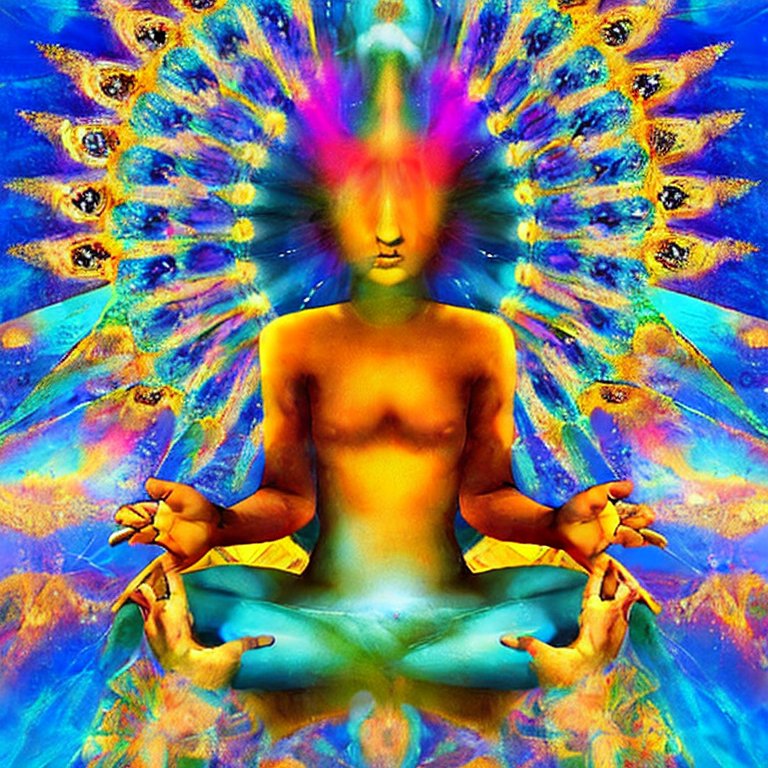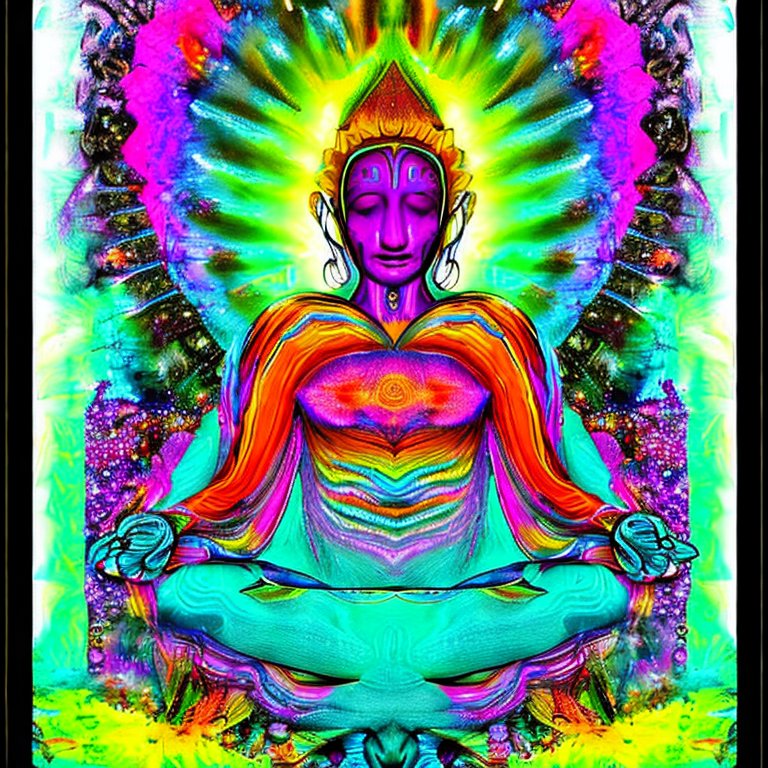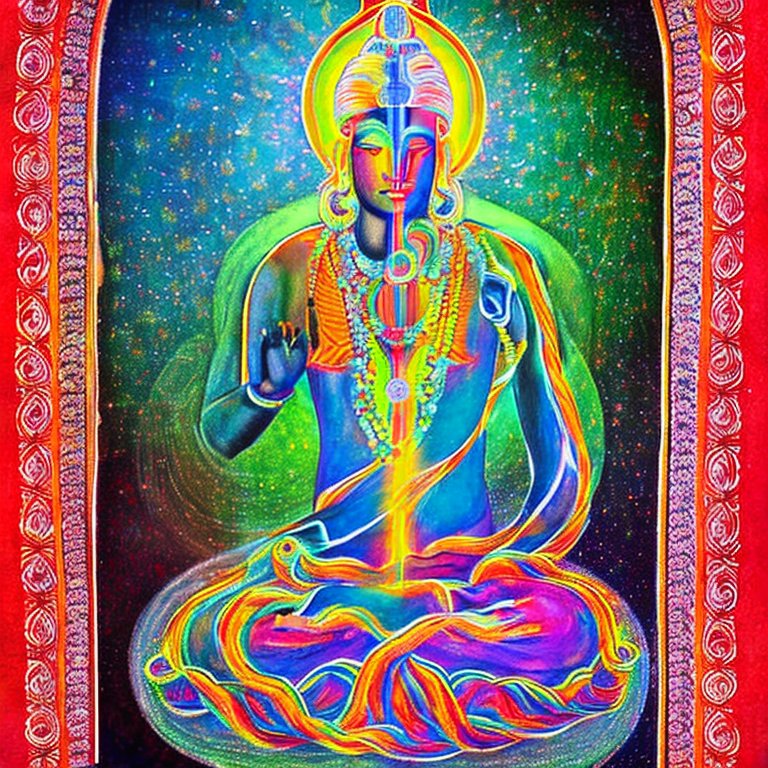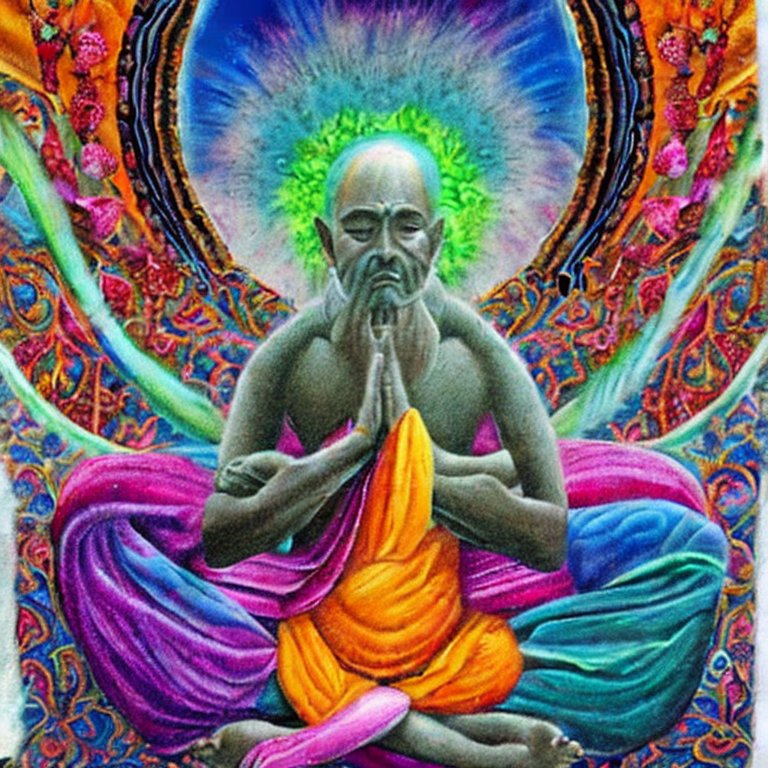
Exploring Spiritual Enlightenment

Unveiling the Essence of Being

Introduction:
In the realm of spirituality, few concepts captivate the human imagination as profoundly as spiritual enlightenment. It has been sought after, contemplated upon, and revered across cultures and traditions. At its core, spiritual enlightenment encompasses a holistic realization, knowing, comprehension, recognition, and liberation, leading to an intimate understanding of one’s essence as the Ground of all Being. In this thought-provoking blog, we embark on a journey to unravel the depths of spiritual enlightenment and explore its transformative power.

Realization: The Full Realization of What You Are as The Ground of All Being
The journey toward spiritual enlightenment begins with a profound realization—an awakening to the fundamental truth of one’s existence. It is an experiential revelation that transcends intellectual understanding, offering a direct encounter with the essence of reality. This realization unveils the interconnectedness of all existence and dissolves the boundaries that separate the self from the world.

Knowing: Knowing Who and What You Are as The Ground of All Being

Knowing, in the context of spiritual enlightenment, goes beyond intellectual knowledge or beliefs. It is a direct and intimate knowing of one’s true nature, beyond the ephemeral constructs of ego and identity. This knowing arises from experiential wisdom that transcends language and logic, revealing the profound interconnectedness of all life.

Comprehension: Comprehending What You Are as The Ground of All Being
Comprehension in spiritual enlightenment refers to a deep understanding that arises from the integration of realization and knowing. It involves grasping the inherent wisdom that pervades all existence and recognizing the underlying unity amidst the apparent diversity. This comprehension allows us to perceive the world through a lens of compassion, empathy, and interconnectedness.

Recognition: Recognizing What You Are as The Ground of All Being

Recognition entails a moment of profound insight where the illusory veils of separation and limitation fall away, revealing the truth of one’s being. It is a transformative recognition of our true nature as vast, boundless awareness, intimately interconnected with the entire cosmos. Through this recognition, we come to acknowledge the divinity that resides within ourselves and all beings.

Liberation: Being Liberated from Shape or Form, Free from Illusion and Attachments

Liberation represents the ultimate culmination of spiritual enlightenment—a state of profound freedom and liberation from the constraints of ego, attachment, and illusion. It is an experiential transcendence of the limited, conditioned self, allowing one to dwell in the realm of pure emptiness. Yet, paradoxically, this liberation is not a detachment from the world but a unification with it, as the awakened individual realizes their inseparability from the tapestry of existence.

Conclusion:
Spiritual enlightenment encompasses a multidimensional journey that surpasses the limitations of language and rationality. It is a profound exploration of the self and the universe, revealing our interconnectedness and inherent divinity. Through realization, knowing, comprehension, recognition, and liberation, we can embark on a transformative path that leads to a deeper understanding of our existence. By embracing the essence of spiritual enlightenment, we may find ourselves united with everything that is form while being liberated from the illusory constraints that bind us. May this exploration inspire you on your quest for self-discovery and awakening to the timeless truth of the Ground of all Being.

Morgan O. Smith

Yinnergy Meditation & My Book, Bodhi in the Brain…Available Now!
Three Perspectives on Divinity

A Journey of Self-Discovery and Cosmic Connection

Every human being, at some point, grapples with the concept of divinity. How we perceive the divine greatly influences how we understand ourselves and our place in the cosmos. While there are many ways to envision divinity, let us ponder the “Three Faces of God” – “I am That,” “Thou art,” and “It, the Ground of All Being.” Each provides a distinct lens through which we may view and experience the divine.

1. Divine Within: The Face of “I am That”

“I am That” is a call to recognize the divine within us. It is not just a statement; it’s an acknowledgment of our inherent divinity. This perspective dissolves the illusion of separateness, helping us realize that we’re not merely fleeting existences in an indifferent universe, but integral fragments of a divine whole.

This face asks us to engage in deep introspection, to see beyond the veil of our mundane identities, and to understand that our true essence is not our transient ego, but the eternal spirit. Could it be that we’re more divine than we’ve ever imagined? This face prompts us to explore that possibility.

2. Divine As Other: The Face of “Thou Art”

The face of “Thou Art” offers a contrasting perspective. Here, the divine is seen as the ‘Other,’ an entity outside ourselves with whom we can establish a personal connection. This relationship with the divine, filled with reverence and love, is akin to the bond between a devotee and their deity.

In this model, God is the figure we pray to, seek comfort from, and surrender our troubles to. It’s a perspective that creates a powerful, intimate bond with the divine, letting us experience the divinity not as a part of us, but as a separate, caring, and guiding entity.

3. Divine As All: The Face of “It, the Ground of All Being”

The third face, “It, the Ground of All Being,” portrays God as an impersonal essence, the primal energy that permeates the cosmos. This face of divinity does not personify the divine but sees it as the raw material of existence. It is the unchanging reality amidst the ceaseless flux of the universe.

This view urges us to go beyond the traditional understandings of God and probe deeper into the mysteries of existence. Could it be that the divine is not just a deity or a spirit within, but also the very fabric of reality?

Wrapping Up

The Three Faces of God offer a multidimensional understanding of the divine, guiding us on our spiritual and philosophical quest. They propose different ways to connect with the divine, based on our personal inclinations and spiritual needs. More than a simple triad, they represent a spectrum of possibilities on our spiritual journey.

In acknowledging these perspectives, we can foster a richer understanding and experience of God, allowing us to discover the divine within ourselves, in an intimate relationship, and as the underlying reality of existence. Such an exploration can become a catalyst for personal growth and spiritual evolution, leading us to new levels of self-discovery and cosmic connection. After all, isn’t that what the quest for understanding divinity is all about?

Morgan O. Smith

Yinnergy Meditation & My Book, Bodhi in the Brain…Available Now!
https://linktr.ee/morganosmith

Embracing Paradox and Nonduality

Exploring the Paths to Spiritual Awakening

Introduction:
In the realm of philosophy and spirituality, two captivating concepts often spark profound contemplation and open doors to expanded understanding: paradox and nonduality. Both concepts challenge our conventional modes of thinking and invite us to explore the nature of reality and consciousness. In this thought-provoking blog, we will delve into the differences and similarities between paradox and nonduality, and delve into their roles in the context of spiritual awakening.

Paradox: Illuminating the Mystery Within
Paradoxes are enigmatic statements or situations that defy our logical expectations and challenge our understanding of reality. They present us with apparent contradictions, forcing us to question our assumptions and explore deeper layers of truth. Paradoxes are often the gateways to expanded consciousness, as they push the boundaries of our thinking and invite us to embrace the complexities and mysteries of existence. They are the mind’s playground, a fertile ground for philosophical inquiry and intellectual growth.

Nonduality: Beyond Duality, Towards Unity

Nonduality, on the other hand, transcends the realm of paradox by recognizing the illusory nature of dualistic distinctions altogether. It is a profound philosophical and spiritual concept that asserts the fundamental unity of all things, beyond conventional boundaries. Nonduality suggests that the apparent separation between self and other, subject and object, is an illusion that obscures the deeper truth of interconnectedness. It invites us to explore the essence of oneness that lies at the heart of existence, beyond the limitations of dualistic thinking.

Differences and Similarities:
While paradox and nonduality are distinct in their approaches, they share some intriguing similarities. Both concepts challenge our preconceived notions and invite us to embrace uncertainty. Paradoxes expose the limitations of linear thinking and expand our intellectual horizons, while nonduality goes beyond the realm of paradox by embracing a holistic view of reality. They both foster an open-mindedness that allows for new perspectives and insights to emerge.

In the realm of spiritual awakening, both paradox and nonduality play crucial roles. Paradoxes serve as catalysts, shaking us out of our complacency and inviting us to question our deeply held beliefs. They disrupt our habitual patterns of thinking and awaken us to the inherent mystery and wonder of existence. Nonduality, on the other hand, offers a framework for understanding the ultimate truth of interconnectedness. It guides us towards a direct experience of unity and helps dissolve the illusory boundaries that separate us from the world and others.

Conclusion:
Paradox and nonduality are two fascinating concepts that contribute to our philosophical and spiritual growth. Paradoxes challenge our intellect and expand our understanding, while nonduality transcends dualistic thinking and reveals the profound interconnectedness of all things. By embracing both paradox and nonduality, we can embark on a transformative journey of self-discovery and spiritual awakening. They invite us to explore the depths of our consciousness and contemplate the profound mysteries of existence. Let us embrace the paradoxes that confront us and open our hearts to the boundless unity that nonduality reveals. In this harmonious dance, we find the keys to unlocking the doors of awakening and embracing the vastness of our being.

Morgan O. Smith

Yinnergy Meditation & My Book, Bodhi in the Brain…Available Now!
https://linktr.ee/morganosmith

Sand Castles of Consciousness

Discovering the Essence Within

Introduction:


In the tranquil tapestry of Eastern philosophy, where contemplation converges with existence, there lies a profound revelation – Everything in existence is composed of Pure Consciousness. Here, Consciousness is not merely an attribute; it is capitalized, symbolizing its omnipresence as the very fabric that weaves through the cosmos. It is akin to an ancient tale of a castle crafted from sand, reflecting that though it may don the guise of a majestic structure, it remains, in essence, sand.

The Sand and the Castle:

Visualize a child meticulously building a sand castle on the shore. The grains of sand, amassed and sculpted, assume the shape of a castle. Does the sand cease to be sand when shaped into a castle? Certainly not. This allegory mirrors the realization that while the myriad forms around us may appear different, they are all permutations of the same unyielding Consciousness.

The Essence of Consciousness:

Consciousness is akin to Brahman in Hinduism or the Tao in Taoism in the Eastern philosophical context. The unchanging, infinite, immanent, and transcendent reality is the Divine Ground of all matter, energy, time, space, being, and everything beyond. Our ephemeral existence is a mere reflection, a ripple in the vast ocean of Consciousness.

Flow of Forms:


Just as a sand castle is subjected to the whims of waves and winds, forms in the material world are in a constant state of flux. The ancient Hindu text, the Bhagavad Gita, illustrates this with the concept of ‘Lila’, depicting the world as a divine play of forms. The Taoist philosophy also reverberates with this thought through the Tao, which flows through and is the inherent nature of all things.

The Inner Alchemy:

One might inquire, how does this realization benefit our daily lives? Understanding that we are not just isolated entities, but integral threads woven into the fabric of Consciousness, can be transformative. It helps us transcend the illusion of separateness and cultivates compassion, humility, and interconnectedness with all beings and the natural world.

Conclusion:


As we embrace the wisdom of Eastern philosophy, let us be mindful of the sand castles we build and the sands that shape them. Let us embark on a spiritual odyssey to unearth the Consciousness within and around us, recognizing that the essence is unchanging, infinite and all-encompassing. Like the sand castles by the sea, our forms are transient, but the Consciousness that shapes us is eternal.

Morgan O. Smith

Yinnergy Meditation & My Book, Bodhi in the Brain…Available Now!

https://linktr.ee/morganosmith

Meditative Practices and the Illusory Nature of the False Self

A Journey Towards Self-Realization

Introduction:
Meditative practices have long been revered as transformative tools in the realm of self-discovery and spiritual growth. They offer a profound pathway for individuals to explore the depths of their consciousness, seeking truth, peace, and liberation. However, beneath the surface lies a fascinating paradox—the false self, which appears as the practitioner, ultimately leads to the revelation of the Ultimate Self, the Ground of All Being.

The Illusion of the False Self:
Within the tapestry of various spiritual traditions, the notion of the false self arises—a deceptive construct born out of our attachments to external roles, labels, and conditioned beliefs. This illusory identity emerges from our tendency to assign significance to transient aspects of our existence, such as social standing, material possessions, and superficial identities. Meditative practices, in their diverse forms, serve as illuminating mirrors, enabling us to perceive the transient nature of the false self and transcend its illusory grasp.

Meditation as a Mirror:
Meditation acts as a reflective surface, offering a clear reflection of the illusory nature of the false self. By turning inward and observing our thoughts, emotions, and sensations without judgment or attachment, we gain a heightened awareness of the ever-changing nature of our experiences. Regular practice nurtures a profound realization—an understanding that our thoughts come and go, emotions rise and subside, and identities shift fluidly. This awakening brings us closer to recognizing that the false self is not a fixed entity but a construct that can be deconstructed through the power of self-inquiry.

The Ultimate Self:
While meditative practices may originate from the false self, they hold within them the potential to reveal the Ultimate Self—the very essence of our being, the Ground of All Being. As we delve deeper into our meditative journey, we begin to touch upon an interconnectedness and unity with the vast cosmos. The boundaries that once separated our individual selves from the external world begin to dissolve, and we catch glimpses of the inherent oneness that permeates all existence. In this expanded state of awareness, the false self loses its grip, and we realize that our essential nature transcends the limitations of individual identity.

Integration and Transformation:
The true essence of meditative practices lies in the interplay between the false self and the Ultimate Self. The false self, while illusory, acts as a vehicle for the exploration and transformation of consciousness. Engaging with meditative practices allows us to intimately observe the patterns and tendencies of the false self, ultimately leading us to transcend its limitations. By embracing the false self as a catalyst for growth, we integrate its lessons and move closer to the realization of our true nature—the Ultimate Self.

Conclusion:
In the realm of meditative practices, the interconnection between the false self and the Ultimate Self invites profound contemplation. While the false self may present itself as real and compelling, it is merely a construct that can be unravelled through the transformative power of meditation. Engaging in these practices propels us on a journey of self-realization, unveiling the essence of our being—the Ground of All Being. Meditative practices serve as bridges, guiding us from the illusion of the false self to the profound truth of our interconnected existence. Embrace these practices, embrace the false self, and embark on the path toward ultimate liberation and self-realization.

Morgan O. Smith

Yinnergy Meditation & My Book, Bodhi in the Brain…Available Now!

https://linktr.ee/morganosmith

Embracing the Infinite

Unravelling the Unity of Being in Nondual Realization

Introduction:
Nondual realization, a concept deeply rooted in various spiritual and philosophical traditions, beckons us to unravel the intricate fabric of perceived separateness. It nudges us to fathom that our heads, shoulders, knees, and toes are not disjoint fragments, but an interwoven tapestry of existence that extends beyond our physical form to encompass the entirety of the cosmos.

The Mirage of Separation:
Our conditioned minds are apt at categorizing and labelling. We discern our body parts as separate entities, our thoughts as ours alone, and our experiences as exclusive. This discernment perpetuates a mirage of separation, where we see ourselves as isolated entities distinct from others and the world around us.

The Confluence of Suchness:
Nondual realization, however, invites us to shed these layers of compartmentalization and dive into the undercurrent of ‘suchness’. Suchness refers to the raw, unfiltered state of existence, free from conceptualizations. At this juncture, the distinctions blur, and the head, shoulders, knees, and toes emerge not as isolated landmarks but as interconnected contours of a boundless landscape.

Unity in Diversity:
Imagine a symphony where every instrument contributes to a harmonious melody. Each note, when observed in isolation, has its identity, but together they create music that is beyond the sum of its parts. Similarly, in the realm of nondual awareness, every form and phenomenon is an integral note in the cosmic symphony.

Bodies Within the Cosmic Body:
In the space of nondual awareness, the body is seen not as a solitary vessel but as a wave in the ocean of existence. Each wave is distinct yet made of the same essence as the ocean. The ‘body’ extends beyond physical form and encapsulates the trees, stars, and galaxies – all expressions of the same primordial energy.

Relevance in the Modern World:
In an era characterized by division and strife, embracing the understanding of nonduality can be transformative. When we recognize the interconnectedness of all forms and phenomena, compassion and empathy naturally flow. As we perceive others and the environment not as separate but as extensions of ourselves, a sense of stewardship and responsibility emerges.

Conclusion:
Nondual realization is not just a philosophical concept, but an experiential reality that can awaken us to the interconnected tapestry of existence. By perceiving the unity in diversity, recognizing the body as a microcosm of the cosmic body, and letting go of entrenched categorizations, we can nurture a more inclusive, compassionate, and harmonious world. This realization invites us to not only tread more lightly upon the Earth but also to embrace the boundlessness of our being.

Morgan O. Smith

Yinnergy Meditation & My Book, Bodhi in the Brain…Available Now!

https://linktr.ee/morganosmith

Embracing the Unity of Free Will and Determinism

Nondual Perspectives

Introduction:
In the timeless debate surrounding free will versus determinism, philosophical inquiries have often sought to reconcile these seemingly opposing concepts. However, from a nondual standpoint, rooted in direct experience, the boundaries between free will and determinism begin to blur. In this blog, we explore the profound idea that every choice we make is our decision and the decision of the universe itself. We delve into the unity of free will and determinism, highlighting how this perspective challenges conventional notions and opens up new avenues for contemplation.

The Illusion of Separation:

From a nondual perspective, the fundamental illusion is the perception of separation between ourselves and the universe. When we examine our direct experience, we realize that we are intimately interconnected with the fabric of existence. Our choices and actions are not isolated events but intricately interwoven with the tapestry of the cosmos. Thus, the dichotomy of free will and determinism fades away, revealing a deeper unity.

The Illusion of Individual Agency:
Conventionally, free will is often associated with individual agency, the belief that we possess an independent power to make choices. However, upon closer inspection, we find that our notion of individual agency is built upon a complex web of influences. Our thoughts, desires, and motivations arise from a multitude of factors: genetics, upbringing, culture, and countless other variables. In this sense, determinism seems to assert its presence, implying that our choices are shaped by external forces.

Reframing Choice as Cosmic Manifestation:
While determinism challenges the idea of individual agency, nondual perspectives offer an intriguing alternative. Instead of perceiving ourselves as separate entities with independent choices, we can reframe choice as a cosmic manifestation. Every decision we make can be seen as a ripple in the interconnected web of existence, an expression of the universe itself. In this way, free will and determinism merge into a harmonious whole, transcending the limitations of duality.

Unfolding in the Eternal Now:
In the nondual understanding, the concept of time takes on a different dimension. Past, present, and future merge into an eternal now, where every choice and outcome coexist in a timeless dance. From this vantage point, the notion of causality loses its strict linear framework. Our choices are not predetermined events unfolding in a predetermined sequence; rather, they arise in the timeless realm of possibility, where the universe expresses itself through our individual consciousness.

Embracing Paradox:
The reconciliation of free will and determinism requires embracing paradox. It calls upon us to transcend the limitations of dualistic thinking and expand our awareness to encompass the vastness of existence. In this paradoxical dance, we find liberation. We become both the orchestrators and the orchestrated, the chooser and the chosen, as we recognize the profound interdependence that pervades all aspects of reality.

Conclusion:
From the nondual standpoint, the interplay between free will and determinism reveals a profound unity. By exploring our direct experience and recognizing the illusory nature of separation, we discover that every choice we make is intricately connected with the choices made by the universe. As we embrace this understanding, we transcend the limitations of duality and embark on a journey of profound self-realization, where the dance of free will and determinism becomes an expression of the cosmic symphony of life.

Morgan O. Smith

Yinnergy Meditation & My Book, Bodhi in the Brain…Available Now!

https://linktr.ee/morganosmith

Beyond the Veil

Unveiling the Paradoxical Tapestry of Nonduality

Introduction:
In the realm of profound philosophical inquiry, few concepts have captivated human minds as powerfully as the notion of nonduality. It beckons us to delve deeper into the nature of existence, challenging our preconceived notions and inviting us to explore the uncharted territories of paradox. Yet, amidst the vast expanse of literature and discourse on the subject, there lies an untrodden path, a unique perspective awaiting discovery. In this thought-provoking blog, we embark on a journey to unravel the tapestry of nonduality, weaving together the threads of seemingly opposing concepts in a way that illuminates the unexplored corners of our understanding.

Section 1: Subject-Object Wholeness: The Mirage of Separation
Traditionally, nonduality has been described as the dissolution of the boundary between subject and object. But what if we were to consider that this boundary is not merely an illusion to be dissolved, but rather a fundamental aspect of the interconnected whole? By embracing the paradoxical nature of subject and object, we transcend the notion of a binary relationship and uncover a rich tapestry where both unity and diversity dance in harmony.

Section 2: The Dance of Infinity and Finitude: An Eternal Synchrony

Infinity and finitude have long been viewed as opposites, forever in conflict. However, a fresh perspective emerges when we recognize that infinity does not exist apart from the finite, but rather encompasses it. Just as a droplet of water contains the essence of the vast ocean, the finite contains within it the spark of infinity. In this revelation, we discover an eternal synchrony where the boundaries between the two dissolve, revealing a profound interplay of expansion and limitation.

Section 3: Embracing the Yin and Yang: The Alchemy of Dualities
Within the realm of nonduality, the interplay of positive and negative transcends mere opposition. Rather than negating each other, they fuse together in a cosmic dance, giving rise to the intricate tapestry of existence. By reframing our perspective, we find that positivity and negativity are two essential forces that co-create the symphony of life, providing contrasting hues that bring depth and richness to our human experience.

Section 4: The Timeless Now: Eternity and Temporality Unveiled
Eternity and time often appear as irreconcilable opposites, with eternity representing a timeless realm and time embodying the ephemeral. However, what if we were to explore the idea that eternity is not separate from time, but rather encompasses it? In the ever-present now, the eternal reveals itself as the foundation from which time emerges. As we attune ourselves to this perspective, we can embrace the cyclical dance of birth, growth, decay, and renewal, while remaining anchored in the timeless essence.

Section 5: The Nondual Kaleidoscope: Beyond Samsara and Nirvana
Samsara and nirvana, often considered opposing states, are entwined in the fabric of nonduality. The transformative potential lies not in escaping samsara for a transcendent nirvana, but in recognizing that both exist within the same spectrum of experience. By embracing the paradoxical nature of these concepts, we open ourselves to the possibility of finding liberation amidst the cycles of existence, fostering a profound integration of the sacred and mundane.

Conclusion:
As we conclude our exploration into the uncharted realms of nonduality, we find that the fabric of existence is a tapestry of paradox, where unity and diversity, finitude and infinity, positive and negative, eternity and time, samsara and nirvana, ultimate and relative, spirit and matter, one and many, Atman and Brahman, form and emptiness, merge and interweave in a dance of cosmic significance. This unique perspective on nonduality challenges us to embrace the complexity and interplay of seemingly opposing concepts, inviting us to transcend our limited understanding and explore the profound depths of existence.

In this exploration, we are called to relinquish the impulse to categorize and label, to move beyond the constraints of linear thinking, and to embrace the boundless potential that arises when we hold paradox with reverence. It is within these liminal spaces that our consciousness expands, allowing us to perceive the interconnectedness of all things and the underlying unity that permeates the fabric of reality.

By contemplating this unique perspective on nonduality, we can cultivate a transformative shift in our perception of the world. We begin to see the inherent beauty in the interplay of opposites, recognizing that it is through the harmonization of these apparent contradictions that we can truly embrace the totality of our existence.

As we navigate the complexities of life, let us remember that the paradoxes we encounter are not obstacles to be overcome but gateways to profound insight and understanding. By embracing the intricate dance of nonduality, we embark on a journey of self-discovery and interconnectedness, transcending the limitations of our individual perspectives and merging with the vast cosmic tapestry of existence.

In this grand symphony of paradox, we are invited to become active participants, co-creators of our own reality. By engaging with the multifaceted nature of existence, we can honour the unity within diversity, find solace in the ever-present now, and discover the profound interconnectedness that weaves through all aspects of life.

So, let us venture forth with open hearts and curious minds, ready to explore the uncharted territories of nonduality. Let us embrace the unique perspective that transcends the boundaries of verbal expression and literature, and in doing so, may we awaken to the awe-inspiring beauty of the paradoxical tapestry that lies beyond the veil.

Morgan O. Smith

Yinnergy Meditation & My Book, Bodhi in the Brain…Available Now!

https://linktr.ee/morganosmith

Journeying the Spectrum of Selfhood

A Novel Take on Eastern Philosophy

We’re all familiar with the concept of the individual ‘self’, the ego, and our personal identity that separates us from others. Conversely, many of us are aware of the concept of the ‘Universal Self’, the unbounded reality that underpins all existence, a staple idea in Eastern Philosophy. But what if we looked at these two states not as polar opposites but as points on a spectrum of selfhood? What if our understanding of ‘self’ could be broadened into a continuum that spans from the individual ego to the Ultimate Reality? In this blog, we explore the Theory of the Spectrum of Selfhood.

**Understanding the Spectrum of Selfhood**

The Theory of the Spectrum of Selfhood posits a fluid transition from the ‘small self’ or ego to the ‘big self’ or the Ultimate Reality. The journey from the ego-bound state of individual identity to the egoless state of universal consciousness isn’t an abrupt leap but a gradual progression along a continuum of selfhood.

**Navigating the Spectrum**
While this process of self-evolution is dynamic and fluid, it might be useful to outline several potential stages or ‘selves’ along the spectrum:

1. **The Empathetic Self**: The first significant step beyond pure self-interest is when we start appreciating and feeling the needs and emotions of others. This is the dawn of less dualistic thinking, where others begin to be seen as extensions of oneself.

2. **The Societal Self**: Here, we become more community-focused, perceiving ourselves as parts of the societies or communities we belong to. We adopt group values, work towards communal goals, and blur the lines between the self and others.

3. **The Global Self**: Progressing further, we extend our consciousness beyond our immediate surroundings to encompass all of humanity. We acknowledge our shared human experiences and feel connected to diverse cultures, races, and backgrounds, which promotes unity and erodes dualistic perspectives.

4. **The Cosmic Self**: At this stage, we expand our identity beyond humanity, resonating with all life forms and the cosmos itself. As a cosmic self, we experience the interconnectedness of all beings and sense a deep unity with the universe, inching closer to non-duality.

5. **The Transcendent Self**: Here, the illusion of a separate self begins to dissolve. We start to experience moments of transcendence where we feel absolutely unified with all that is, leading us further down the path of non-duality.

6. **The Big Self (The Self/Ultimate Reality)**: The final stop on our journey where the individual self is completely transcended. We realize our true nature as pure consciousness and become one with the Ultimate Reality, embodying absolute non-duality.

**A Journey, Not a Destination**
Remember, the Theory of the Spectrum of Selfhood presents a journey, a process of becoming, rather than a fixed state to attain. As such, these stages are not rigid or sequential; they provide a framework to understand the fluid and expansive nature of selfhood.

In embarking on this journey, we might find ourselves oscillating between different stages at different times, and that’s perfectly fine. The aim is not to rush through to the ‘end’ but to understand, embrace, and learn from each stage as we continue to evolve and expand our sense of self.

To borrow a phrase from the Greek philosopher Heraclitus, “No man ever steps in the same river twice.” Similarly, our journey along the spectrum of selfhood ensures that we are not the same ‘self’ at any two points in our life. We are always evolving, always expanding, forever journeying toward that Ultimate Reality.

This theory offers a refreshing perspective, and a new lens to view our spiritual evolution and growth. It invites us to acknowledge and accept that our sense of self is not a static or a binary concept but a dynamic and expansive one.

**Implications of the Theory of Spectrum of Selfhood**
Understanding ourselves as existing on this spectrum can foster tolerance, empathy, and a deeper connection with all that is around us. As we move along the spectrum, our focus shifts from a purely self-centred perspective towards a more inclusive view that acknowledges our interconnectedness with the universe.

This shift in perspective allows us to approach our lives and interactions with a sense of unity and compassion. It also helps us to appreciate the diversity and complexity of human experiences. After all, we are all on our own unique journey along this spectrum, each of us exploring and expressing different aspects of selfhood at different stages of our lives.

**In Conclusion**
The Theory of the Spectrum of Selfhood, while grounded in Eastern philosophy, offers a universal model for understanding and exploring our own identity. By viewing selfhood as a spectrum, we can embrace the complexity, fluidity, and dynamism of our personal and spiritual evolution.

Every moment provides us an opportunity to experience a different point on this spectrum, and each point brings us a step closer to the Ultimate Reality. So, let’s celebrate the journey, acknowledging each phase of selfhood as a stepping stone towards broader awareness and deeper understanding.

And remember, you are not just the drop in the ocean; you are the entire ocean in a drop, ever-evolving, ever-expanding. Happy journeying along your Spectrum of Selfhood!

Morgan O. Smith

Yinnergy Meditation & My Book, Bodhi in the Brain…Available Now!

https://linktr.ee/morganosmith