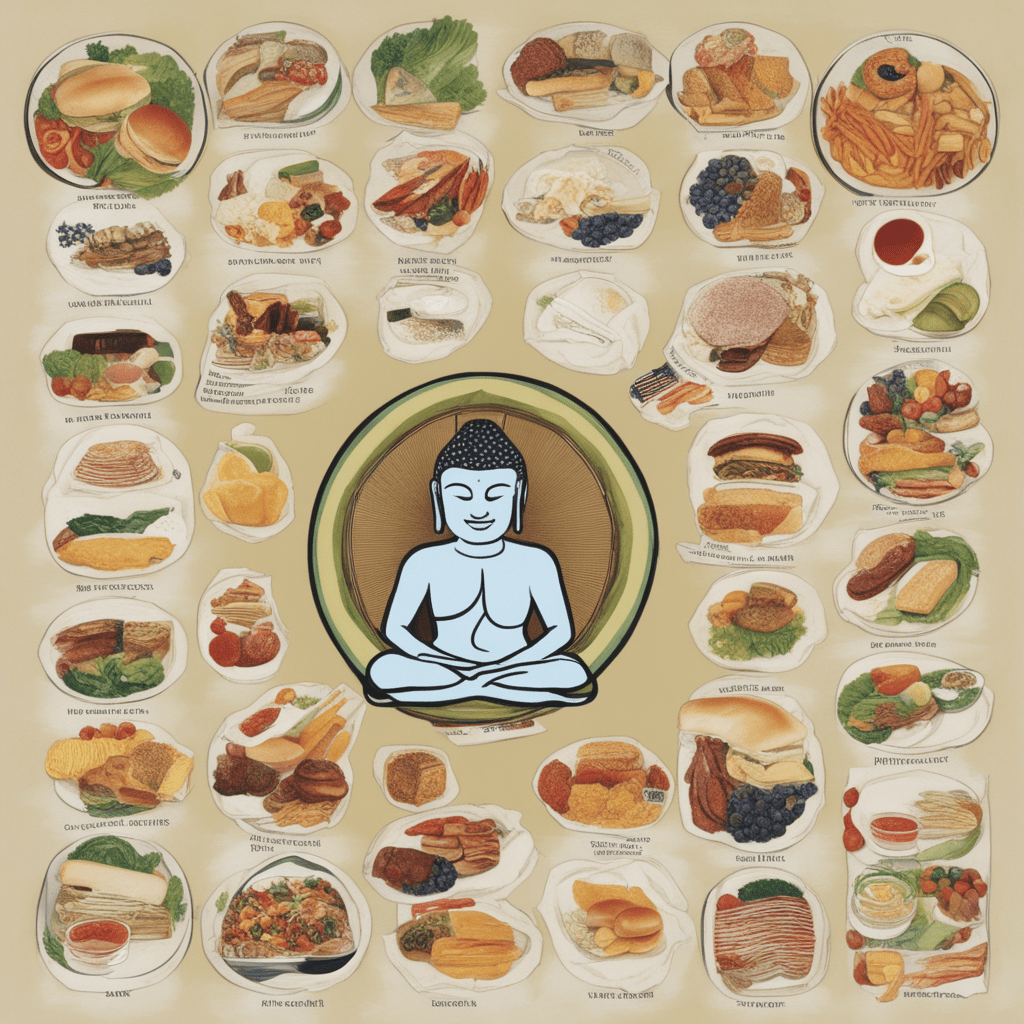
The Eastern Philosophy of Consumption and Abstention
In the intricate dance of life, we often hear the adage, “You are what you eat.” Rooted in the wisdom of many cultures, this phrase suggests that our physical and mental well-being is profoundly influenced by the food we consume. But just as importantly, the choices we make about what we refrain from eating also define us. In the vast expanse of Eastern philosophy, whether feasting or fasting, you are that.
The concept of ‘Ahara’ in Ayurveda, the ancient Indian science of life, teaches that everything we consume, be it food, thoughts, or experiences, becomes a part of our inner and outer constitution. It’s not merely about the nutrients we obtain, but the energy, the ‘prana’, that comes with it. A meal cooked with love nourishes the soul, just as a dish prepared in haste or anger might leave us feeling unsettled.
Conversely, the act of abstention or fasting, common in Eastern practices like Buddhism, Jainism, and Taoism, is not merely a physical exercise. Fasting is as much a mental and spiritual activity as it is a physical one. By abstaining, we aren’t merely depriving ourselves; we’re creating space. Space for reflection, for inner growth, and for reconnecting with the self.
In the Zen Buddhist tradition, the act of eating mindfully, paying attention to every morsel, and being grateful for the nourishment is a form of meditation. On the other hand, moments of abstention teach us about the impermanence of desires. As Lao Tzu stated in the Tao Te Ching, “To attain knowledge, add things every day. To attain wisdom, subtract things every day.”
In the end, the balance between consumption and abstention is a personal journey, an inner dialogue. It’s about recognizing that every choice we make, whether to indulge or to refrain, is a reflection of our inner state, our philosophies, and our connection to the world around us.
As we navigate through the rhythms of life, let us remember: that we are not just shaped by what we consume but also by what we choose to let go. And in that delicate balance lies the true essence of existence.
Morgan O. Smith
Yinnergy Meditation & My Book, Bodhi in the Brain…Available Now!
https://linktr.ee/morganosmith

 Morgan O. Smith
“As Lao Tzu stated in the Tao Te Ching, “To attain knowledge, add things every day. To attain wisdom, subtract things every day.” – Loved this 🙂 The creation of space on abstaining is true, can be verified easily. It is not just a physical food and physical space but also everything imbibed at the mental-psychological plane. An appreciation for this space comes from occasionally fasting/abstaining or letting go, of the usual routine habit (of stuffing ourselves). Indeed we are what we eat. Thank you!
LikeLike
My pleasure, Ramble! And let us all continue to subtract 🙂
LikeLike