Shaktipat and Darshan in the Quest for Enlightenment
In the rich tapestry of spiritual traditions, the concepts of Shaktipat and Darshan emerge as profound mechanisms of grace, each offering a unique conduit to the divine. These terms are often encountered in the lexicon of Indian spirituality, particularly within the paths of yoga and tantra, where the pursuit of enlightenment takes a form as varied as the seekers themselves.
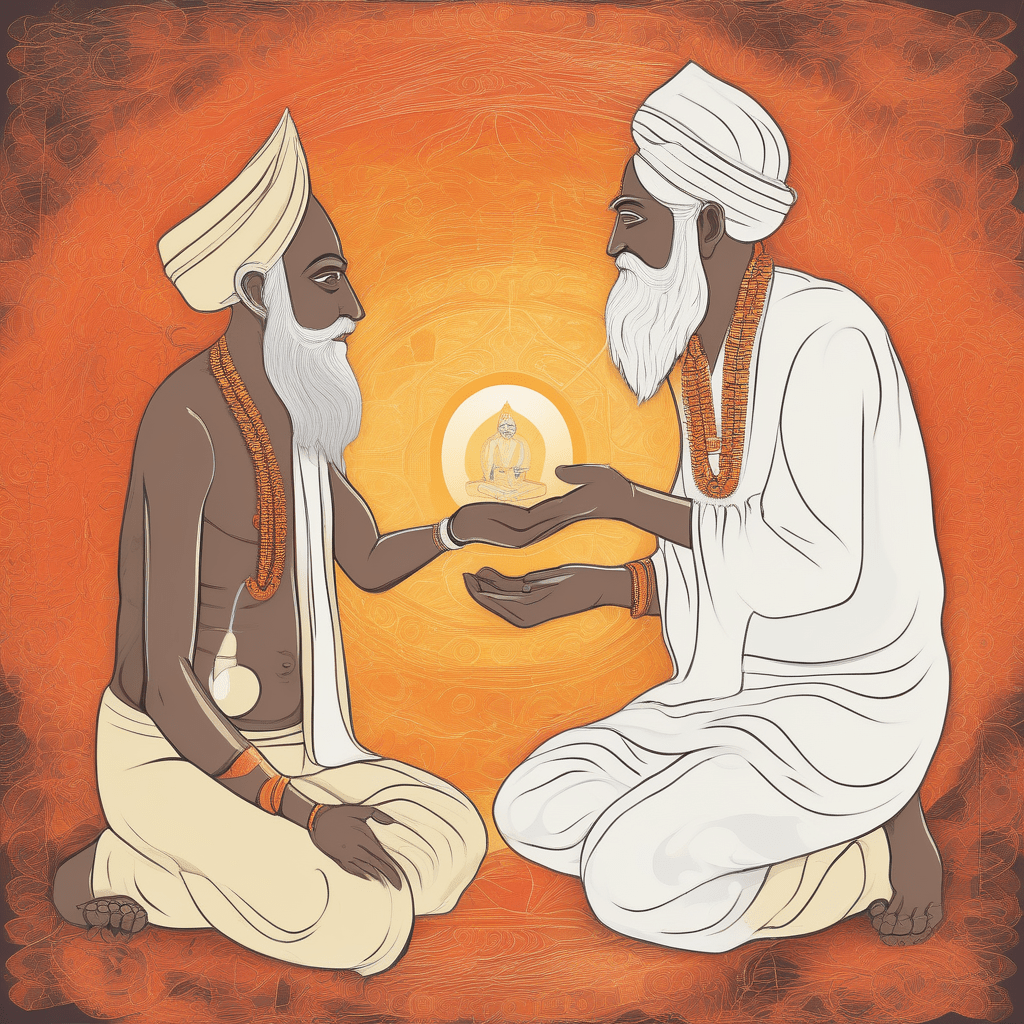
Shaktipat, often translated as the “descent of grace,” is a spiritual act where a guru or enlightened master transmits spiritual energy to a seeker. This transmission can catalyze a profound transformation, initiating or deepening the spiritual awakening process. It is an act of unlocking, a key turned in the lock of latent spiritual potential, often without the necessity of the seeker’s understanding or effort. It is said to be a direct intervention by the divine through the guru, whereby the seeker’s energy is awakened and the journey towards self-realization is accelerated.
Conversely, Darshan translates to “sight” or “a glimpse” in Sanskrit. It refers to the auspicious seeing or beholding of a holy person, deity, or sacred object. Darshan is not merely a passive observation; it is an active engagement, a reciprocal act where the seer is seen, where the act of viewing is saturated with spiritual significance. In darshan, the barriers between the divine and the devotee dissolve in the act of sacred viewing, and it is in this mutual encounter that blessings are believed to flow.
While Shaktipat can be considered an active transmission of spiritual energy, Darshan is a more passive receipt of divine presence. Yet, both hold the common thread of divine grace as central to their efficacy. They differ not in their ultimate aim—liberation and enlightenment—but in their operation. Shaktipat is akin to the wind that stirs the still waters of a lake, while Darshan is like the sun that is reflected upon it.
In contemplating Shaktipat and Darshan, one realizes that they are not mere practices but experiences that lie at the heart of the mystical relationship between the individual and the absolute. They embody the dual aspects of the spiritual journey: Shaktipat represents the inner transformation through direct intervention, and Darshan symbolizes the outer reflection of the divine in the world.
Ultimately, both Shaktipat and Darshan remind us that enlightenment is not a solitary pursuit; it involves a profound interconnectedness with the divine and the world. They encourage the seeker to remain open to the myriad ways grace manifests and recognize that each moment holds the potential for a deeper awakening.
In the spiritual odyssey, Shaktipat and Darshan are not merely destinations or methods; they are living dialogues with the divine, where each seeker is both a witness and a participant in the eternal dance of consciousness. As we embrace the mystery and beauty of these encounters, we find ourselves woven into the very fabric of spiritual unfolding, a journey that is as unique as it is universal.
Morgan O. Smith
Yinnergy Meditation & My Book, Bodhi in the Brain…Available Now!
 Morgan O. Smith