
The Unspoken Reality
In the realm of spirituality and philosophy, few concepts are as intriguing and paradoxical as nonduality. Nonduality, often associated with Eastern philosophies like Vedanta and Buddhism, refers to the idea that the dualistic distinctions we make between self and other, subject and object, mind and matter, are ultimately illusory or not fundamentally real.
The profound irony of nonduality is that any attempt to discuss or conceptualize it inherently contradicts its very essence. Speaking or thinking about nonduality is, by its nature, a dualistic activity. This is because language and thought are tools that rely on differentiation and distinction. They are the media through which we carve out the ‘self’ from the ‘other’, the ‘this’ from the ‘that’. In doing so, they perpetuate the illusion of duality – the very illusion that nonduality seeks to transcend.

This paradox highlights a fundamental challenge in human cognition: our reliance on dualistic frameworks to make sense of the world. From the moment we are born, our minds are trained to categorize and differentiate. This cognitive structuring is crucial for our survival and functioning in the world, yet it also confines us within the boundaries of dualistic thinking.
Nonduality suggests a state of consciousness where these dualistic distinctions dissolve. It points to an experiential understanding where the division between subject and object, observer and observed, ceases to exist. In this state, the egoic self expands into a boundless, undifferentiated whole.
Yet, the path to realizing nonduality is not through intellectual understanding. Since it is beyond the grasp of dualistic thought and language, nonduality is often approached through practices that transcend rational thinking, such as meditation, mindfulness, or other forms of spiritual contemplation. These practices aim to quiet the mind and dissolve the ego, allowing for a direct, non-conceptual experience of reality, unfiltered by the distorting lens of dualistic thought.
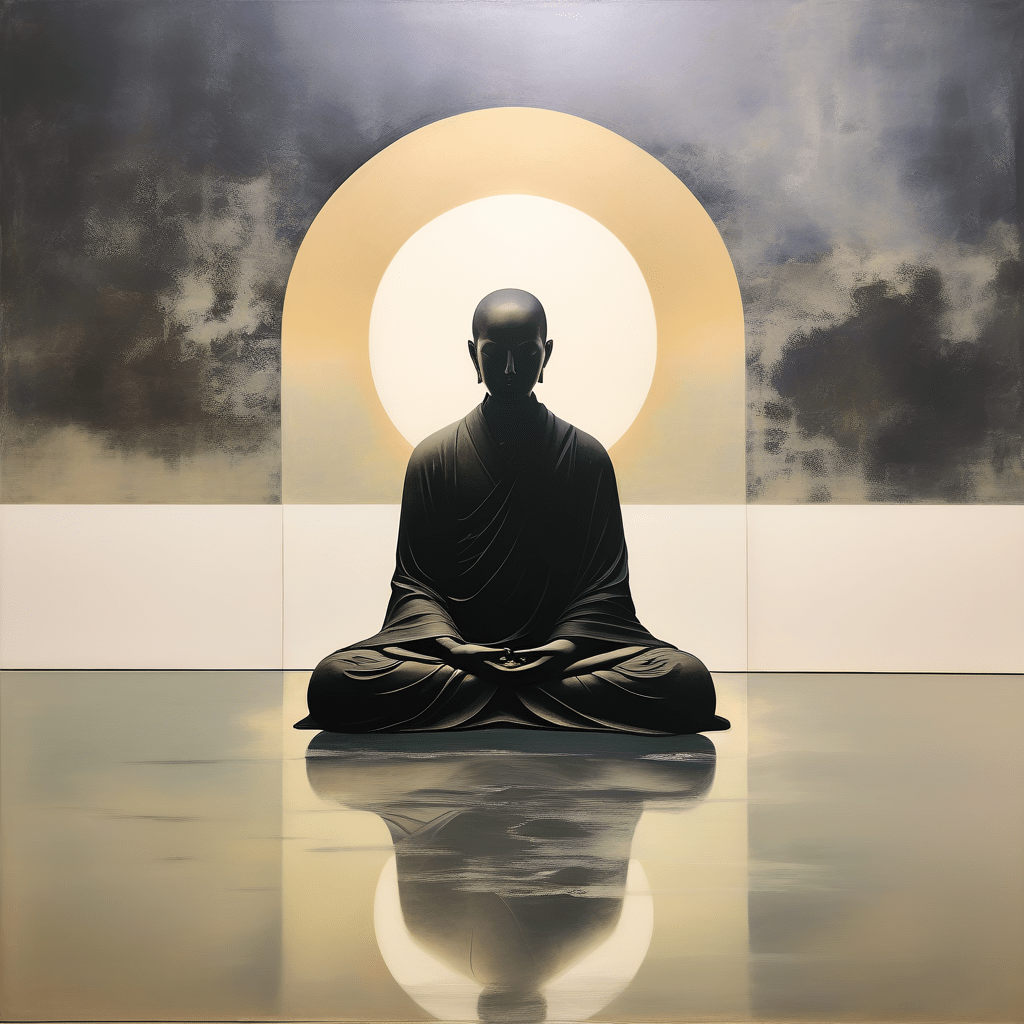
In conclusion, nonduality remains an enigmatic yet profoundly significant concept. It challenges us to look beyond the apparent separateness and fragmentation of our experiences and to question the very foundations of our understanding of reality. While it may never be fully captured in words or thoughts, it stands as a powerful reminder of the limitations of our dualistic perspectives and invites us to explore the depths of our consciousness.
Morgan O. Smith
Yinnergy Meditation, Spiritual Life Coaching & My Book, Bodhi in the Brain…Available Now!
 Morgan O. Smith