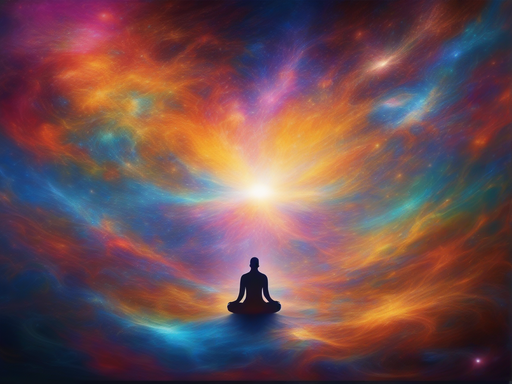
Beyond the Infinite

Contemplating the Vastness Beyond Para-Brahman

In the profound depths of Hindu philosophy, the concept of Para-Brahman represents the ultimate, unchanging reality, the absolute existence that transcends all forms and phenomena. It is an entity beyond human perception, beyond all attributes, the substratum of both the manifest and the unmanifest. But the human mind, insatiably curious and inherently uncontent with limits, dares to ponder—what, if anything, lies beyond Para-Brahman?

To consider what is beyond Para-Brahman is to engage in a philosophical exercise that stretches the boundaries of thought and existence. It is like trying to illuminate the space beyond the edge of the universe’s observable horizon. Para-Brahman itself is defined as the highest Brahman, beyond which nothing further can be conceptualized within the traditional frameworks of Hindu philosophy. However, this does not deter the most adventurous minds from speculating on the nature of the absolute’s transcendence.

In attempting to name that which is beyond the ultimate, we delve into a realm of thought that precedes language and form. Such a pursuit may lead us to the Sanskrit term “Anirvachaniya,” meaning that which cannot be expressed or described. In this context, the term acknowledges the limitations of human language and understanding when faced with the immensity of the infinite.

Yet, it is in the silence of meditation and the stillness of contemplation that Hindu tradition often finds its deepest insights. Here, the individual soul (Atman) comes into direct experience with Brahman, and it is perhaps in the dissolution of the self where one might fleetingly encounter the hint of something even more profound than Para-Brahman—something that, by its very nature, cannot be encapsulated by any concept or word.

We might then call this speculative beyond “Ananta,” the infinite, a term that suggests an endlessness that extends even beyond the ultimate expanse of Para-Brahman. It is not a place, entity, or state that can be reached or understood; it is the possibility of infinity within infinity, the essence of boundlessness that permeates every aspect of the cosmos and yet is apart from it, untouched and untouchable.
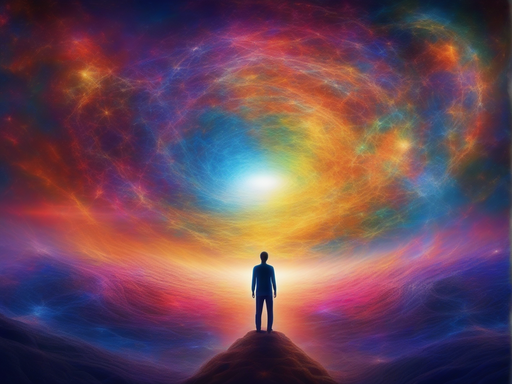
To ponder what lies beyond Para-Brahman is to embrace the essence of the Upanishadic inquiry, “Neti, neti,” not this, not this. By negating all that can be known, we are left with silent wonder, an acknowledgment that the truth is ever beyond the grasp of our finest conceptions. It is a journey not toward another concept, but towards an ever-deepening mystery that invites us to find peace in the acceptance of the unknown.

The spiritual endeavour to reach beyond even the concept of Para-Brahman invites us to a profound humility, an understanding that what we know and experience is only a fragment of the vastness of reality. It is a cosmic reminder that the journey is not just about seeking answers, but also about appreciating the beauty of the questions themselves.

In this exploration, we are not just students of Hindu philosophy but of the universe itself, engaged in a ceaseless dialogue with the essence of existence. And perhaps, in that very dialogue, we come to realize that the ultimate truth is not a distant reality to be pursued but an ever-present mystery to be lived.

Morgan O.  Smith

Yinnergy Meditation & My Book, Bodhi in the Brain…Available Now!

https://linktr.ee/morganosmith
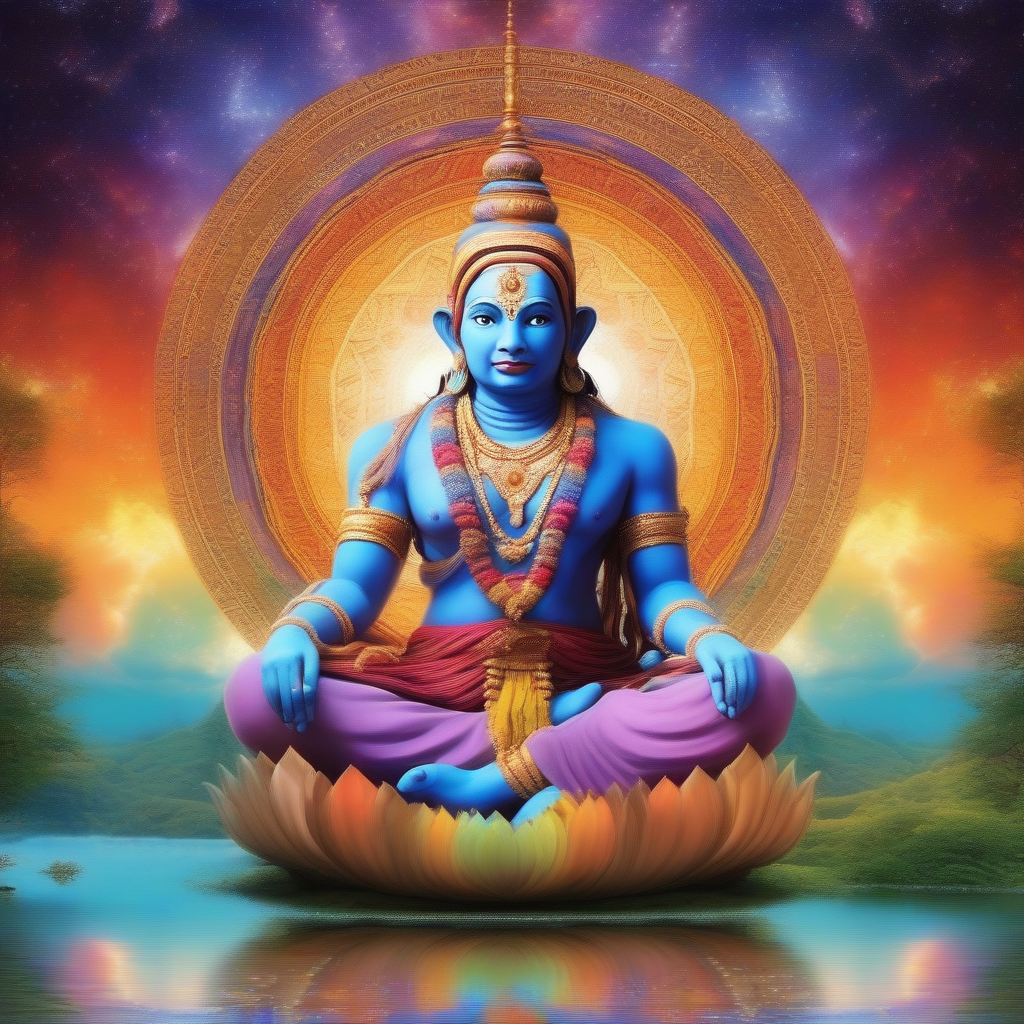

The Infinite and Beyond

Contemplating Brahman and Para-Brahman

In the profound depths of Indian philosophy, the concepts of Brahman and Para-Brahman emerge as pivotal ideas that transcend ordinary comprehension, inviting seekers to explore the very edge of cosmic understanding. Brahman is often described as the ultimate reality, the unchanging, infinite, immanent, and transcendent reality that is the Divine Ground of all matter, energy, time, space, being, and everything beyond in this Universe. It is the singularity from which multiplicity flows, the essence that sustains and constitutes the cosmos and its myriad expressions.

Yet, within this already boundless concept lies the hint of something even more ineffable: Para-Brahman. This term goes beyond even Brahman, suggesting a reality that exists beyond the highest conception of the Absolute as known within the limits of human understanding. If Brahman is the white canvas upon which the universe is painted, then Para-Brahman is the very space that holds the canvas, the possibility of canvases yet untouched, and the idea of the canvas itself—both less tangible and more fundamental.

Para-Brahman is not just a step further; it is an exponential leap into the realm of the Absolute’s absolute. While Brahman can be approached through spiritual practice, described in scriptures, and meditated upon, Para-Brahman remains forever beyond the grasp of direct experience and intellectual articulation. It is the ‘Beyond’ in ‘Beyond the Ultimate’, the ‘Transcendence’ in ‘Transcendental’, where even the concept of ‘existence’ loses its footing.

The distinction between Brahman and Para-Brahman is not just of scholarly interest—it offers a radical perspective on the nature of enlightenment and the ultimate goal of spiritual pursuit. It challenges practitioners to question the very foundation of what they consider to be Absolute. In Brahman, we find the dissolution of the ego and the union with the divine; in Para-Brahman, there seems to be no ‘we’ to experience the union, no ‘divine’ to unite with, only an unmanifested potentiality that defies duality and description.

This philosophical delineation beckons us to reconsider the nature of reality and our place within it. It humbles our narrative-driven minds to accept that the ultimate truth may be a mystery that remains forever out of reach, something that can be hinted at but never fully explained or understood. Yet, this is not a cause for despair but an invitation to expand our perception, to live with a sense of wonder, and to find peace in the ineffable mystery that is the grandeur of existence.

In this light, the journey of life transforms into a sublime trek across the expanse of consciousness—with Brahman as the guide and Para-Brahman as the destination that was never apart from us, yet always beyond us. The seeker thus becomes the ultimate pilgrim, traversing an inner universe where questions and answers merge into the silent eloquence of Being.

Morgan O.  Smith

Yinnergy Meditation & My Book, Bodhi in the Brain…Available Now!

https://linktr.ee/morganosmith

The Unfathomable Brahman

Exploring the Indivisible Reality from Multiple Perspectives

The quest to understand Brahman is a journey into the heart of existence itself, a pursuit that has intrigued philosophers, sages, and seekers for millennia. In the vast expanse of Hindu philosophy, Brahman is the ultimate reality, the fabric of all that exists and beyond. It is both immanent and transcendent, the core of our being and the cosmos. This exploration of Brahman from various perspectives—gross, subtle, causal, and nondual—invites us to expand our minds beyond the limits of ordinary perception.

**From the Gross Perspective: Brahman as the World**


When we look at Brahman from the gross perspective, we see the universe in all its material splendour. Here, Brahman is not an abstract concept but the physical universe that we interact with through our senses. It is the mountains, rivers, stars, and galaxies; the dance of creation and destruction visible to the naked eye. This manifestation is known as Saguna Brahman, the form with qualities, where the Divine is seen with attributes and forms, engaged in the act of creation.

**From the Subtle Perspective: Brahman as Consciousness**


Venture deeper, and we encounter the subtle perspective. Here, Brahman is the essence of consciousness that animates life. This is not the consciousness that fluctuates with our thoughts and feelings, but the pure awareness that observes, untouched and unchanging. This subtle Brahman also referred to as Nirguna Brahman, is without qualities, where God is not limited by any attributes. It is the silent witness to the play of the universe, the inner light that illuminates our experiences.

**From the Causal Perspective: Brahman as the Source**

Moving into the causal perspective, we touch on the very source of existence. Brahman here is the unseen cause behind everything—the seed from which the tree of the universe grows. This aspect of Brahman is deeply mysterious, for it is the origin of time, space, and causality itself. It is Avidya, ignorance, not in the sense of lack of knowledge, but as the primal forgetfulness that makes us perceive duality in the nondual.

**From the Nondual Perspective: Brahman as the One without a Second**


Finally, from the nondual perspective, Brahman is realized as the one without a second—Advaita. It is not a deity, not an entity, not even a ‘thing’ that can be comprehended by the intellect. It is the underlying oneness that pervades all dualities, where the seeker and the sought merge. In this view, the individual self (Atman) and the universal self (Brahman) are the same. All distinctions between creator and creation dissolve, revealing that there is nothing but Brahman—pure existence, consciousness, and bliss (Sat-Chit-Ananda).

This journey through the perspectives of Brahman reflects the layered depths of our existence. From the tangible reality of our day-to-day lives to the deepest spiritual realization, Brahman remains the unchanging truth. Each perspective is a step closer to the ultimate truth, leading us from the outward expressions of divinity to the profound inner revelation that we are, in essence, the infinite Brahman.

To understand Brahman is to expand our awareness across the spectrum of existence. The gross perspective roots us in our environment, the subtle unfolds the inner cosmos, the causal leads us to the primal source, and the nondual reveals our true infinite nature. In contemplating these perspectives, we may find that the journey to understand Brahman is not a journey outward but a profound voyage within, to the very core of who we are.

Morgan O.  Smith

Yinnergy Meditation & My Book, Bodhi in the Brain…Available Now!

https://linktr.ee/morganosmith
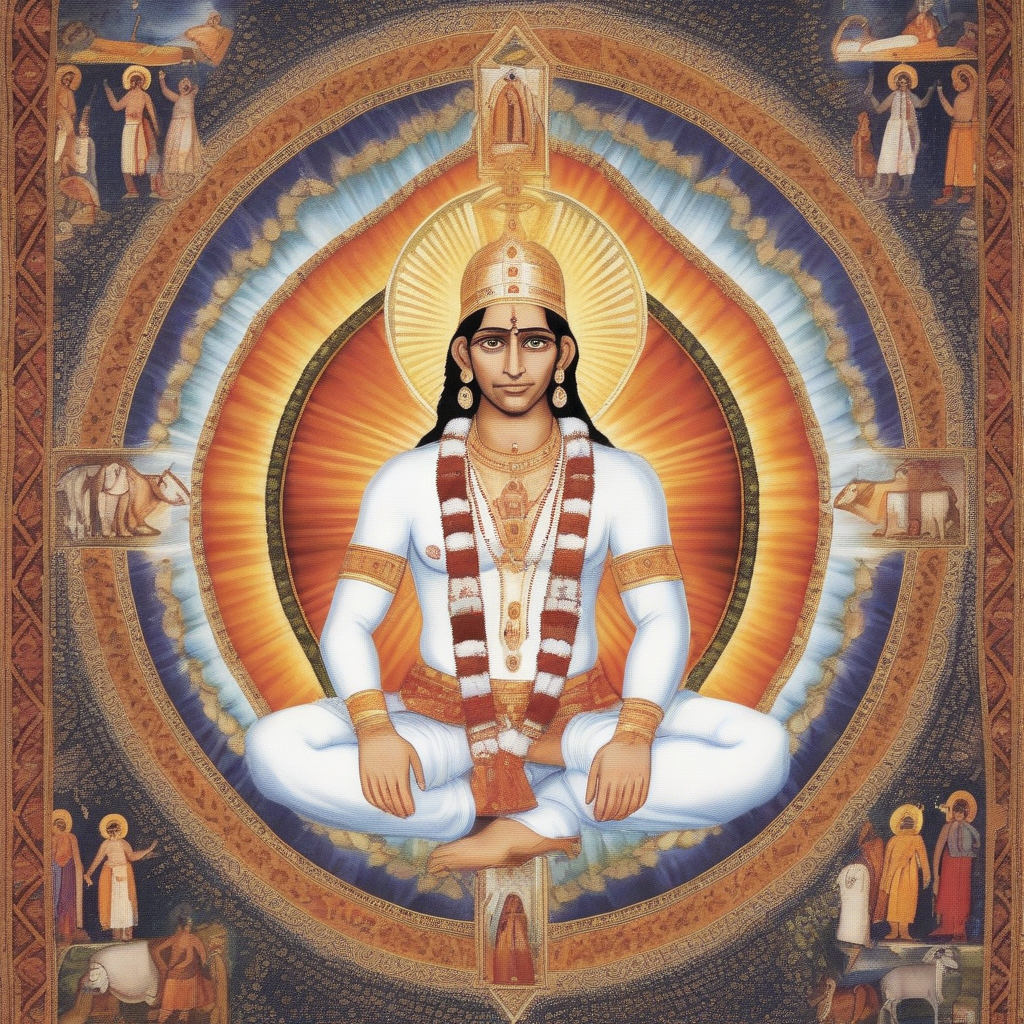
Brahman Through a Christian Lens

Exploring the Divine Tapestry

In the lush gardens of spiritual thought, there exist concepts that, at first glance, may appear to belong to entirely different landscapes. Yet, upon closer examination, one finds threads that weave them together into a grand tapestry of the divine. Such is the case when one seeks to understand the Hindu concept of Brahman from a Christian perspective.

At the heart of Hindu philosophy lies Brahman, the ultimate reality, the absolute existence, knowledge, and bliss. Brahman is not merely a god among many but the ineffable ground of all being, beyond form, beyond limits, the essence of everything that was, is or will be. It is an ocean of consciousness, infinite and eternal, from which the universe springs forth like waves from a boundless sea.

How, then, can a Christian approach this concept? Christianity speaks of God in terms of a personal deity, a Trinity of Father, Son, and Holy Spirit, yet also affirms that God is beyond all comprehension, omnipresent, and the source of all that exists. The Christian mystical tradition, with its contemplative gaze, has long sought union with the divine, echoing the Hindu pursuit of realizing one’s oneness with Brahman.

In the Christian mystical experience, one might glimpse parallels to the understanding of Brahman. The Apostle Paul, in his letter to the Colossians, speaks of Christ as the one “in whom all things hold together.” This echoes the sense of Brahman as the underlying reality that upholds the universe. Theologians like St. Augustine have described God as being closer to us than we are to ourselves, resonating with the Hindu notion of Atman, the innermost self, ultimately one with Brahman.

Furthermore, the Christian concept of agape, or self-giving love, can be seen as a reflection of the blissful aspect of Brahman. In creation, God pours out love, which might be understood as a movement from the fullness of divine bliss. The Incarnation, the event of God becoming human in the person of Jesus, is a profound expression of this divine self-outpouring, analogous to the way Brahman manifests as the universe.

Yet, there are also profound differences. Christianity insists on a personal relationship with God, while the realization of Brahman is often described in impersonal terms. The Christian God enters into history and suffers with humanity, whereas Brahman is often seen as beyond all duality and unaffected by the play of cosmic forces.

In exploring Brahman from a Christian standpoint, we tread a path of mystery and paradox, where words falter and concepts blur. It is a journey that calls for humility, for what we encounter is the divine mystery, which, whether named Brahman or God, ultimately eludes all attempts at definition.

As we reflect on Brahman through a Christian lens, we are invited not to a debate but to a dance of understanding, where diverse beliefs can enrich each other. It is a reminder that our grasp of the Infinite is always incomplete and that perhaps, in the silent spaces between our words and concepts, there might be more that unites than divides.

Morgan O.  Smith

Yinnergy Meditation & My Book, Bodhi in the Brain…Available Now!

https://linktr.ee/morganosmith
Absolute Monism

Unraveling the Tapestry of Oneness

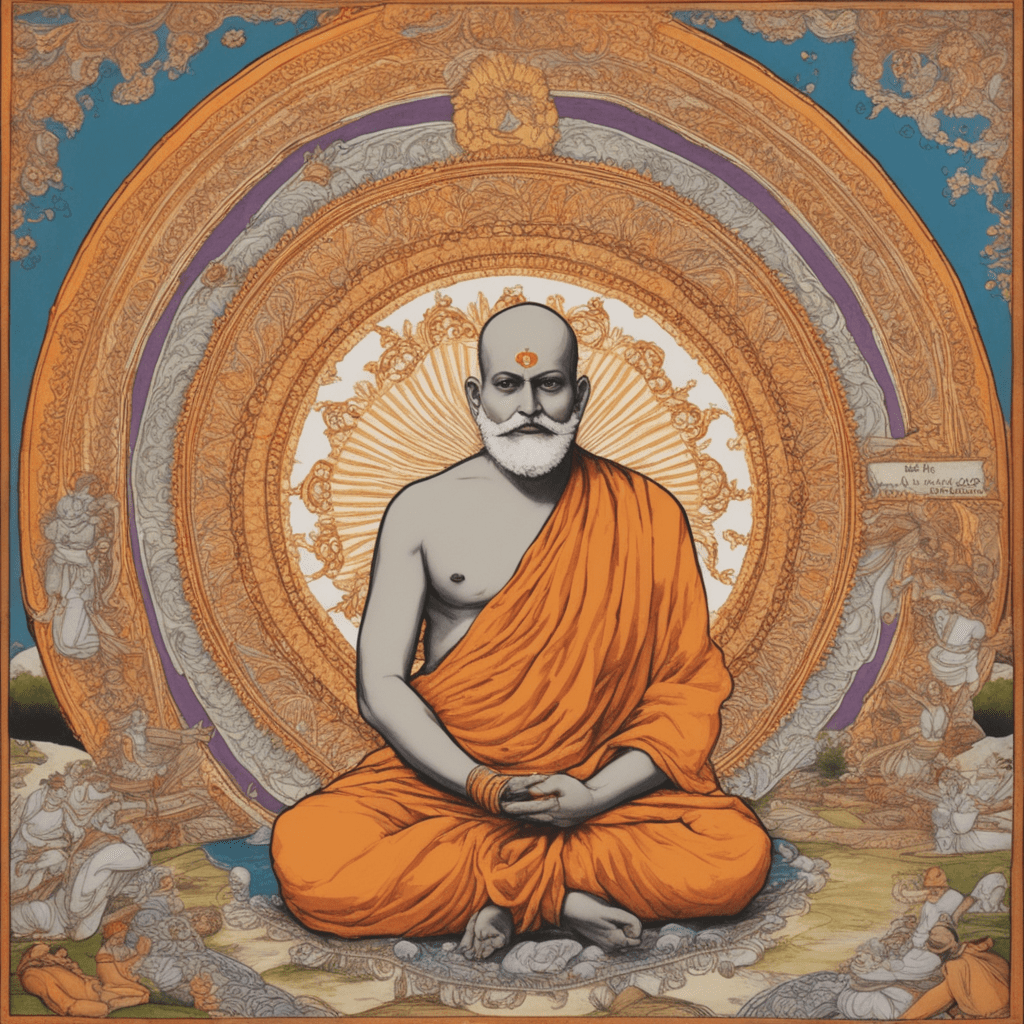
The vast universe, with its manifold entities and infinite complexities, often bewilders human minds. Philosophers and thinkers from time immemorial have grappled with questions about the nature of existence and the ultimate reality. One profound idea that surfaces recurrently is that of Absolute Monism: the belief that beneath the apparent multiplicity, there is but one undivided reality. Let’s take a deeper look into this captivating worldview.

### A Universe from One Thread


At the heart of Absolute Monism lies the assertion that all differences and diversities we perceive are mere illusions. This assertion may seem contradictory to our daily experiences. After all, isn’t the world teeming with diversity?

Yet, this is where Eastern and Western philosophies converge. Ancient Hindu scriptures speak of *Brahman* as the ultimate, undifferentiated reality. The Hindu philosophy of Advaita Vedanta encapsulates this belief by stating that the world’s multiplicity, driven by *Maya*, is an illusion. Meanwhile, in the West, the philosopher Spinoza proposed that God and Nature are two names for the same reality, implying a singular, infinite substance. These ideas, separated by continents, come together to champion a singular reality beneath the apparent diversity.

### Seeing Beyond the Illusion

The concept of illusion is integral to understanding monism. In life, appearances can often be deceiving. A mirage in the desert, a rainbow after the rain, and even our reflection in the water are all illusions. If such simple things can deceive our senses, might it be possible that our entire perception of diverse reality is similarly mistaken?

*Mysticism* has been one avenue through which individuals across cultures have described experiences consistent with Absolute Monism. The interconnectedness of all things, a theme found in the tapestry of monism, speaks to the heart, nudging us to see beyond divisions and differences.

### Implications for Modern Times

If Absolute Monism holds that all is one, then what does this mean for us in the present age, surrounded by divisive forces and fragmented views?

Firstly, on an ethical plane, it implies that harm inflicted upon one is harm to the entirety. This perspective could drastically alter how we approach interpersonal relationships, environmental concerns, and global crises. If we truly internalize this philosophy, then every act of kindness and harm has far-reaching consequences.

Secondly, it brings to the fore the importance of self-realization. In many monistic traditions, the realization of this singular truth is the end goal, bringing about an end to suffering.

Lastly, it sparks curiosity about the nature of our universe. With advancements in modern physics and cosmology, we find theories that echo monistic thoughts. The Big Bang, for instance, suggests that everything we see, touch, and experience emerges from a singular point.

### Embracing Diversity within Unity

Absolute Monism does not negate the value of diversity. Rather, it calls for a deeper understanding. Imagine a tapestry. Up close, one can see the myriad of colours, textures, and patterns. But from a distance, it’s one cohesive artwork. Similarly, monism asks us to appreciate the individual threads while recognizing the grand design.

In an age teeming with division, perhaps the idea of Absolute Monism can be the bridge that reminds us of our interconnectedness. As we stand at the cusp of profound global challenges, this ancient philosophy might just hold the key to a unified, harmonious future.


Embracing the ideas of Absolute Monism requires introspection and openness. Whether you fully resonate with its tenets or not, it undoubtedly serves as a beacon, guiding us toward unity, understanding, and profound interconnectedness.

Morgan O. Smith

Yinnergy Meditation & My Book, Bodhi in the Brain…Available Now!

https://linktr.ee/morganosmith
The Veils of Maya

Navigating Illusion in the Quest for Truth

The labyrinthine nature of existence, adorned with its pleasures and pitfalls, has been a subject of deep contemplation for ages. At the heart of many philosophical inquiries in Hinduism lies the enigmatic concept of ‘Maya’. Far from being a mere illusion, Maya reveals layers of truth, each pointing towards an understanding of the universe and our place in it.

**The Cosmic Dance of Prakriti and the Three Gunas**


Imagine the universe as a grand stage, with Prakriti, the primal nature, as the backdrop. From this vast expanse springs forth everything we see, feel, and experience. Yet, what gives rhythm to this cosmic dance?

Enter the Three Gunas – Sattva, Rajas, and Tamas. These are not just passive qualities but dynamic forces shaping our experiences. The serenity of a tranquil lake embodies Sattva, the turbulence of a storm epitomizes Rajas, and the still darkness of the night echoes Tamas. Together, they create a spectrum of experiences in our lives.

**The Individual’s Tryst with Ignorance**


Closer to our personal experience is Avidya, the fog of ignorance clouding our perception. Under its influence, we misidentify with our transient selves, overlooking the eternal essence within. It’s like mistaking the waves for the vast ocean.

In this state, we are ensnared by Karma, the ever-entwining web of action and consequence. The Kleshas, those tormenting afflictions, further deepen our entanglement. Desires and aversions play tug-of-war, with the ego stoking the flames.

**The Divine Masquerade**

But is Maya merely a cosmic error or a deceptive trap? Not necessarily. Maya, when seen as the divine power or Shakti, becomes the grand choreographer of the universe’s dance. It’s a divine play, a Leela, where the One chooses to manifest as many, experiencing itself through myriad forms.

**Beyond Duality: The Advaita Perspective**


The school of Advaita Vedanta offers a profound insight. It suggests that beneath the multiplicity lies a singular truth, the Brahman. Maya, in this view, is the sublime artist crafting the many from the one, making the undivided appear divided.

**Conclusion: The Play and Beyond**

Maya, far from being a mere illusion to discard, becomes a lens to navigate our existence. It offers lessons, challenges, and experiences, pushing us to question, understand, and ultimately transcend.

In the dance of Maya, we are both the dancer and the audience. The key lies in recognizing the play, enjoying its beauty, and seeking the truth beyond the performance. In this quest, we don’t just find answers about the universe, but also about ourselves.

Morgan O. Smith

Yinnergy Meditation & My Book, Bodhi in the Brain…Available Now!

https://linktr.ee/morganosmith

The Profound Transformation of Realizing Oneself as Brahman

A Journey Beyond the Self

In the boundless tapestry of human existence, few ideas are as profound and transformative as the realization of oneself as Brahman. A central concept in Hindu philosophy, Brahman refers to the ultimate reality or cosmic spirit, a principle that transcends the individual self and unites all living beings.

This blog post explores the many changes an individual might experience upon this realization, a journey that transcends mundane existence and awakens a new consciousness.

### The Loss of Ego and the Embrace of Unity

Perhaps the most radical shift in consciousness comes from losing the individual ego. Recognizing oneself as part of the universal oneness leads to a dissolution of the self, allowing the individual to see beyond the superficial distinctions that often characterize human perception. This leads to a profound sense of unity, empathy, and compassion, transcending barriers like race, nationality, and religion.

### A Shift in Values and Desire

The realization of Brahman changes the very fabric of desire and ambition. Material possessions, social status, and even relationships may lose their significance, replaced by spiritual growth and a deepened understanding of the cosmic order. The individual might pursue selfless service, finding fulfillment in contributing to the well-being of all.

### The Embrace of Paradox and the Transcendent Nature of Existence

This profound awakening allows for a comfortable acceptance of paradoxes and contradictions. Time becomes more fluid, creativity blossoms, and the person might develop an ability to recognize synchronicities, meaningful coincidences that reveal the interconnected web of existence.

### Living in Harmony and Transcending Social Constructs


Living in harmony with nature, respecting all life, and transcending conventional gender roles and social constructs, the enlightened individual moves through life with grace, mindfulness, and effortless action. Their actions are unforced, carried out with a sense of reverence and alignment with universal ethics.

### The Physical and Emotional Manifestations

The journey to realizing oneself as Brahman does not merely affect the mind but also resonates through the body and emotions. The individual may find improved physical well-being, experience deeper states of meditation, and become almost entirely devoid of internal and external conflict.

### The Inspiration to Others

Through this transformation, the individual becomes a living example of peace, love, and wisdom, inspiring others simply through their presence and way of being. They embody a philosophy that sees beyond the limitations of material existence and offers a path to spiritual awakening.

### Conclusion

The realization of oneself as Brahman is a profound spiritual concept that encompasses every aspect of being—mental, physical, emotional, and spiritual. It offers a glimpse into a state of consciousness that transcends the mundane and awakens a new way of perceiving reality.

In a world often driven by material pursuits and divisive ideologies, the teachings surrounding Brahman provide a timeless wisdom that calls for unity, compassion, and a life centred on spiritual truth. Whether viewed as a philosophical concept, a religious belief, or a spiritual experience, the realization of Brahman invites us to look beyond the self and embrace a vision of existence that is all-encompassing, transcendent, and profoundly transformational.

As we navigate the complexities of modern life, may we find inspiration in the ancient wisdom that teaches us to see ourselves not as isolated beings but as part of a grand, interconnected cosmos, guided by a principle that is at once beyond us and within us. It is a journey of discovery, a path to enlightenment, and a call to a deeper, more meaningful existence.

Morgan O. Smith

Yinnergy Meditation & My Book, Bodhi in the Brain…Available Now!

https://linktr.ee/morganosmith

Beyond the Verbal Abyss

Embracing the Indescribable in the Pursuit of Nondual Consciousness

The realm of metaphysics has been exploring the uncharted territory of human existence since the inception of philosophical thought. The concept of ‘Turiyatita’, borrowed from the ancient Vedantic wisdom, invites us to delve into the mystery of the Ultimate Nondual Presence. In a state of supreme transcendence, Turiyatita marries the notions of Emptiness and form, painting a picture of the Self fully liberated and realized.

This profound state is said to represent the highest level of human awareness. It’s the experience of actualizing the quintessential Vedantic concept, “Aham Brahmasmi,” the realization that all is Brahman, the ultimate reality.

The fascinating paradox of this journey lies in its unspeakability. The moment of enlightenment, where one realizes their ultimate oneness with the universe, is so overwhelmingly mind-shattering that no human language can capture its essence. We find ourselves venturing into a stateless state, an inexplicable expanse that houses all potentiality, while simultaneously being nothing. It’s a cosmic riddle that has always existed and will continue to exist, challenging the very constructs of human understanding.

Over the years, I grappled with expressing the enigma that is Turiyatita. I discovered that language, no matter how profound or poetic, remains insufficient to convey this transcendental experience. The individual mind’s narratives fall short when tasked with communicating such an experience to the collective consciousness. This realization is like a boundless sea that can only be expressed through the universe itself – through everything around us, beneath us, above us, within us, and even through us. Our very existence, after all, is an echo of this ‘Absolute’ language.

This illuminating journey of pure awareness left me in a state of awe, marking an indelible imprint on my ego’s fragments. An unforgettable memory, it is the most profound self-discovery I’ve had in this lifetime.

Most of us remain oblivious to the existence of this state, yet it’s accessible to everyone. It waits patiently for anyone bold enough to plunge into its mysterious depths. These are the Akashic waters of enlightenment, a blissful abyss where the brave explorers willingly lose themselves.

This presence, while unnoticeable, pervades our existence as an invisible field, a force that forms the bedrock of all beings. It’s in the exploration of this Ground of All Existence that one realizes the enigma of the indescribable, the ineffable mystery commonly referred to as ‘God’.

So, as we journey through life and its varied experiences, may we always strive for the courage to explore these profound depths. For it is in these explorations that we touch upon the mysteries of our existence, our true selves, and the cosmic reality we are all a part of.

Morgan O. Smith

Yinnergy Meditation & My Book, Bodhi in the Brain…Available Now!

https://linktr.ee/morganosmith

The Multiverse Within

Exploring Chakras Beyond Our Perception

In the rich tapestry of Eastern philosophy and spirituality, the concept of chakras and kundalini awakening has long captivated the Western world. But a deeper, more expansive understanding of these ideas prompts us to transcend the traditional seven chakras in the human body and see them permeating the universe at every level – from the massive galaxies to the tiniest sub-atomic particles.

This perspective’s core is the belief that chakras are not exclusive to the gross or subtle human body. They are ubiquitous and omnipresent, extending their influence to every cell, every molecule, every atom, and even to the most infinitesimal particles. Just like each human has energy centers, these minuscule entities – bodies in their own right – are also believed to possess chakras.

This viewpoint is a confluence of spirituality and quantum physics. It suggests a microcosm-macrocosm principle where the patterns of the universe repeat themselves at different scales, connecting everything from the vastness of the cosmos to the smallest particles.

During a full-blown kundalini awakening, a transformative spiritual experience often depicted as the release of divine energy stored at the base of the spine, it is proposed that not only the individual’s chakras but also these infinitesimal chakras, in each ‘body’ within our physical body, come to life. It is a grand unison of consciousness awakening at all levels of existence, interconnecting every particle within and beyond us.

In such a profound event, each ‘body’, from cellular to atomic and sub-atomic levels, reaches a state of self-realization, comprehending that it is part of the ‘Brahman,’ the ultimate reality or absolute in Hindu philosophy. This concept equates to ‘The Ground of all Being,’ a term that mystics and spiritual teachers use to describe the deepest level of reality.

This fascinating belief presents an interconnected universe where the microcosm and macrocosm continually interact, affecting and reflecting each other. A place where every entity, regardless of size or subtlety, is a unique expression of the same energy, bound by a common cosmic rhythm and linked through an intricate network of chakras.

In conclusion, the belief in a kundalini awakening of not just the seven primary chakras, but countless others within every atom and sub-atomic particle, invites us to broaden our perception of reality. This concept urges us to look beyond the boundaries of our current understanding and explore the uncharted territories of consciousness that might hold the key to our oneness with the universe. It is a philosophy that doesn’t merely expand our knowledge of self and the universe; it transforms it.

Morgan O. Smith

Yinnergy Meditation & My Book, Bodhi in the Brain…Available Now!

https://linktr.ee/morganosmith
A Meeting of East and West

Advaita Vedanta and Ken Wilber’s Four Quadrants

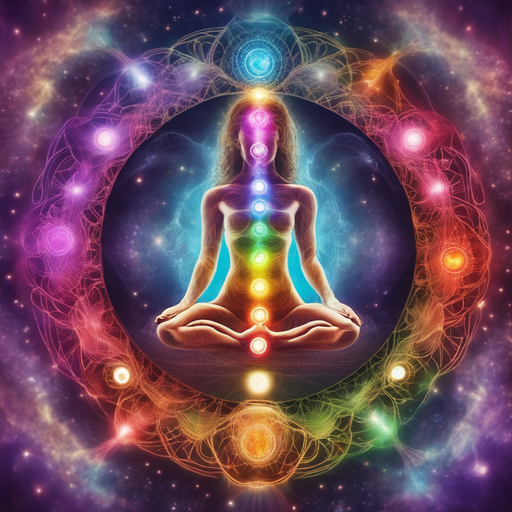
As we navigate through life’s labyrinth, we encounter myriad philosophical viewpoints designed to offer us clarity about the nature of reality. Two such perspectives – one rooted in ancient Eastern spirituality, Advaita Vedanta, and the other a more contemporary Western theory, Ken Wilber’s Integral Theory – provide us with intriguing interpretive lenses. While appearing distinct, when juxtaposed, they unfold a captivating dialogue, revealing the interconnectedness of diverse paths of wisdom.

**Non-Duality: The Heart of Advaita Vedanta**

At the core of Advaita Vedanta lies the profound principle of non-duality. The term ‘Advaita’ translates to ‘not two’, pointing towards the notion of unity beneath apparent multiplicity. According to this philosophy, all phenomena – whether perceived as separate entities or diverse experiences – are manifestations of a singular absolute reality known as Brahman.

This philosophy posits that the perceived distinction between the individual self (Atman) and the ultimate reality (Brahman) is an illusion (Maya), born out of ignorance (Avidya). The journey of spiritual awakening in Advaita Vedanta is about transcending this illusion, recognizing the non-dual nature of existence, where the Atman and Brahman are not separate but one.

**Ken Wilber’s Four Quadrants: A Comprehensive Map of Reality**

Ken Wilber’s Integral Theory, particularly the Four Quadrants model, offers a different but complementary perspective. Wilber presents a holistic map of reality, dividing it into four quadrants: Individual Interior (consciousness), Individual Exterior (behaviour), Collective Interior (culture), and Collective Exterior (society). Each quadrant represents an integral part of our existence and must be considered to understand reality holistically.

**The Interplay: Advaita Vedanta and Four Quadrants**

Drawing parallels between Advaita Vedanta and the Four Quadrants can create a fascinating synthesis of Eastern and Western thought.

The Upper Left Quadrant (Individual-Interior) aligns with the individual’s subjective experience, mirroring the Advaita exploration of Atman. The Upper Right Quadrant (Individual-Exterior) encapsulates the physical manifestation of the individual, aligning with the Advaita concept that even our physical existence is a manifestation of Brahman.

The Lower Left Quadrant (Collective-Interior) represents shared beliefs and cultures, resonating with the Advaita perspective that cultural differences are superficial, and at a deeper level, unity prevails. The Lower Right Quadrant (Collective-Exterior) mirrors societal structures, all manifestations of the same non-dual reality.

From the Advaita viewpoint, the division of the four quadrants are themselves expressions of Maya, as they create apparent separations where none ultimately exist. They are valuable tools for understanding and navigating the world but do not represent the deepest truth of non-duality.

**Uniting Perspectives: A Path to Enlightenment**

Exploring the intersection of Advaita Vedanta and Ken Wilber’s Four Quadrants offers a richer understanding of reality, harmonizing subjective and objective, individual and collective, Eastern spirituality and Western theory. As we understand that the lines dividing these quadrants are more porous than they seem, we move closer to the non-dual truth of Advaita – that beneath apparent diversity, unity pervades.

At a time when division and fragmentation are rampant, this synthesis could offer a path toward the kind of transcendental insight that can bridge divides, fostering a deeper sense of interconnectedness and wholeness. After all, as Advaita Vedanta teaches us, beneath the surface of multiplicity, we are ‘not two’ but one. As we embrace the wisdom of the four quadrants, we might just find ourselves taking a step closer to that unity, opening ourselves to a richer, more holistic understanding of the world.

Morgan O. Smith

Yinnergy Meditation & My Book, Bodhi in the Brain…Available Now!

https://linktr.ee/morganosmith