
A Journey from Relative to Ultimate Reality
In the realms of Integral Theory, our perception of reality is intricately divided into four primary dimensions or perspectives: the subjective (‘I’), the intersubjective (‘We’), the objective (‘It’), and the interobjective (‘Its’). These perspectives serve as the foundational pillars through which we navigate our relative existence, framing our experiences, relationships, and understanding of the world around us. These quadrants, when represented graphically, are not just abstract concepts but are reflective of the comprehensive ways in which we engage with reality.
However, the journey toward spiritual awakening introduces a profound transformation in this perception. As one advance towards the state of Turiyatitta, a term deeply rooted in Eastern philosophy signifying a state beyond the waking, dreaming, and deep sleep states, a remarkable unification occurs. In Turiyatitta, the boundaries that once separated the ‘I’ from ‘We’, the ‘We’ from ‘It’, and the ‘It’ from ‘Its’, dissolve into a seamless oneness. This state transcends the distinctions between the subjective and the objective, the individual and the collective, and the observer and the observed.
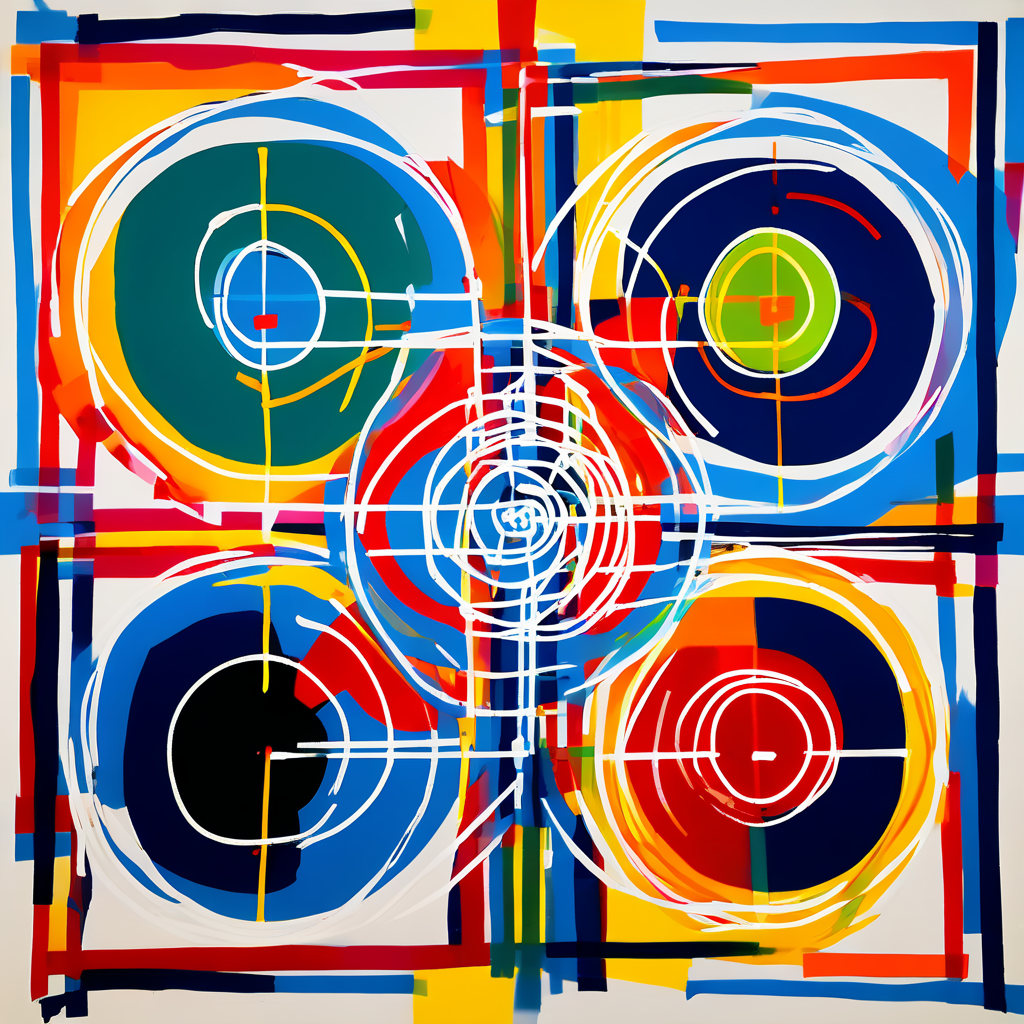
The exploration of Turiyatitta challenges the compartmentalized view of reality presented by Integral Theory. It invites us into a realm where the delineations between the upper-left (I), lower-left (We), upper-right (It), and lower-right (Its) quadrants blur, suggesting that these divisions are merely constructs of a relative reality. In the ultimate reality experienced through Turiyatitta, these quadrants converge, revealing that at the most profound level, there is no distinction between ‘I’ and ‘We’, ‘We’ and ‘It’, ‘It’ and ‘Its’—everything becomes interconnected, a unified whole.
This revelation has significant implications for our spiritual and philosophical journeys. It suggests that the ultimate truth lies not in the separation and analysis of reality into distinct quadrants but in the recognition of the inherent oneness that underlies all existence. The experience of Turiyatitta offers a direct encounter with this oneness, an experiential understanding that transcends intellectual comprehension and invites us into a direct, immediate experience of unity.

Engaging with this perspective does not invalidate the usefulness of the four quadrants in navigating our relative reality. Instead, it enriches our understanding by adding depth to our perception, allowing us to see beyond the surface distinctions and appreciate the underlying unity that connects all aspects of existence. This holistic view fosters a deeper sense of empathy, interconnectedness, and a profound appreciation for the mystery that is life itself.
As we navigate our spiritual path, the exploration of Turiyatitta and the convergence of the four quadrants invite us to reconsider our understanding of reality. It encourages us to look beyond the apparent separations and to embrace the unity that encompasses all aspects of our existence. In doing so, we open ourselves to a more profound, interconnected, and unified experience of reality, one that transcends the limitations of our conventional perspectives and guides us toward a deeper realization of the ultimate truth.
Morgan O. Smith
Yinnergy Meditation, Spiritual Life Coaching & My Book, Bodhi in the Brain…Available Now!
https://linktr.ee/morganosmith

 Morgan O. Smith