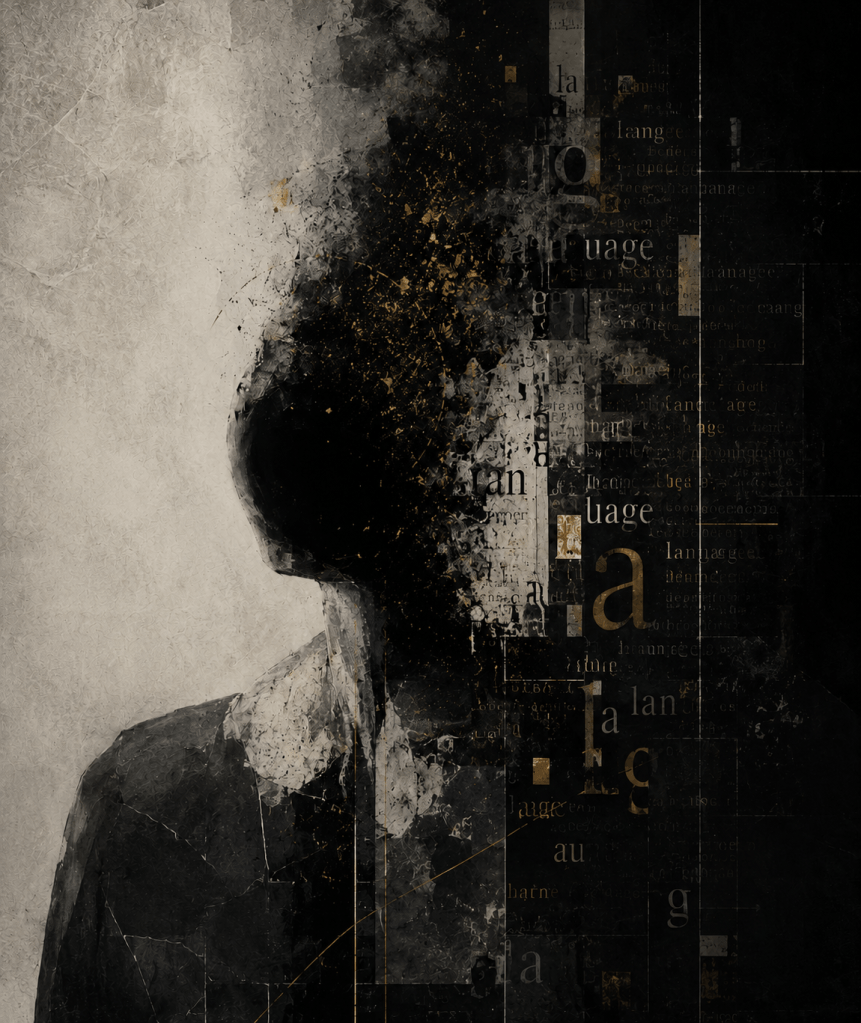
The strangest paradox of human existence is that we rely on language to understand reality while the deepest parts of reality seem to exist beyond language entirely.
A word can ignite a war, resurrect a forgotten memory, or make a stranger weep. Entire civilizations rise from shared symbols and stories. Human beings navigate life through names, categories, and explanations so constantly that description begins to feel indistinguishable from reality itself.
Yet the moment experience becomes truly immediate — raw grief, overwhelming beauty, profound stillness, unconditional love — words begin to fracture around its edges. Something essential escapes translation.
Every word depends upon distinction. Language functions by separating one thing from another so the mind can navigate experience. Light becomes different from darkness. Self becomes different from other. Beginning becomes different from ending.
But what happens when reality is encountered prior to division?
Ordinary language begins to fail.
Mystics throughout history arrived at the same dilemma. Whatever they discovered could not be fully translated into thought. Some called it God. Others called it emptiness, Brahman, Tao, pure awareness, or the Absolute. Different names emerged across cultures and centuries, yet every label pointed beyond itself.
A map drawn in ash cannot contain the wildfire itself.
A person can spend decades studying spiritual systems, memorizing sacred texts, and refining belief structures while never directly encountering what the words attempt to reveal. Language can guide attention, but it cannot substitute for realization.
This becomes especially clear during profound states of meditation or radical presence. Thought slows. Internal narration weakens. Identity loosens its grip. Experience no longer feels divided into observer and observed. Something vast and immediate remains, yet the mind struggles to explain it afterward.
Silence suddenly carries more honesty than explanation.
Not because truth is irrational, but because reality appears prior to conceptual separation. Words emerge afterward as echoes attempting to describe what cannot fully become an object of thought.
The mind naturally resists this insight. Human beings seek stability through conclusions. Definitions create psychological structure. Naming something creates the feeling of control over it. This tendency explains why religious institutions, philosophical systems, and ideological movements often become rigid.
But reality itself remains fluid and immeasurable.
Attempts to imprison the infinite within language eventually collapse into contradiction. God is described as both personal and impersonal. Emptiness becomes fullness. Enlightenment appears both ordinary and transcendent. Opposites dissolve because language was designed to organize division, not indivisibility.
Zen masters understood this deeply. Some answered spiritual questions with silence. Others responded with paradox, laughter, or seemingly irrational statements meant to loosen attachment to concepts. Their aim was not confusion for its own sake, but direct seeing.
A sunset does not need philosophy to radiate beauty. Love does not require intellectual agreement to be felt.
Reality arrives before commentary.
Perhaps this is why awakening often feels less like gaining knowledge and more like recognizing what has always been here beneath mental noise. The search softens because the seeker realizes what was being sought was never absent.
Words may continue afterward. Teaching may continue. Yet something fundamental changes. Language becomes symbolic rather than absolute. Concepts become tools rather than prisons mistaken for truth.
The nameless remains untouched behind every sentence.
Silent. Boundless. Uncontained.
Morgan O. Smith

